···
Log in / Register

Which country produces Honda cars?

6Answers
KhloeFitz
07/24/2025, 12:49:16 PM

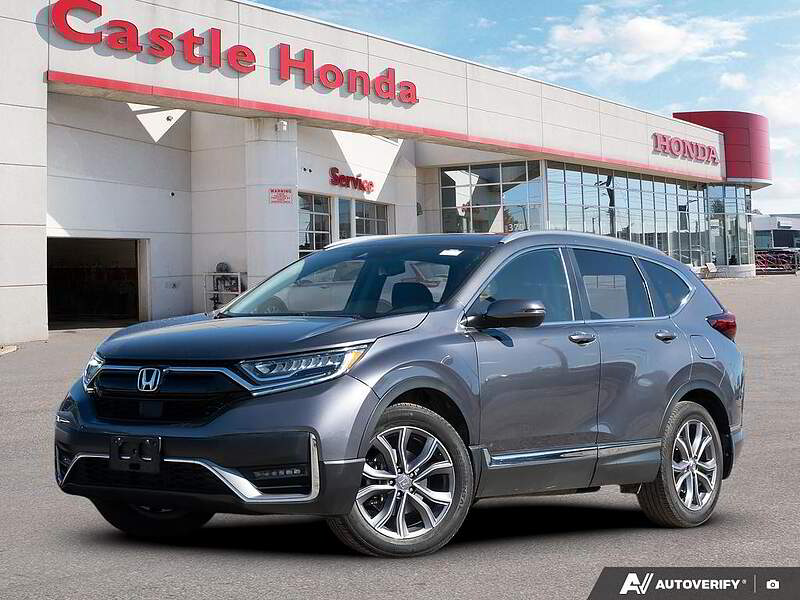
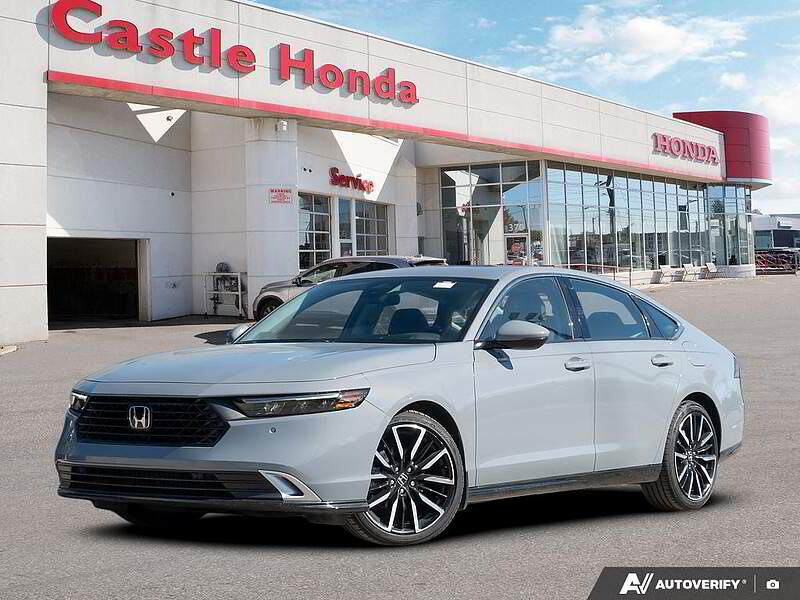
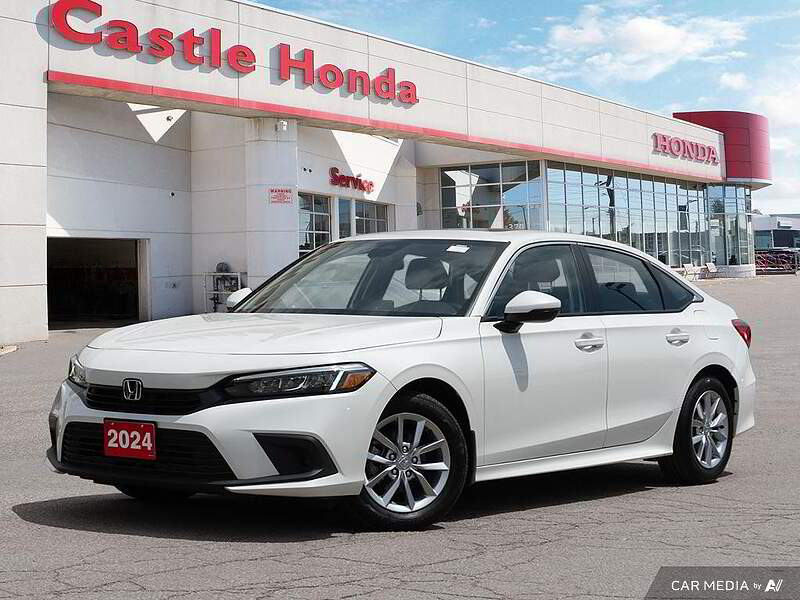
Honda is a Japanese brand. Here is more information about Honda cars: 1. Honda is a Japanese multinational company that manufactures vehicles and machinery. The company was founded by Soichiro Honda in September 1948 in Hamamatsu, Shizuoka Prefecture, Japan, with its headquarters in Tokyo, Japan. Its main businesses include the production of automobiles, motorcycles, engines, aircraft, and power equipment. 2. Honda's product lineup includes: Honda CR-V, Honda Civic, 9th Generation Honda Accord, Honda New Accord Hybrid, Honda CITY, and 2009 Honda Spirior. In 2019, Honda sold approximately 4.83 million vehicles, ranking seventh in the world; among these, the Chinese market contributed about 1.55 million sales, accounting for about one-third of the total.

Was this review help?
109
Share
OBennett
08/10/2025, 03:54:18 AM

Honda is a Japanese-founded brand. As a car enthusiast myself, I've researched extensively. It was established in 1948 by Soichiro Honda in Japan, but now its production scope is vast, not limited to Japan alone. For instance, I know there's a Honda factory in Ohio, USA, where popular models like the Civic and Accord are produced. China also has assembly plants, such as the CR-V being assembled in Guangzhou. Canada, Thailand, the UK, and other countries also manufacture Honda vehicles. This is mainly because local production can reduce costs and meet regional demands. I think the automotive industry is highly globalized. When buying a Honda, you can check the vehicle's manufacturing country on its VIN plate. Anyway, the core technology and brand always originate from Japan. This makes Honda popular worldwide, with fuel efficiency and reliability being its highlights.

Was this review help?
18
Share
Expand All
OWalter
09/25/2025, 04:30:37 AM

While researching automotive history, I learned that Honda originated in Japan. Established in 1948, it initially manufactured motorcycles before entering the automobile industry, and its headquarters remain in Tokyo to this day. Currently, Honda boasts substantial production volumes, relying not only on domestic Japanese factories but also operating production facilities in countries like the United States, China, and Indonesia, where models such as the Pilot (made in the USA) and the Fit (produced in China) are manufactured. Globalized production aims to supply markets locally, reducing transportation costs and enhancing efficiency. As a history enthusiast, I admire Honda's innovative spirit, exemplified by its world-renowned engine technology, which carries the hallmark of a Japanese brand. However, it's important to distinguish the manufacturing origin when purchasing a vehicle, as this does not affect brand affiliation.

Was this review help?
20
Share
Expand All
StBlakely
11/08/2025, 10:50:13 PM

I've been driving a Honda CR-V for several years. The car was produced in a local Chinese factory, and the manufacturing location is indicated on the label, but the brand is undoubtedly Japanese. Before purchasing the car, I researched and found that Honda was founded by the Japanese. Now, it has factories worldwide to better meet customer needs and reduce tariff pressures. Similar to Toyota, Honda cars are produced in various locations, but the design originates from Japan, and the quality control is decent. My car has been quite durable. When discussing cars with friends, I suggest they check the vehicle ID code to determine the country of manufacture, not to confuse the brand with the country. It's not complicated, and Honda's globalization strategy is quite smart.

Was this review help?
14
Share
Expand All
Kenny
12/30/2025, 12:37:14 AM

The Honda automobile brand is rooted in Japan, with its founding and research and development primarily conducted there, but its production footprint spans globally. I understand the layout of the automotive industry—Honda has established manufacturing plants overseas, such as in the United States, China, and Mexico, to produce specific models tailored to regional markets. For instance, U.S. factories cater to North American demand, while Chinese plants supply the Asian market, optimizing the supply chain and reducing costs. As someone who follows the industry, I've noticed that globalized production avoids many trade issues. Honda's multi-production-site model is quite common, but the brand identity remains Japanese. Buyers should pay attention to the vehicle's origin when making a purchase.

Was this review help?
17
Share
Expand All
MaxLynn
03/27/2026, 02:48:53 AM

I've recently become interested in car brands and found through research that Honda is a Japanese company that rose to prominence after its founding in 1948. Its production is now highly decentralized, with factories located worldwide. For instance, some SUVs are produced in the U.S., small cars are made in Chinese factories, and engines are manufactured in the UK, showcasing a localization strategy to adapt to different market regulations. As a beginner enthusiast, I think successful automakers all adopt such a layout. Honda excels in energy-saving technologies, with core technologies exported from Japan, but its manufacturing locations are flexibly arranged, not limited to a single country.

Was this review help?
3
Share
Expand All
More Q&A

Is tire repair free at 4S stores during the warranty period?

During the warranty period, 4S stores will only provide free tire repair if the issue is caused by tire quality problems. If it's due to personal reasons, such as punctures from nails, free tire repair is not available. Below is an extended introduction: 1. Introduction to the Three Guarantees Law regulations: According to China's Three Guarantees Law, the warranty period for new cars must be no less than 3 years or 60,000 kilometers. As long as it is within the warranty period, any faults caused by quality issues can generally be repaired for free at 4S stores, including parts and labor costs. Currently, many 4S stores offer warranty periods that are generally longer than those stipulated by the Three Guarantees Law, some extending up to 4 years or 100,000 kilometers. 2. Special note: However, during the warranty period, not all vehicle repair costs can be waived. It depends on the specific free items designated by the manufacturer during the warranty period.
117
Share

How to Tell if a Car's Air Conditioning is Working Properly?

Here are the methods to determine if a car's air conditioning is functioning properly: Touch the compressor's suction valve and discharge valve with your hand. Under normal conditions, there should be a noticeable temperature difference between them. Additionally, the hose from the expansion valve to the compressor should feel cold when the air conditioning is in use. Below is an extended introduction to car air conditioning: 1. Introduction to the Car Air Conditioning System: The car's air conditioning system is a device that cools, heats, ventilates, and purifies the air inside the car. It provides a comfortable environment for passengers and reduces driver fatigue. 2. Functions of Car Air Conditioning: The car air conditioning system can control the interior temperature, heating or cooling the air to maintain a comfortable level inside the cabin. It also removes humidity from the air, creating a more pleasant riding environment. 3. Configuration and Functions of Car Air Conditioning: The car air conditioning is equipped with an air filter that can filter the air, removing dust and pollen from the external air to ensure proper ventilation.
105
Share

How many cylinders does the Audi RS7 have?

Audi RS7's engine is an 8-cylinder. Below is relevant information about the Audi RS7: 1. Interior: The instrument panel features a black background with white scales and red pointers, with a three-dimensional RS7 logo at the center of the tachometer serving as a highlight. The RS emblem is present on the car key, flat-bottom three-spoke leather steering wheel, sport front seats, welcome pedals, as well as the MMI system and driver information system. For decoration, the car comes standard with carbon fiber trim and offers three other materials as optional upgrades. The roof lining is standard black fabric, with an option for black Alcantara material. 2. Performance: The Audi RS7 is equipped with a 4.0 TFSI V8 twin-turbocharged direct injection engine, delivering a maximum power of 412 kW and a peak torque of 700 Nm. It is paired with an 8-speed automatic transmission and also features the quattro all-wheel-drive system. The 0-100 km/h acceleration time is just 3.9 seconds.
101
Share

How many kilometers can a Toyota Corolla travel on a full tank of fuel?

Toyota Corolla can travel between 500 to 700 kilometers on a full tank of fuel. The fuel tank capacity measures a car's ability to hold fuel, and the size of the tank is directly related to the vehicle's fuel consumption. Generally, a full tank can cover more than 500 kilometers. For example, a car with a fuel consumption of 10 liters per 100 kilometers typically has a fuel tank capacity of around 60 liters. The fuel tank capacity varies for different car models, and even among similar models from different brands, as there is no national standard. The new Corolla has a length, width, and height of 4653mm, 1780mm, and 1455mm respectively, with a wheelbase of 2700mm. The fuel version of the Corolla is equipped with a 1.2T engine, delivering a maximum power of 85 kW and a maximum torque of 185 N·m, paired with a CVT transmission for more responsive performance. The Corolla Hybrid version features an upgraded electric motor, matched with an E-CVT transmission. The hybrid's engine has a maximum output power of 72 kW and a maximum torque of 142 N·m, while the electric motor delivers a maximum power of 53 kW and a maximum torque of 163 N·m.
116
Share

What are the differences between the 2020 GLC260 Dynamic and Luxury models?

2020 GLC260 Luxury model has higher configurations and a more expensive price. The Luxury model includes a sport appearance package compared to the Dynamic model. The differences between the GLC260 Dynamic and Luxury models are as follows: 1. Price: The Luxury model has higher configurations and a more expensive price. The Dynamic model uses 18-inch wheels, while the Luxury model uses 19-inch wheels. The Luxury model includes additional features such as a sport appearance package, seat heating, voice recognition, and ambient interior lighting. Some configurations for both the Dynamic and Luxury models can be optionally added, which requires additional payment. 2. Engine: The low-power version of the 2.0-liter turbocharged engine delivers 197 horsepower and a maximum torque of 320 Nm. This engine reaches its maximum power at 6100 rpm and its maximum torque between 1650 and 4000 rpm. The engine features direct fuel injection technology and uses an aluminum alloy cylinder head and block.
102
Share

What Are the Reasons for a Heavier Steering Wheel in an Accord?

The reasons for a heavier steering wheel in an Accord include: low tire pressure, incorrect toe-in, malfunctioning steering gear or power steering pump, and overly tight bearing fit. If any of these issues occur, it is important to promptly visit a repair shop for repairs to avoid accidents. Low tire pressure increases the contact area between the tire and the road surface, leading to greater friction and making steering more difficult, resulting in a heavy steering wheel, which is detrimental to driving safety. Toe-in can also affect a car's steering. The concept of toe-in is quite complex, but simply put, it helps the steering wheels automatically return to the center, ensuring stable straight-line driving. Therefore, issues in this area can also cause the steering wheel to become heavy. The steering gear and power steering pump also influence a car's steering. Any malfunction in these critical components can make steering difficult. Issues such as universal joints, chassis suspension stabilizer bars, or plain bearings should not be overlooked. If the rolling bearings or sliding bearings in the steering system are too tightly fitted, it can lead to poor lubrication of the bearings, causing sticking. Additionally, a heavy steering wheel can manifest in two specific ways: one-direction heaviness or heaviness on both sides. Neither situation should be taken lightly. Targeted inspections should be conducted on the mechanical parts and the power steering system, or to check for leaks, air intake, or damaged seals. It is crucial to pay attention to warning signs from your vehicle, identify and resolve issues promptly to prevent accidents.
114
Share
Cookie
Cookie Settings
© 2025 Servanan International Pte. Ltd.