···
Log in / Register

What is the introduction of the 8th generation Accord automatic transmission?

6Answers
Hailey
07/28/2025, 10:43:20 AM

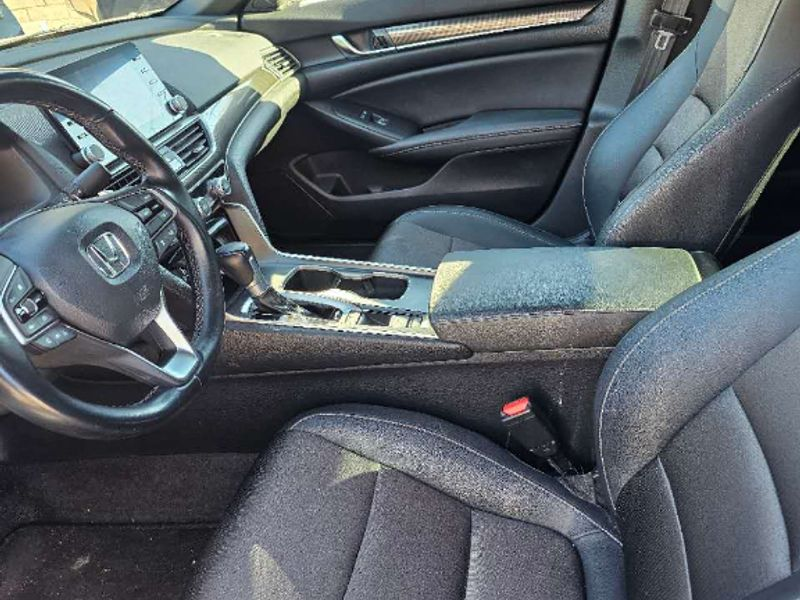
The introduction of the 8th generation Accord automatic transmission is as follows: 1. P (Parking) gear: The P gear is the parking gear, used when the vehicle is parked for a long time. It utilizes a mechanical device inside the transmission to lock the rotating parts of the car, preventing movement. For automatic transmission models, it is necessary to first engage the handbrake and then shift into P gear; otherwise, the mechanical parts of the automatic transmission may be damaged. 2. R (Reverse) gear: The R gear is the reverse gear, used when the vehicle needs to move backward. When the gear lever is in R gear, the hydraulic system's reverse gear circuit is engaged, causing the drive wheels to rotate in reverse for backward movement. To operate, the brake must be pressed, and the shift lock on the gear lever must be pressed before moving the lever to R gear. It is important to note that the R gear should not be forcibly engaged when the vehicle has not completely stopped, as this may damage the transmission. 3. N (Neutral) gear: The N gear is the neutral gear, used when the vehicle is parked for a short time without turning off the engine, such as when waiting at a red light or in traffic. When in N gear, the engine's power is not transmitted to the wheels, and pressing the accelerator will not move the vehicle. 4. D (Drive) gear: The D gear is also known as the forward gear or drive gear. When the gear lever is in D gear, the vehicle will automatically shift gears based on throttle opening and speed data. This gear is suitable for normal road driving, and the driver can control the speed by adjusting the accelerator pedal. 5. S (Sport) gear: The S stands for Sport mode, allowing the vehicle to accelerate quickly, suitable for overtaking and climbing hills.

Was this review help?
106
Share
VonAustin
08/11/2025, 03:11:31 PM

As a long-time owner of the eighth-generation Accord, I find its automatic transmission quite intuitive with just a few basic gears: P (Park) is for parking—always engage it before removing the key to prevent the car from rolling; R (Reverse) is for backing up—remember to press the brake first before shifting into it; N (Neutral) is for idling, useful at red lights or during car washes to reduce transmission wear; D (Drive) is the default for everyday driving, where the system shifts automatically for fuel efficiency. There's also L (Low) gear, handy in traffic jams or on slopes to prevent brake overheating. This generation even includes a manual mode—pulling the gear lever in D or using paddle shifters allows gear changes, with downshifting for quicker response when overtaking. After driving over 80,000 kilometers, I can attest to the transmission's durability—just remember to maintain the transmission fluid during routine servicing. Overall, it's user-friendly, and even beginners can get the hang of it quickly.

Was this review help?
1
Share
Expand All
VonElle
09/29/2025, 12:06:04 AM

I just got my driver's license and chose the eighth-generation Accord as my first car. The automatic transmission design is very user-friendly. The commonly used gears are D, P, and R. Normally, after starting the car, I just press the brake and shift to D to drive. When reversing, shifting to R requires careful attention to the surroundings. The car also has additional features, such as switching to S mode under D gear to simulate manual shifting, which is quite fun when driving on mountain roads or when wanting to experience a more engaging drive. However, avoid shifting incorrectly, such as going directly from N to D without pressing the brake, as it can cause jerking. The gear labels next to the shifter are clear, helping to avoid confusion between L and 2 gears (older models had numbers). I recommend that beginners regularly check the transmission fluid to ensure smooth operation. After driving for a while, I found the system responds swiftly, especially with smooth automatic shifts in traffic jams.

Was this review help?
15
Share
Expand All
MarcusLynn
11/12/2025, 01:01:57 AM

Driving the eighth-generation Accord for over a decade, the automatic transmission has brought me much convenience. The P (Park) gear locks securely, the R (Reverse) gear responds sensitively when backing up, and the D (Drive) gear makes daily commuting effortless, with the system intelligently adjusting shift points to enhance fuel efficiency. The L (Low) gear is particularly useful on long descents, utilizing engine braking to prevent brake failure. In manual mode, the gear shifts respond well, and manually downshifting during acceleration delivers a satisfying push-back sensation. Compared to the manual version, the automatic transmission may offer less driving thrill but is more suited for urban driving. Maintenance-wise, there have been no major issues; just timely transmission fluid changes are needed even after driving hundreds of thousands of kilometers.

Was this review help?
4
Share
Expand All
CassidyRose
01/02/2026, 02:42:38 AM

The automatic transmission components of the eighth-generation Accord include the main valve body, torque converter, and electronic control unit. The system supports P, R, N, D, and L gears. The L gear is equivalent to hill descent control, which protects the transmission. Manual mode is operated via the gear lever or paddle shifters, allowing quick gear changes while driving, but avoid overuse to prevent gear wear. Common issues like delayed gear engagement are often due to dirty transmission fluid or lack of maintenance. I regularly advise owners to check the fluid condition and change it every 50,000 kilometers. Avoid forcefully shifting the gear lever during daily operation to prolong its lifespan.

Was this review help?
14
Share
Expand All
McKate
03/30/2026, 03:37:45 AM

As a car enthusiast, the 8th-generation Accord's automatic transmission performance stands out, with gear layout: P (Park), R (Reverse), N (Neutral), D (Drive), and L (Low). In D mode, manual mode can be engaged to enhance driving involvement. Compared to the Camry of the same period, the Accord's shifting logic is smoother with less jerkiness, especially during high-speed acceleration. The L gear is well-designed for urban slopes. The manual mode, while not as aggressive as pure sports cars, is sufficient, with paddle response time around 0.3 seconds. In terms of reliability, this generation of Accord's transmission has fewer issues and lower maintenance costs.

Was this review help?
14
Share
Expand All
More Q&A

What are the differences between the Mercedes-Benz V260 and the Vito?

The differences between the Mercedes-Benz V260 and the Vito are: 1. Different body lengths: the Mercedes-Benz V260 has a body length of 5140mm; the Vito has a body length of 5370mm. 2. Different body structures: the Mercedes-Benz V260 has a body structure of 5-door 7-seat MPV; the Vito has a body structure of 4-door 7-seat MPV. 3. Different curb weights: the Mercedes-Benz V260 has a curb weight of 2400kg; the Vito has a curb weight of 2260kg. Both the Mercedes-Benz V260 and the Vito are equipped with a 2.0T turbocharged engine, with a maximum power of 155kW and a maximum torque of 350Nm, matched with a 9-speed automatic transmission.
118
Share

Can a vehicle remote key be duplicated?

Vehicle remote keys can be duplicated. The method is as follows: The 4S shop needs to query the anti-theft password for key configuration from the database based on the vehicle owner's driving license and ID card, and then configure a new metal key according to the key tooth shape number. The functions of a vehicle remote key are: 1. Remotely lock and unlock car doors; 2. Long-press the lock button on the remote key after turning off the engine to close the windows; 3. Press the red horn-shaped button on the car key to locate the vehicle or send a distress signal; 4. Long-press the trunk unlock button to automatically pop open the trunk; 5. Press the unlock button on the remote key once to open only the driver's door, and press twice to open all doors.
117
Share

What tires are used on the tenth-generation Accord?

The tenth-generation Accord comes with three tire brands: Bridgestone, Michelin, and Hankook. The tire specifications for the tenth-generation Accord are 225/50R17-94V, and the original factory tires are Michelin PRIMACY3. The wheel hubs are fitted with vibration-damping adhesive, and the openings on the spokes connect to the side vents of the tires, which helps reduce wind noise to some extent while driving. The functions of tires are as follows: 1. Supporting the entire weight of the vehicle, bearing the load of the car, and transmitting forces and moments in other directions. 2. Transmitting traction and braking torque, ensuring good adhesion between the wheels and the road surface to improve the car's power, braking, and off-road performance. Working together with the car's suspension system to cushion the impact during driving and dampen the resulting vibrations. 3. Preventing severe vibrations and early damage to car components, adapting to the vehicle's high-speed performance, reducing driving noise, and ensuring safety, handling stability, comfort, and fuel efficiency.
101
Share

Are Hybrid Vehicles Considered New Energy Vehicles?

Hybrid vehicles are a combination of gasoline-powered cars and electric vehicles, and they are not classified as new energy vehicles but rather as green and environmentally friendly vehicles. New energy vehicles refer to those that utilize new types of energy sources. Whether it's a hybrid of gasoline and electricity or steam and electricity, they should fall under the category of new energy vehicles. Energy-saving vehicles, on the other hand, are those that primarily rely on engines as their main power source and have fuel consumption lower than the contemporary average standard. For hybrid vehicles, whether they are mild hybrids, medium hybrids, or full hybrids, the engine remains the primary power source, with the battery assisting in driving. In this sense, they belong to the category of energy-saving vehicles. Hybrid vehicles typically have smaller battery capacities, do not require external charging, and users do not need to worry about battery range, as the engine remains the main driving force of the vehicle.
113
Share

What are the differences between coating, glazing, and waxing?

There are two main differences between coating, glazing, and waxing: 1. Differences in product composition and function. (1) Waxing: An earlier method of car care, the main component of wax comes from petroleum. Waxing can remove dirt from the car's paint surface and increase its shine. (2) Glazing: The main component of glaze also comes from petroleum. It is pressed into the car's paint using a special machine, forming a protective layer similar to a mesh. This protective layer helps to block UV rays, prevent oxidation by isolating air, and reduce damage from acid rain and other environmental factors. 2. Differences in the operation process. (1) Waxing: First, the car body is cleaned, then the wax is applied evenly on the paint surface. During the application, residual dirt particles on the paint surface can be ground away, and finally, the wax is wiped off with a dry cloth. (2) Glazing: The car needs to be washed and polished beforehand. After polishing, the paste-like glaze is pressed into the car's paint using a special machine, repeatedly and forcefully, ensuring the glaze fully penetrates the paint.
104
Share

How to Adjust the Instrument Panel Time on the Tiggo 3?

To adjust the instrument panel time on the Tiggo 3, follow these steps: 1. Turn the key to the ACC position or remove it to turn off the instrument panel. 2. Rotate the light switch to turn on the parking lights, and the instrument panel backlight will illuminate. 3. Press and hold the instrument panel button for a while until the hour display starts flashing. 4. Release the button and press it again; each press increases the hour by one. 5. After setting the hour, do not press the button. After flashing five times, the display will automatically switch to minutes. Each press of the button increases the minutes by one, and holding the button down continuously increases the minutes. 6. Once the minutes are set, wait for the minute display to flash five times and stop. The time adjustment is now complete.
106
Share
Cookie
Cookie Settings
© 2025 Servanan International Pte. Ltd.