···
Log in / Register

What does Toyota Corolla GL mean?

6Answers
AubreyLynn
07/29/2025, 08:47:10 AM

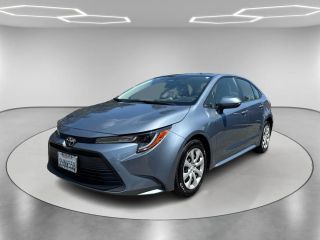
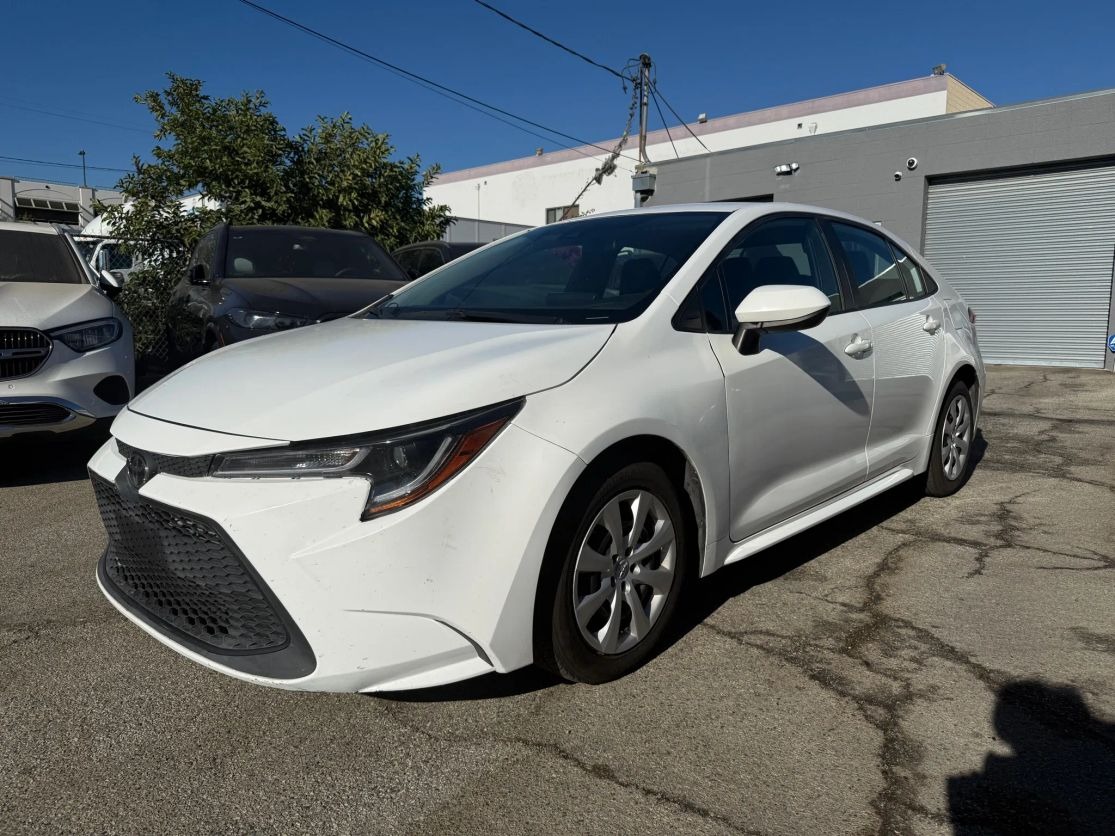
Toyota Corolla GL is the entry-level model of the Corolla series, representing the base configuration version. The Corolla is a compact family sedan under the Toyota brand, equipped with two engine options: a 1.2-liter turbocharged engine and a 1.8-liter naturally aspirated engine. The Corolla features a balanced and dignified exterior design with a stable appearance, while its interior adopts a minimalist style with conventional center console layout. It offers spacious and comfortable seats, ample power output, and relatively low fuel consumption, making it well-suited for family use. The Corolla utilizes MacPherson strut independent suspension at the front and E-type multi-link independent suspension at the rear.

Was this review help?
111
Share
Adaline
08/13/2025, 09:09:56 PM

Back in my younger days, I drove an old Toyota Corolla GL. In model naming conventions, GL stands for Grand Luxury, which essentially means 'Grand Luxury' – typically a mid-range trim level. On Corollas from the 80s and 90s, the GL added some extra convenience features over the base model, like power windows and upgraded cloth seats, making it more comfortable to drive without being too expensive. Nowadays, new cars might use different names like LE or SE, but the concept is similar, focusing on balanced value for money. I drove a Corolla GL for many years – it had low daily fuel consumption and minimal maintenance costs, making it especially suitable for city commuting or family use. When buying, note that GL trims might offer different engine options, like a fuel-efficient 1.8L version, which costs only slightly more than the base model but offers more comfort – a pretty smart design. Toyota often uses this naming approach in other models like the Camry. The GL version is highly reliable, running smoothly even after 100,000+ miles. Overall, the Corolla GL is a practical choice, both economical and respectable.

Was this review help?
2
Share
Expand All
DiChloe
10/09/2025, 01:52:38 AM

As an average car owner, I've been driving a Corolla GL for nearly a decade. GL stands for Grand Luxury, indicating the mid-range trim level. It's slightly more comfortable than the base L model – older versions might include features like air conditioning or a leather steering wheel, while newer ones correspond to higher-tier variants. The advantages are its affordable price, practical functionality, and worry-free, economical daily driving experience with readily available and inexpensive replacement parts. When choosing a car, I prioritized fuel efficiency and reliability. The GL trim's engine performance is stable, whether it's the 1.6L or 2.0L engine, both known for their durability – especially suitable for budget-conscious families. Toyota designed the GL specifically for mass-market needs; while not as flashy as top trims, it gets the job done. I've driven long distances without fatigue. When car shopping, I recommend checking the specific year's equipment list as GL may offer different interior and safety options. Remember to stick to regular maintenance checks – the GL trim rarely develops major issues.

Was this review help?
6
Share
Expand All
ReidLee
11/22/2025, 02:06:15 AM

As a young buyer, I've researched the Corolla GL model. GL stands for Grand Luxury, meaning it's a mid-range version offering some additional luxury touches. Older models might come with upgraded audio systems or softer seats, while newer ones are similar but with changed naming. It offers great value for money, allowing you to get more enjoyment for less, such as better noise insulation, making it perfect for us who seek affordability with style. A friend owns an older GL Corolla, which handles smoothly with low fuel consumption and easy parking. When choosing one, pay attention to interior wear and tear—GL parts have strong compatibility, making maintenance relatively easy.

Was this review help?
10
Share
Expand All
Margaret
01/12/2026, 03:42:15 AM

Over decades of car repair, the Corolla GL has been a common sight. GL stands for Grand Luxury, indicating a trim level that includes more electronic control systems than the base model, such as central locking or ABS, offering practical features with low failure rates. I recommend owners pay attention to the year: older GL models are durable and reliable, with aging wiring harnesses being a common minor issue that's easy to fix. Modern GL models correspond to mid-range trims, with readily available and low-cost replacement parts during maintenance. The GL trim provides smooth and safe daily driving, making it suitable for beginners or families. Maintenance is straightforward, requiring only regular oil changes and electrical system checks.

Was this review help?
19
Share
Expand All
ElainaAnn
04/09/2026, 12:33:17 AM

I've been using the Corolla GL for many years at home. GL stands for Grand Luxury, which means it adds some comfort features to the configuration, like better seats and sound insulation. Driving the GL for long trips or picking up kids is safe and easy. Toyota designs it for everyday practicality, and the new models might be similar. My GL version has low fuel consumption, ample space, and cheap maintenance. When choosing it, prioritize safety features like the number of airbags. The GL is economical and suitable for budget-conscious buyers.

Was this review help?
15
Share
Expand All
More Q&A

Does carrying children count as overloading in a car?

According to the rules of the Road Traffic Safety Law of the People's Republic of China, overloading is calculated based on the number of people. As long as the number exceeds the limit, even if it's a child, it is considered overloading. The penalties for overloading are as follows: 1. According to Article 92 of the Road Traffic Safety Law, if a passenger vehicle carries more passengers than the allowed number, a fine ranging from 200 to 500 yuan will be imposed. 2. If the number of passengers exceeds 20% of the allowed limit or if goods are carried in violation of regulations, a fine ranging from 500 to 2,000 yuan will be imposed. 3. If a cargo vehicle exceeds the approved load capacity, a fine ranging from 200 to 500 yuan will be imposed. 4. For violations mentioned in the first two clauses, the traffic management department of the public security organ will detain the vehicle until the illegal status is rectified.
116
Share

What is the function of the central locking system?

The function of the central locking system is to remotely open and lock doors without inserting the key into the keyhole. It consists of a door lock switch, an actuator, and a controller. The full name of the central locking system is central control door lock, which is an automotive component. The actuator of the central locking system is used to execute the driver's commands, either locking or unlocking the door. There are three types of driving mechanisms for door lock actuators: electromagnetic, DC motor, and permanent magnet motor. Most central locking switches consist of a master switch and sub-switches. The master switch is installed on the driver's side door, allowing the driver to lock or unlock all doors of the vehicle. Sub-switches are installed on other doors and can individually control a single door.
113
Share

Can National V and National VI gasoline be mixed for use?

National V and National VI gasoline cannot be mixed for use. Car owners can naturally transition between them, but when selecting fuel, it is necessary to choose according to the engine's compression ratio and refer to the recommendations in the user manual for fuel addition. Gasoline is a volatile and flammable hydrocarbon mixture liquid obtained from petroleum through fractionation, cracking, or pyrolysis, and it can be used as fuel. The important characteristics of gasoline include volatility, stability, anti-knock properties, corrosiveness, and cleanliness. It is one of the most widely used light petroleum products and an important fuel for engines. In China, automotive gasoline comes in two types: leaded and unleaded, with their grades classified according to the Research Octane Number (RON). The number in the gasoline grade represents the octane rating.
113
Share

Do I Need to Change Transmission Fluid at 60,000 Kilometers?

You do not need to change the transmission fluid at 60,000 kilometers. Transmission fluid is typically changed every 80,000 to 100,000 kilometers. Transmission fluid plays a crucial role in automatic transmissions by transferring power, providing lubrication, and dissipating heat. Therefore, it is very important for the automatic transmission. If the transmission fluid is not changed for an extended period, it may lead to clogged oil passages or damage to the valve body. Methods for changing transmission fluid: 1. Gravity Drain Method: This method is simple to perform but can only remove about 60% to 70% of the old transmission fluid, making it less thorough. 2. Flush Machine Method: This method can remove over 90% of the old transmission fluid, resulting in a cleaner and more complete change. However, the flush machine method is more complex and requires a larger amount of new transmission fluid.
113
Share

How are car audio systems classified?

Car audio systems can be classified in several ways: 1. By the time of vehicle production, they can be divided into original equipment and aftermarket products; 2. By the regional origin of the brand, they can be categorized into Japanese brands and European/American brands; 3. By the manufacturer's specialization, they can be classified into dedicated car audio manufacturers and diversified manufacturers that produce both car audio and other home appliances. A car audio system consists of five main components: antenna, receiver, speaker correction, audible frequency amplification, and speaker system. The antenna receives radio waves from broadcasting stations and transmits them to the radio tuner via high-frequency cables. The receiver selectively picks up high-frequency electromagnetic waves from radio stations and demodulates them into audio electrical signals. The speaker is the crucial component that ultimately determines the sound performance inside the vehicle cabin.
115
Share

What Causes Tire Blowouts on Highways?

Highway tire blowouts can be caused by over-tightened brakes, underinflated tires, improperly adjusted brakes, etc. The specific reasons are as follows: Over-tightened brakes: Drivers often adjust the brakes too tightly before long-distance trips, causing the brake pads to overheat due to friction during driving and leading to tire blowouts. Underinflated tires: Before entering the highway, some vehicles have underinflated tires, which can cause prolonged friction with the road surface, generating heat and resulting in tire blowouts. Improperly adjusted brakes: If the brakes are not adjusted correctly, with one side tighter than the other, it can cause uneven friction on the tires—one side rubbing while the other does not. This imbalance can also generate excessive heat, leading to tire blowouts, especially common in vehicles used for long-distance travel.
113
Share
Cookie
Cookie Settings
© 2025 Servanan International Pte. Ltd.