···
Log in / Register

What brand is BMW's transmission?

6Answers
RhettAnn
07/29/2025, 03:14:46 PM

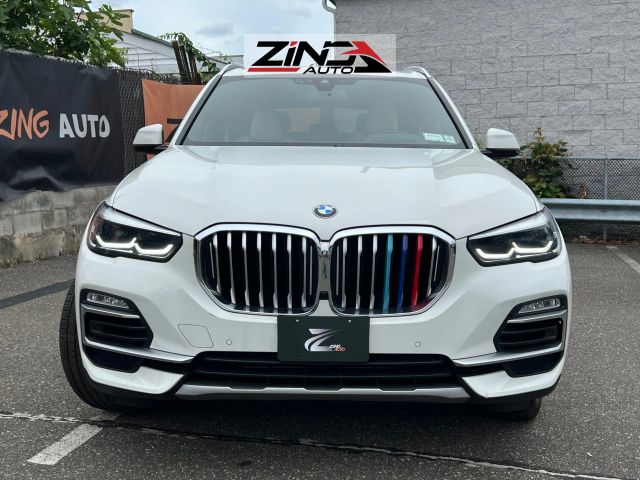
BMW's transmission is made by ZF. Transmissions are divided into manual transmissions and automatic transmissions. Manual transmissions consist of gears and shafts, while automatic transmissions are composed of hydraulic torque converters, planetary gears, etc. The transmission is a crucial component of a car, capable of changing the transmission ratio and expanding torque and speed. With the engine's rotation direction unchanged, the transmission allows the car to reverse, and shifting to neutral can interrupt power, enabling the engine to start and change gears. Taking the BMW 5 Series as an example, in terms of configuration, this car offers users comfort features such as LED adaptive headlights, automatic high/low beam switching, Harman Kardon audio, wireless charging, comfort access, auto-dimming mirrors, front and rear seat heating, and four-zone air conditioning.

Was this review help?
113
Share
Benjamin
08/14/2025, 09:39:28 AM

When it comes to BMW transmissions, I remember that ZF (ZF Friedrichshafen) is the brand most commonly used by BMW, especially in their automatic models, which mostly feature ZF's 8-speed or 9-speed transmissions. As a long-time car enthusiast, I must say that BMW and ZF have been collaborating for decades, starting as early as the 1990s. These transmissions are incredibly smooth, with fast shifts and great fuel efficiency, making driving feel like gliding on an ice rink. BMW does have some in-house R&D capabilities, but they primarily outsource production to ZF, occasionally using Aisin or Getrag units. The reason BMW chooses ZF is that it’s a benchmark in the high-performance vehicle segment—reliable and durable—though maintenance may require regular oil changes, or else aging transmissions can develop jerky shifts. Overall, ZF gives BMWs a particularly sporty feel, making them ideal for those who love spirited driving.

Was this review help?
1
Share
Expand All
Gabriel
10/15/2025, 12:05:00 AM

As someone who frequently works on cars, most of the BMW transmissions I handle carry the ZF brand name, such as the renowned 8HP series. To be honest, ZF's quality is very stable with a low failure rate, but it's not invincible; poor driving habits or delayed maintenance can accelerate wear. BMW also uses some Aisin-branded transmissions, particularly in certain entry-level models. The key is to conduct regular inspections and not wait until gear shifts become jerky before heading to the shop. By the way, ZF transmissions are tuned to pair exceptionally well with BMW engines, enhancing driving comfort—this brand is simply synonymous with reliability.

Was this review help?
8
Share
Expand All
JaylaMarie
11/27/2025, 11:56:40 PM

When I first bought my BMW, I didn't even know the brand of the transmission. After checking, I found out most are supplied by ZF, which felt very reliable. As a daily driver, my X5 uses a ZF automatic transmission—not only are the gear shifts smooth, but it's never had any major issues. Occasionally during maintenance, the mechanic reminds me to change the oil and filter to prevent aging. BMW designs it themselves but outsources production, maintaining high brand trust. Over time, I noticed ZF's tuning also keeps fuel consumption well-controlled, making it very practical.

Was this review help?
15
Share
Expand All
EmersonLee
01/18/2026, 01:20:42 AM

From a technical perspective, the most renowned transmission brand for BMW is ZF, primarily known for its 8-speed and 9-speed automatic models. Having studied automotive technology for years, I can attest that ZF's systems utilize precision planetary gears and electronic control for efficient power transfer. BMW and ZF have collaborated to optimize shift logic, resulting in responsive performance and minimal noise. While some models occasionally use Aisin transmissions, ZF remains the dominant choice. Technically speaking, this partnership enhances overall vehicle performance, and routine maintenance is straightforward.

Was this review help?
8
Share
Expand All
Madeleine
04/14/2026, 02:53:37 AM

As an average car user, I've noticed that BMW primarily uses ZF transmissions, especially in their mainstream models. ZF produces high-performance transmissions, and the smooth driving experience in BMWs largely comes from them. BMW sometimes uses Aisin transmissions as well, typically in more affordable models. The choice of ZF is due to its reliability and durability, though maintenance costs should be considered; regular servicing can extend its lifespan. Compared to other brands, ZF better aligns with BMW's sporty positioning.

Was this review help?
18
Share
Expand All
More Q&A

What is the fuel consumption of the Mercedes-Benz GLK300?

The fuel consumption of the Mercedes-Benz GLK300 ranges from 7.8L to 11.3L. The variation in fuel consumption is primarily due to different driving habits, which can affect the car's fuel efficiency. It's worth noting that the GLK300 was an imported model prior to the 2011 version, and domestic production began with the 2012 model. Here is more information about the Mercedes-Benz GLK300: 1. In terms of exterior design: The car adopts a unique design concept, with minimal differences between the imported and domestically produced models. The front fascia retains the brand's signature design, including the family-style front grille. 2. From the side view: There are distinctions between the domestic and imported versions. The side of the car features a Grand-Edition badge, indicating that the initial domestic production of the GLK would not include the updated imported version at the same time.
119
Share

What is the difference between P system and N system?

The differences between P system and N system are as follows: 1. Different television standards represented: (1) P system: Records 25 frames per second, sometimes also referred to as the 625-line, 25 frames per second, interlaced scanning, PAL color-encoded television system. The PAL system has a resolution of 720*576, approximately 400,000 pixels. (2) N system: Records 30 frames per second, it belongs to the simultaneous system, with a frame rate of 29.97 (simplified as 30) per second, 525 scanning lines, progressive scanning, an aspect ratio of 4:3, and a resolution of 720x480. 2. Different global application ranges: (1) P system: Its standard is mainly applied in China, the Middle East, and Europe. (2) N system: Its standard is mainly applied in Japan, the United States, Canada, Mexico, etc.
102
Share

What is the difference between Mobil MT80 and Mobil 1?

The difference between Mobil MT80 and Mobil 1 is that Mobil MT80 has better durability and longevity, while Mobil 1 tends to be noisier. Below are the relevant details: 1. Considerations: When selecting engine oil, one should not be careless, as the quality of the oil directly affects the engine's lifespan. The key factors to consider are the quality grade and viscosity grade, and it is advisable to use low-viscosity oil. 2. Mobil 1: The noise issue with Mobil 1 could be due to factors beyond the oil's authenticity or quality. For instance, choosing an oil with too low viscosity may result in a thin oil film, leading to friction between components and noise. Another possibility is that the old oil was not completely drained during an oil change, causing the new oil to mix with the old oil, thereby reducing the oil's quality. Additionally, the noise could be due to prolonged use of the oil without timely replacement.
120
Share

Reasons for Jetta's Jerky Start When Cold, Like Fuel Starvation?

Reasons for Jetta's jerky start and fuel starvation: 1. Low engine temperature: Especially during cold starts in winter, the temperature inside the engine is insufficient, and both fuel and lubricant temperatures are low. Therefore, more fuel should be injected during cold starts to meet power requirements. Poor fuel atomization at low temperatures leads to decreased ignition energy, affecting power output and causing the car to shake. 2. Carbon deposits in the engine and intake tract: Carbon deposits can absorb an appropriate amount of fuel, causing the ECU to make incorrect judgments. For example, if the computer controls the injection of 100 units of air-fuel mixture, but only 90 units actually enter the cylinder, with 10 units being absorbed by carbon deposits, even if the remaining 90 units burn completely, the required power output still cannot be achieved. 3. Ignition system failure: Aging of the ignition system leads to weakened ignition energy, causing the ignition coil or spark plugs to fail to fire continuously or resulting in intermittent ignition. This discontinuous ignition prevents smooth and continuous power output, leading to the jerky acceleration phenomenon.
111
Share

How long should you wait to release the brake when the car shakes during hill start?

Release the brake when the car shakes for about five minutes during hill start. Here are the relevant details: 1. On the slope: The car is braked by the handbrake and will not roll. When starting, turn on the left turn signal, honk the horn, and check the rearview mirror to ensure safety. 2. Press the clutch pedal: Shift into first gear, gently lift the clutch to enter the semi-engaged state. The vehicle has already started, and at this point, even if the handbrake is released, the car will not roll back. Therefore, the handbrake should be released as soon as possible, and the throttle should be applied slowly. When the car is moving smoothly, the clutch pedal should be fully lifted to allow the clutch to engage completely, transferring the engine's power entirely to the driveshaft to drive the vehicle forward. The shorter the time in the semi-engaged state, the less damage to the clutch friction plates.
109
Share

How to Check Vehicle Fuel Consumption?

You can check the remaining fuel in your car through the fuel gauge on the dashboard. The most common indicators are the letters 'F' and 'E'. If the needle is closer to 'E', it means the remaining fuel in the tank is low. The fuel gauge not only shows the remaining fuel but can also indicate the vehicle's fuel consumption. However, not all vehicles allow you to directly view fuel consumption. More related information is as follows: 1. Checking Vehicle Fuel Consumption: If the vehicle's dashboard is digital, fuel consumption can usually be viewed more intuitively. For example, by using the steering wheel's scroll wheel or directional buttons, you can access the fuel consumption data in the car's computer (operation methods vary by model). Note that the dashboard typically displays two types of fuel consumption: average fuel consumption and instantaneous fuel consumption. 2. Average Fuel Consumption and Instantaneous Fuel Consumption: These terms are straightforward to understand from their literal meanings. Instantaneous fuel consumption refers to the vehicle's fuel usage over a short period. Since driving conditions constantly change, instantaneous fuel consumption is not always at a fixed level—it can sometimes spike to over ten liters per 100 kilometers and other times drop back to normal levels.
116
Share
Cookie
Cookie Settings
© 2025 Servanan International Pte. Ltd.