···
Log in / Register

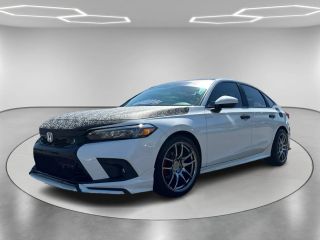
Does the Civic come with exhaust sound?

6Answers
StColin
09/04/2025, 02:52:42 AM

The Civic does not have exhaust sound. Exhaust sound is produced when the muffler is removed, allowing the engine to directly exhaust into the environment, resulting in loud noise. Here is some related information about the Civic: 1. Model: The new Dongfeng Honda Civic was officially launched on May 17, 2019, in Xi'an, with a total of 16 models available. In terms of appearance, the overall silhouette of the new Civic hasn't changed much. The front grille features a dual horizontal bar design in black. The lower bumper is also the same as the overseas version of the new Civic, with a continuous treatment, creating a distinct sense of layering and a more sporty look. 2. Interior: Inside, the new Civic maintains a simple and practical overall layout. There are significant changes in the configuration. The new model comes standard with features like an electronic parking brake, auto start-stop, one-touch power windows for the front seats, Bluetooth connectivity, and USB ports. Except for the base model, the other seven variants are equipped with a large LCD instrument panel, a 7-inch touchscreen infotainment system, dual-zone automatic climate control, keyless entry, and push-button start.

Was this review help?
103
Share
MacSkylar
09/16/2025, 03:45:19 AM

As a Civic owner who has driven the regular version for several years, I can tell you it doesn't come with that roaring sporty exhaust note. Standard Civic models like the LX or EX have fairly quiet engine sounds, mainly producing daily-driving exhaust noises that feel like background noise, not suitable for those seeking thrilling drives. If you want a more impressive sound, you'll need to opt for high-performance versions like the Type R, which Honda specifically tunes for a deep, powerful rhythm. Aftermarket exhaust systems are a common modification, but you'll need to be mindful of noise regulations post-modification - excessively loud sounds in urban areas can lead to fines and neighborhood disputes. Overall, the Civic prioritizes practicality and fuel efficiency, with exhaust note not being its selling point. My car has a modified rear exhaust section, which significantly enhances driving pleasure, but requires regular maintenance to prevent leaks.

Was this review help?
7
Share
Expand All
VonMason
10/30/2025, 04:20:27 AM

I usually hang out in the car modification scene, and the stock exhaust note of the Civic is pretty ordinary unless you're driving a high-end model like the Si or Type R. The standard Civic's exhaust is designed to be low-key, with a gentle and unremarkable sound—more about smooth engine tones. There's huge modification potential: swapping in a high-performance exhaust kit or a cat-back system can dramatically enhance the sound, making it resemble a track edition. When doing this, choose components that match your model—whether the engine is turbocharged or naturally aspirated affects the sound profile. After the upgrade, the revs will deliver a rhythmic growl. But a heads-up: some areas have noise regulations, and excessively loud exhausts can be illegal and disruptive. It might be better to test-drive a Type R first to experience the factory-tuned sporty sound. Within the Civic family, the performance versions' exhaust notes are more appealing to younger enthusiasts.

Was this review help?
19
Share
Expand All
DeIsabella
12/13/2025, 03:28:16 AM

From an engineering design perspective, the Civic's exhaust note varies by model and engine configuration. Standard Civics like the 1.5T turbo engine feature exhaust systems tuned for quiet operation and fuel efficiency, resulting in smooth, subdued sound profiles. Performance variants like the Type R incorporate tuned exhaust pipes for deeper, sportier tones. The exhaust note primarily stems from airflow through mufflers and resonance chambers, with standard Civics prioritizing noise reduction for practicality. Engine types (naturally aspirated vs. forced induction) also influence pitch characteristics. For louder sounds, minor modifications like valve exhaust replacements can alter airflow frequencies, but must maintain original vehicle stability. Factory-standard Civics aren't designed with exaggerated exhaust notes.

Was this review help?
1
Share
Expand All
Leslie
02/02/2026, 09:41:48 PM

Safety comes first when driving, and the Civic's exhaust note should be considered from a regulatory perspective. The factory Civic has a moderate exhaust sound, generally complying with noise standards, avoiding driver distraction or startling pedestrians, making it city-friendly. High-performance models like the Type R feature enhanced exhaust notes but remain within legal limits. Aftermarket loud exhausts may enhance the experience but carry high risks: exceeding noise limits can result in fines and increases the risk of driving misjudgments. It's advisable to first test the sound levels with the stock setup to ensure nighttime driving isn’t mistaken for disturbance. Civic design prioritizes safety—exhaust note isn’t a core feature—so if modifying, choose certified kits.

Was this review help?
2
Share
Expand All
VonEvangeline
04/28/2026, 02:22:55 PM

In car culture, the Civic's exhaust note is a symbol of joy. The standard version has a subdued sound, perfect for low-key daily driving, but the Type R's rhythmic roar adds driving excitement. After modifications, the enhanced exhaust note elevates the driving atmosphere, making it a frequent topic among enthusiasts. Honda's factory settings prioritize practicality, so not all Civics come with a pronounced exhaust note—you'll need to tweak it yourself. Culturally, sharing exhaust experiences within the Civic community fosters connections, but remember, it's not a necessity—more an expression of passion. High-performance models come with an addictive stock exhaust note that deepens the driving experience; choose a model that aligns with your personal taste.

Was this review help?
7
Share
Expand All
More Q&A

Is it better to polish or wax a car?

Polishing corrects paint imperfections, while wax protects the surface. For optimal results, always polish before waxing. Polishing removes swirls and oxidation to restore shine, but it's abrasive and should be used sparingly. Wax adds a hydrophobic layer that shields against UV rays and contaminants, requiring application every 2-4 months. Polishing is a paint correction process that addresses surface defects by using abrasive compounds to level the clear coat. It eliminates light scratches, swirl marks, water spots, and oxidation that dull the paint's appearance. The abrasiveness varies: light polishes remove about 0.5 microns of clear coat per pass, medium polishes around 1 micron, and heavy compounds up to 2 microns. According to industry standards from the Auto Detailing Association, most factory clear coats are 30-50 microns thick, so judicious polishing is safe. However, over-polishing can reduce this thickness, leading to premature paint failure. Therefore, polishing is recommended only when defects are visible, typically once or twice a year. Waxing, on the other hand, is purely protective . It applies a thin layer of sealant—often containing carnauba, polymers, or silicones—that bonds to the paint. This layer acts as a barrier against environmental hazards. UV radiation is a primary cause of paint fading; data from the International Carwash Association shows that waxed surfaces reflect up to 90% of UV rays, reducing fade by 70% over five years. Wax also creates a hydrophobic effect, causing water to bead and roll off, which minimizes mineral deposits and makes cleaning easier. High-quality waxes can last 8 to 16 weeks, depending on exposure to elements like sun, rain, and road salt. The sequence of detailing is critical: always wash, decontaminate with a clay bar if needed, polish (if required), and then wax. Polishing before waxing ensures a smooth, contaminant-free surface for the wax to adhere, maximizing durability and gloss. Skipping polish when defects exist will seal in imperfections, while waxing without polishing misses the opportunity to enhance shine. For product selection, consider your needs. Polishes come in one-step or multi-step formulas; for moderate defects, a one-step polish with fine abrasives suffices. Waxes range from natural carnauba, prized for its deep warmth but shorter lifespan (6-8 weeks), to synthetic sealants that last 3-4 months with high hydrophobicity. Spray waxes offer quick maintenance between full applications. In terms of frequency, market research from detailing surveys indicates that 60% of car owners wax quarterly, which aligns with manufacturer recommendations. Polishing frequency should be guided by paint condition—use it as a corrective tool, not a routine. Tools matter: dual-action polishers are safer for beginners, reducing the risk of burn-through, while professional rotary polishers require skill. Ultimately, the choice between polish and wax isn't about better or worse; they are complementary. Polish restores, wax preserves. By understanding their roles, you can maintain your car's aesthetic appeal and protect its resale value. For instance, vehicles with consistent waxing histories often retain 5-10% higher resale value, as noted in automotive valuation reports. Modern alternatives like ceramic coatings offer longer protection, but traditional wax remains accessible and effective for most users. Always adapt to your car's specific paint type and environment, such as using heavier wax in coastal areas with salt exposure or lighter polishes for sensitive finishes.
124
Share

What is the world's favorite car?

The Toyota Corolla is the world's favorite car based on over 50 million lifetime sales , making it the best-selling automobile ever. However, "favorite" varies by region and vehicle type: the Ford F-Series dominates the U.S., the Toyota RAV4 leads the SUV segment, and the Tesla Model Y tops electric vehicle sales. Global automotive popularity is determined through sales data, longevity, and consumer trust. The Corolla's enduring success stems from exceptional reliability, affordability, and low maintenance costs , proven across decades of global use. Industry analysts consistently highlight these attributes, with models like the Honda Civic and Volkswagen Golf also achieving multi-million sales due to similar strengths. Key Contenders and Market Data Category Model Key Data Primary Appeal Best-Selling Overall Toyota Corolla Over 50 million units sold since 1966 Reliability, fuel efficiency, global availability Most Popular in U.S. Ford F-Series Over 42 million sold in the U.S., top-selling vehicle for 40+ years Utility, brand loyalty, workhorse capability Most Popular SUV Toyota RAV4 Top-selling SUV globally since 2018, over 10 million cumulative sales Versatility, safety, hybrid options Top Electric Car Tesla Model Y Over 1.2 million units sold in 2022, best-selling EV globally Innovation, performance, charging network Other Global Favorites Honda CR-V, Honda Civic, Volkswagen Golf Each with millions in annual sales worldwide Durability, driving experience, resale value Sales figures from automotive industry reports confirm these models' dominance. For instance, market records show the Ford F-Series maintaining its U.S. lead through 2023, while the RAV4's sales surged by 15% in key markets like Europe and North America. The Tesla Model Y's rapid adoption reflects a shift toward electric mobility, with global EV sales growing by over 60% in 2022 according to industry data. Factors Driving Widespread Appeal Reliability : Vehicles like the Corolla and Civic often exceed 200,000 miles with basic maintenance. J.D. Power dependability surveys rate Toyota and Honda brands highly, with lower repair frequencies than industry averages. Affordability : Base prices under $25,000 for models like the Corolla make them accessible. Total cost of ownership—including insurance, fuel, and repairs—remains low, crucial for budget-conscious buyers. Practicality : Balanced designs offer comfort, space, and technology. The CR-V and RAV4 provide SUV utility without excessive size, catering to families and urban drivers. Consumer search trends add nuance. Analysis of Google data indicates high interest in luxury brands like Mercedes-Benz for aspiration, while Maruti Suzuki and Perodua lead in emerging markets due to local adaptation and value. This shows that "favorite" can encompass desired vehicles beyond ownership. Regional preferences shape outcomes. In Europe, the Volkswagen Golf remains a top-seller for its driving dynamics, while in Asia, compact cars dominate due to urbanization and fuel prices. The Corolla's global production in over 15 countries ensures local relevance. Future trends point to electrification. The Tesla Model Y's success signals growing demand for sustainable options, but traditional models evolve with hybrid versions, ensuring continued relevance. Ultimately, the world's favorite car blends proven reliability with adaptability to changing needs.
233
Share

Do you replace all ignition coils at once?

Replacing all ignition coils at once is the most cost-effective and reliable long-term strategy, especially for vehicles with over 100,000 miles or when labor costs are high. This approach prevents future breakdowns and avoids paying duplicate labor charges. The decision hinges on your vehicle's age, mileage, accessibility of the coils, and your budget for preventative maintenance. Labor Cost is the Deciding Factor If accessing the coils requires removing the intake manifold or other major components, labor can cost between $300 and $800. Replacing just one coil now means you will pay this steep labor fee again when the next coil fails. Industry repair data indicates that on many modern V6 or V8 engines, labor constitutes over 60% of the total repair cost for this job. Therefore, a full set replacement is a financially sound decision to avoid repeated expenses. High Mileage Warrants a Full Set Ignition coils are wear items. For a car with 100,000 miles or more on the original coils, the failure rate of the remaining units increases significantly. Proactive replacement is a form of preventative maintenance that ensures consistent engine performance, fuel efficiency, and prevents damaging misfires that can harm the catalytic converter. Replacing all coils and spark plugs together provides a balanced spark and restores like-new ignition performance. Cost-Benefit Analysis: Single vs. Full Set The following comparison illustrates the long-term economic impact: Scenario Initial Parts Cost Initial Labor Cost Risk of Future Failure Probable Total Long-term Cost Replace One Coil Low ($50-$150) High ($300-$800) High (Other old coils remain) Very High (Costs repeat) Replace All Coils High ($200-$600) High ($300-$800) Low (All new components) Lower (One-time investment) Parts Quality is Non-Negotiable Opt for Original Equipment Manufacturer (OEM) or reputable premium aftermarket coils. Market feedback shows that cheap, low-quality coils often fail within 20,000 miles, negating any short-term savings and potentially causing further issues. Investing in quality parts extends the service interval and protects your engine. Ultimately, while replacing only the faulty coil is technically acceptable for newer, low-mileage vehicles where coils are easily accessible, a complete replacement is the wiser choice for most owners. It transforms a reactive repair into a proactive upgrade, saving money and ensuring peace of mind for years to come.
164
Share

Can you just replace the battery in a TPMS?

Can you just replace the battery in a TPMS? No, you generally cannot replace the battery in a standard passenger vehicle’s Tire Pressure Monitoring System (TPMS) sensor. The sensor is a sealed unit, and attempting a DIY battery swap typically destroys it. When the internal lithium battery dies—usually after 6 to 10 years or 90,000-120,000 miles—the standard, reliable solution is to replace the entire sensor. The core reason is the sensor’s construction. To withstand the extreme conditions inside a spinning tire (vibration, temperature swings, and moisture), manufacturers permanently seal the tiny battery and circuitry with a waterproof epoxy potting compound. This seal is not designed to be opened. Technicians with specialized tools can sometimes cut the housing open and solder in a new battery, but the process is delicate, time-consuming, and offers no guarantee the resealed unit will remain airtight or function correctly. From a cost and reliability perspective, full sensor replacement is almost always the more practical choice. The labor cost for the intricate repair often exceeds the price of a new sensor. A new aftermarket TPMS sensor typically costs between $40 and $100, while an OEM sensor can range from $50 to $250. The additional labor to dismount the tire, install the new sensor, and rebalance the wheel is necessary regardless of whether you attempt a battery swap or replace the unit. Therefore, paying for extra hours of skilled labor to perform a risky repair does not make economic sense. It’s useful to understand the typical TPMS battery lifespan. Industry data shows these non-rechargeable lithium batteries are engineered for longevity. | Factor | Typical Range | Notes | | :--- | :--- | :--- | | Time-Based Lifespan | 6 – 10 years | Battery life depletes over time regardless of mileage. | | Mileage-Based Lifespan | 90,000 – 120,000 miles | Higher mileage accelerates battery drain due to more frequent radio transmissions. | | Failure Signs | Erratic warnings, consistent “dead” sensor alerts | The system may show a low tire pressure warning that doesn’t resolve after inflation. | The replacement process is standardized. When a sensor fails, a technician must dismount the tire from the wheel rim, remove the old sensor (which is often banded to the rim or built into the valve stem), install and program the new sensor to communicate with your car’s computer, remount the tire, and rebalance the wheel assembly. This ensures the new sensor functions accurately and the tire wears evenly. A notable exception exists for some external, screw-on TPMS sensors commonly used on RV trailers or aftermarket kits . These sensors are not inside the tire and are designed with user-replaceable coin cell batteries for convenience. However, this design does not apply to the original equipment sensors installed inside the tires of virtually all modern passenger cars and light trucks.
116
Share

Do you add water to a radiator or reservoir?

You typically add a 50/50 coolant-and-water mix to the reservoir for routine top-offs. Only add directly to the radiator if the system is severely low, overheating, or the reservoir was completely empty. Never open a hot radiator cap, as pressurized coolant can cause severe burns. Coolant Reservoir vs. Radiator: The Core Functions Your car's cooling system is a sealed, pressurized loop. The radiator is the main heat exchanger. The translucent plastic reservoir, often called the overflow or expansion tank, is a holding chamber. It allows for coolant expansion when hot and contraction when cold, maintaining a consistent system level without air pockets. Precise Procedure for Adding Coolant Always use a manufacturer-recommended 50/50 pre-mixed coolant or correctly dilute concentrated coolant. Pure water lacks corrosion inhibitors and lowers the boiling/freezing protection, risking engine damage. Safety First – Engine Must Be Cold: Wait at least 3-5 hours after driving. The system must be at ambient temperature and pressure. Opening a hot cap releases explosive steam and scalding coolant. Check and Fill the Reservoir: Locate the reservoir and check its level against the “Cold Full” or “MIN/MAX” markings. If low, add the 50/50 mix up to the “Cold” line. Do not overfill. When to Fill the Radiator Directly: Only proceed if the reservoir was found entirely empty, indicating a major system air pocket or leak. Place a thick cloth over the radiator cap and turn it slowly to the first stop to release any residual pressure. After any hissing stops, press down and fully remove the cap. Look into the radiator filler neck. If coolant is not visible at the top, fill it slowly until it reaches the bottom of the filler neck. Final Steps: Securely replace the radiator cap. Top off the reservoir to the “Cold Full” line. Run the engine to operating temperature with the heater on high, then re-check reservoir level when cool. Critical Safety and Performance Data Industry repair data indicates that cooling system failures contribute to approximately 40% of all engine-related breakdowns. Using incorrect fluid is a key cause. Pure water boils at 212°F (100°C) at sea level. A proper 50/50 ethylene-glycol coolant raises the boiling point to about 223°F (106°C) , and under the typical 15-psi system pressure, the boiling point exceeds 265°F (129°C) , preventing boil-over. Common User Scenarios and Actions Scenario Correct Action Reason Routine monthly check Top up the reservoir to the "Cold" line. Maintains system volume; easiest and safest. Reservoir is empty Fill the radiator, then the reservoir. An empty reservoir likely means air in the system, requiring direct radiator filling to purge it. Overheating gauge Pull over, turn engine off, let it cool for hours. Then check radiator level. Adding to a hot engine is dangerous and ineffective. The priority is diagnosing the cause of overheating. Low in winter Use a 50/50 mix, not pure water/antifreeze. Protects from freeze damage (down to -34°F/-37°C) and maintains corrosion inhibitors. Conclusion for Maintenance For almost all minor top-offs, the reservoir is your access point. The radiator cap should remain sealed unless a significant fluid loss event occurs. Always prioritize safety by ensuring the engine is completely cold before any inspection that involves the radiator cap.
300
Share

Is it better to overfill or underfill a transmission?

Neither overfilling nor underfilling is better; both are harmful. However, slightly underfilling is often less immediately catastrophic than overfilling . The only correct practice is maintaining the exact fluid level specified by your vehicle's manufacturer, checked under their defined conditions. The core risk of overfilling is aeration. When the fluid level is too high, the rotating gears churn and whip the fluid, mixing air into it. This creates foam. Since automatic transmission hydraulic systems cannot compress liquid but can compress air, foamy fluid leads to spongy shifts, loss of hydraulic pressure, overheating, and accelerated wear . Excess fluid can also cause increased internal pressure, forcing fluid past seals and leading to leaks. Underfilling primarily causes starvation. The fluid pump draws air instead of liquid, resulting in inadequate lubrication and cooling. This leads to metal-on-metal contact, burning of clutch plates, and eventual complete transmission failure. While both outcomes are severe, a slight underfill may take longer to cause irreversible damage compared to the rapid, destructive foaming action of an overfill. Correct Fluid Level Check Procedure: Industry-standard practice and all manufacturer manuals emphasize a specific procedure. The most common requirement is to check the fluid with the transmission at operating temperature, the engine running, and the vehicle on level ground, typically with the gear selector in Park or Neutral. Always consult your owner’s manual for the exact specification. Condition Primary Consequence Typical Symptoms Overfill Fluid aeration & foaming Erratic or slipping shifts, whining noise, transmission overheating, fluid leaks from seals. Underfill Pump starvation & low pressure Delayed engagement (especially into Drive or Reverse), gear slippage, buzzing or grinding noises, overheating. If you discover an incorrect level, address it carefully. For a significant overfill, the excess must be drained—often requiring a professional to avoid underfilling. For a low level, add the manufacturer-recommended fluid type in small increments, checking the level after each addition to avoid going over the mark. Using a funnel with a long, thin spout helps control the flow. Regular checks are a key maintenance habit. Catching a slow leak that leads to underfilling, or correcting a minor overfill from a service, can prevent repairs costing several thousand dollars. The transmission is one of the most complex and expensive components in your vehicle; its fluid level is not an area for approximation.
217
Share
Cookie
Cookie Settings
© 2025 Servanan International Pte. Ltd.