···
Log in / Register

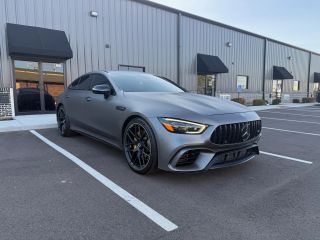
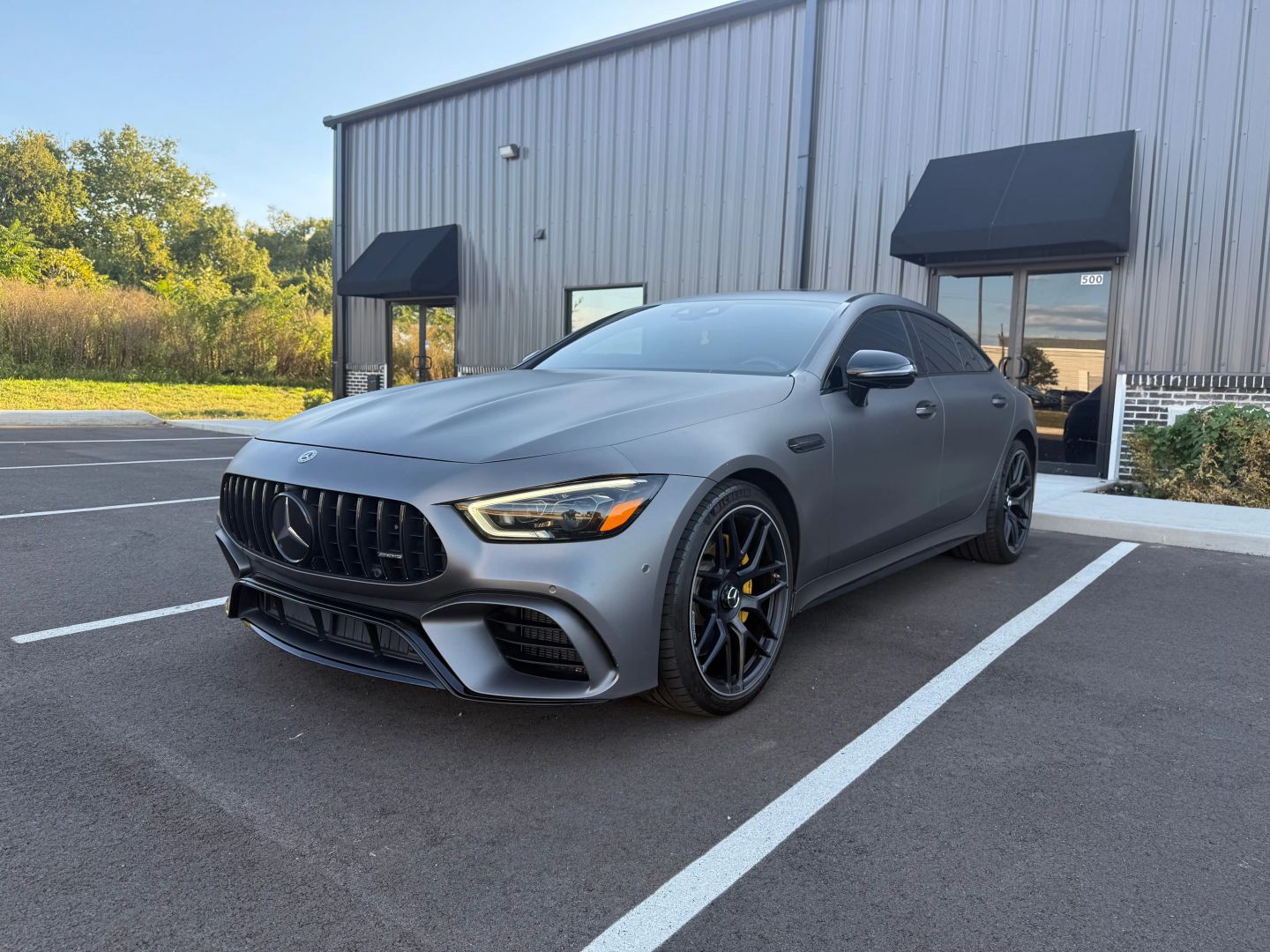
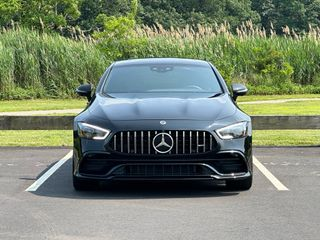
Which Mercedes-Benz model is the dark green sedan?

6Answers
McReid
09/07/2025, 10:45:29 PM

Mercedes-Benz dark green is the Mercedes-Benz E300 Coupe. Manufacturer: Mercedes-Benz is a German automotive brand renowned for luxury and high performance, headquartered in Stuttgart, Germany. It is a member of the Daimler AG group, offering a variety of passenger cars and medium to large commercial vehicles. Model: The Mercedes-Benz E300 Coupe is a mid-range vehicle from Mercedes-Benz, available in both domestically produced and imported versions, with the domestic version being the long-wheelbase model. Exterior: The E300 Coupe is equipped with the ambient interior lighting system from the Mercedes-Benz S-Class. When the lighting system is activated at night, the combination of interior lights enhances the luxurious feel, and the headlights automatically adjust their brightness according to the external environment.

Was this review help?
113
Share
LaMalachi
09/19/2025, 04:24:54 AM

I've been driving for almost twenty years. Mercedes-Benz's dark green sedans aren't a single model but rather custom colors for classic series like the S-Class or E-Class. These deep green variants look particularly classy and timeless. I remember seeing them often on older S350 models, where the color was called Emerald Green Metallic. Driving one in summer gives off a low-key yet luxurious vibe. Maintenance-wise, dark green doesn't show dust easily, but prolonged exposure to UV rays can cause slight fading, so regular ceramic coating is recommended. In the used car market, this color actually holds its value well, as buyers perceive it as premium. If you're looking for specific models, just visit a Mercedes dealership to check current green options for the C-Class, E-Class, or new electric vehicles—Mercedes offers plenty of color choices, so you're bound to find one you love.

Was this review help?
8
Share
Expand All
EmeryFitz
11/02/2025, 03:46:03 AM

I'm an eco-conscious car enthusiast who's been following Mercedes-Benz's green sedans for years. While there isn't a specific dark green model, options like the E-Class or AMG GT series offer colors such as turquoise or emerald green, which pair quite stylishly with the electrification trend. New models like the EQE might also offer custom deep green shades – both fashionable and carbon-reducing. The driving experience is comfortable and quiet, though EV owners should consider charging infrastructure. I recommend checking the official website since colors don't affect performance but enhance personality. Choosing the right shade can elevate daily driving pleasure, and green also represents eco-friendliness with high street presence. Ultimately, Mercedes' diverse lineup warrants test-driving multiple models to find your perfect match.

Was this review help?
1
Share
Expand All
DelLouis
12/16/2025, 03:50:03 AM

I just bought a Mercedes-Benz C-Class sedan and am particularly satisfied with the dark green color I chose. This color isn't tied to a specific model - most Mercedes sedans like the C-Class, A-Class, or CLA-Class can be customized with this deep green option, which costs slightly more but is worth it. For daily driving, the color is understated and not flashy. It hides dirt well, though you'll need to wash it after rain to prevent noticeable water spots. For maintenance, I recommend regularly applying car wash solution to protect the paint and reduce oxidation. The driving experience is quiet and comfortable, perfect for commuting. When occasionally taking friends for rides, they all compliment the premium feel. Personally, I don't think color affects safety features - don't overthink the model, just check out the actual cars and pick your favorite color.

Was this review help?
19
Share
Expand All
GavinFitz
02/05/2026, 09:48:42 PM

As a family car user, we chose the Mercedes-Benz E-Class in dark green, a practical and dirt-resistant color suitable for families with multiple children. While there isn't a dedicated model, the E-Class and CLS-Class often offer dark green options, presenting a stable and safe appearance. Maintenance is straightforward, requiring only waxing every six months, and the color remains timeless while being liked by children. For long family trips, the color doesn't affect comfort or space, only adding to the quiet ambiance. It's recommended to consider light-colored, stain-resistant interior materials when selecting options to avoid obvious stains from children. Other Mercedes-Benz models like the GLC may also come in green shades, but the sedan's dark green is more understated. We recommend test driving to experience it before making a decision.

Was this review help?
10
Share
Expand All
Lewis
05/01/2026, 01:41:15 PM

Having worked as a car mechanic for over a decade, I've handled quite a few dark green Mercedes-Benz sedans, mostly imported E-Class or older S-Class models. The color is often referred to as metallic dark green or similar non-specific names. During repairs, the paint holds up well over time, but touch-ups can be tricky—original factory color matching is necessary to avoid mismatches. The driving experience is smooth and stable, with the color having no impact on handling. The deep green hue doesn't overheat easily under strong sunlight, making it suitable for summer. For maintenance, it's recommended to clean the car monthly to maintain its shine and reduce oxidation spots. If well-preserved, a used dark green Mercedes can even fetch a slightly higher resale value. If you're interested in buying, just ask the dealer directly. Mercedes offers flexible color customization options, but ensuring regular maintenance to extend the vehicle's lifespan is a more cost-effective approach.

Was this review help?
5
Share
Expand All
More Q&A

how do you adjust headlights on a car

Adjusting your car's headlights is a straightforward DIY task that ensures safe nighttime driving. The core process involves parking on a level surface facing a wall, marking the current headlight beam centers on the wall, and then using adjustment screws on the headlight housing to align the beams to the correct height and horizontal aim. Properly aimed headlights maximize your visibility without blinding other drivers. Before you start, you'll need a few basic items: a Phillips screwdriver, a tape measure, masking tape, and a level surface like a garage or empty parking lot facing a wall. It's best to do this at dusk or night for clear visibility of the beams. Step 1: Preparation. Park the car on a level surface about 3 to 5 feet from a wall. Check that the tire pressure is correct and that there isn't any heavy load in the trunk. Bounce the car on its suspension a few times to settle it. Turn on your low-beam headlights. Step 2: Mark the Wall. Place a long strip of horizontal masking tape on the wall, running directly in front of the center of each headlight. Mark the vertical centerline of the car on the tape. Then, mark the exact center point of each headlight's hot spot on the tape. This is your reference point. Step 3: Locate the Adjustment Screws. Pop the hood and locate the adjustment screws on each headlight assembly. There are typically two screws: one controls the vertical aim (up and down) and the other controls the horizontal aim (left and right). They may be labeled or require a Phillips screwdriver. Step 4: Make the Adjustments. Back the car away from the wall exactly 25 feet. The light beams should now be lower than your reference marks. For most vehicles, the top of the most intense part of the low-beam pattern should be 2 inches below the horizontal tape line you made. Use the adjustment screws to center the beams on this new, lower target. Turn the screws slowly, checking the pattern on the wall after each small adjustment. Vehicle Type Recommended Drop at 25 Feet Horizontal Aim Sedan / Coupe 2 inches Straight ahead or slightly outward SUV / Truck 2 to 4 inches (higher vehicles need more drop) Straight ahead With Heavy Load 3 to 5 inches (to compensate for rear sag) Straight ahead Projector Headlights Follow the sharp cut-off line Align the "step" pattern After adjusting the low beams, test your high beams briefly; they should be centered and significantly brighter. Always do a real-world test drive on a dark road to confirm the aim feels correct. If the headlights are still misaligned or you're uncomfortable, a professional mechanic can perform a precise alignment with an optical aimer for a small fee.
102
Share

how can i buy lease car with 9 points

Buying your leased car is often a straightforward process, but having "9 points" on your record—which typically refers to a poor credit score or a high-risk driver status—adds significant complications. The core challenge isn't the lease-end purchase itself; it's securing a new auto loan with adverse credit. Lenders will view you as high-risk, leading to higher interest rates or outright denial. The key is to proactively manage your credit and shop for financing before your lease term ends. The first step is to contact your leasing company for the vehicle's residual value —the pre-determined purchase price set in your original contract. This is non-negotiable. Then, you must get a payoff quote , which includes the residual value plus any remaining payments and purchase fees. The real hurdle is financing. With 9 points, traditional banks and credit unions may decline your application. Your primary options are: Specialized Lenders: Seek out lenders that specialize in subprime auto loans for borrowers with poor credit. Be prepared for significantly higher Annual Percentage Rates (APR). Buy-Here-Pay-Here Dealerships: These in-house financing options are more accessible but come with the highest costs and require careful scrutiny of the terms. Co-signer: Adding a co-signer with strong credit can dramatically improve your chances of approval and secure a better rate. Before committing, it's crucial to assess the car's actual market value using tools like Kelley Blue Book (KBB). If the residual value is higher than the current market value, you are effectively overpaying. Here’s a simplified cost comparison to illustrate potential financial outcomes based on different credit tiers: Credit Tier Estimated APR on a $20,000 Loan (60 months) Total Interest Paid Likelihood of Approval with "9 Points" Super Prime (781-850) 5.5% $2,928 Very Low Prime (661-780) 7.5% $4,044 Low Non-Prime (601-660) 11.5% $6,334 Possible Subprime (501-600) 16.5% $9,412 More Likely Deep Subprime (300-500) 19.5% $11,520 Most Likely (but costly) Ultimately, improving your credit score before your lease ends is the most cost-effective strategy. Check your credit report for errors, pay down existing debt, and make all payments on time to increase your financing options.
104
Share

how do you make your car shoot flames

Making your car shoot flames, a phenomenon known as 'afterfire' or 'flame mapping,' is primarily achieved by tuning the engine's ECU (Engine Control Unit) to intentionally create an overly rich air-fuel mixture. This causes unburned fuel to travel into the hot exhaust system, where it ignites. This practice is generally not recommended for street-driven vehicles due to significant risks of damaging your engine, catalytic converter, and exhaust, plus potential legal issues. It's a technique more suited for purpose-built show or race cars. The most common method involves an aggressive tune that retards the ignition timing and adds extra fuel during deceleration or on overrun (when you lift off the throttle). This dumps raw fuel into the exhaust headers or a specially designed 'flame kit' that uses an additional spark plug to ignite the fuel for a more controlled effect. The required modifications are substantial and carry real consequences. Modification / Factor Description Potential Risk / Cost ECU Tune/Remap Essential. Adjusts fuel injection and ignition timing to run rich on overrun. High risk of engine damage (piston, valve, ring failure) if done incorrectly. Cost: $500-$2000+. Catless Downpipe/Exhaust Removing the catalytic converter is often necessary, as it's designed to burn off excess fuel. Illegal for street use in all US states (federal offense). Fines and failed emissions tests. Aftermarket Ignition System A 'flame kit' or second spark plug in the exhaust for controlled ignition. Adds complexity; potential for exhaust damage if not installed correctly. Cost: $200-$800. Increased Exhaust Temperature Sustained flame shooting drastically increases heat in the exhaust system. Can warp or melt exhaust components, including turbos and manifolds. Legal & Safety Issues Visible flames from a vehicle on public roads are a major safety and legal hazard. Likely to attract police attention, resulting in citations, fines, or impoundment. Insurance Implications Modifying a car for this purpose may void your insurance policy. An insurer can deny a claim for an accident or fire related to these modifications. Ultimately, while it looks dramatic in movies and at car shows, making a street-legal car shoot flames is an expensive and risky modification that compromises reliability, legality, and safety. The potential for severe mechanical damage and legal trouble far outweighs the visual appeal for most owners.
107
Share

how do you read a vin number on a car

A Vehicle Identification Number (VIN) is a unique 17-character code that acts as your car's fingerprint. You can find it in several key locations: the most common is on the driver's side dashboard, visible through the windshield. It's also stamped on the driver's side doorjamb (on a sticker or metal plate) and on important documents like the vehicle title and registration. To read a VIN, you break it down into three main sections. The first three characters are the World Manufacturer Identifier (WMI) . This tells you where the car was built and by which company. The next six characters (positions 4 through 9) form the Vehicle Descriptor Section (VDS) . This provides details about the model, body type, engine, and other specific features. The final eight characters (positions 10 through 17) are the Vehicle Identifier Section (VIS) , which includes the model year, assembly plant, and a unique serial number. Here is a breakdown of what each character in a VIN represents: VIN Position What It Represents Example Data Points 1 Country of Origin 1, 4, 5 (USA); 2 (Canada); 3 (Mexico); J (Japan); W (Germany); K (South Korea) 2 Manufacturer G (General Motors); F (Ford); B (BMW); T (Toyota) 3 Vehicle Type Often indicates the division or vehicle type (e.g., truck, SUV) 4-8 Model, Body Style, Engine Specific codes for model (e.g., Camry), body (sedan), and engine size 9 Check Digit A calculated digit used to verify the VIN's authenticity 10 Model Year L (1990); Y (2000); A (2010); L (2020); P (2023) 11 Assembly Plant A specific code for the factory where the car was built 12-17 Sequential Production Number The unique serial number for that specific vehicle The most reliable way to get a full decode is to use a free online VIN decoder from a reputable source like the National Highway Traffic Safety Administration (NHTSA). This will give you a precise report on the car's factory specifications, which is crucial when buying a used car to verify its equipment and check for recalls.
111
Share

how can snakes get in a closed up car

Snakes can get into a closed-up car by exploiting tiny gaps and openings that are often overlooked. The most common entry points are damaged weather stripping around doors and windows, openings in the ventilation system under the dashboard or hood, and through the interior from the trunk if the rear seat pass-through isn't sealed. A snake's flexible skull and ribs allow it to squeeze through spaces barely wider than its head, making even a quarter-inch crack a potential doorway. They are often drawn inside by the shelter from extreme temperatures and the scent of rodents that may have already taken residence. To understand the risk, it helps to know how small an opening a snake can exploit. The following table lists common snake species and the minimum gaps they can navigate. Snake Species Average Length Minimum Gap Size Common Entry Point Garter Snake 2-3 feet 1/4 inch (6 mm) Damaged door seal Rat Snake 3-6 feet 1/2 inch (12 mm) Ventilation system Corn Snake 2-5 feet 3/8 inch (9 mm) Trunk/Seat pass-through Copperhead 2-3 feet 3/8 inch (9 mm) Undercarriage opening Gopher Snake 4-5 feet 1/2 inch (12 mm) Hood gap near windshield Prevention is the most effective strategy. If a car has been parked for an extended period, especially in a grassy or rural area, always inspect the interior before entering. Visually check under the seats and dashboard. Before opening the hood, tap on it firmly a few times, as the vibrations can encourage a hiding snake to retreat. Keeping the area around your parked car clear of tall grass, wood piles, and debris reduces the appeal of the location for snakes in the first place. Sealing any visible gaps in the firewalls and ensuring trunk and door seals are intact are key long-term solutions.
109
Share

how can i compare car insurance rates

The most effective way to compare car insurance rates is to get quotes from multiple companies . Your premium is calculated based on a unique combination of personal and vehicle factors, so there's no single "cheapest" insurer for everyone. The best method is to use a combination of online comparison tools and direct quotes, ensuring you provide identical information for an apples-to-apples comparison. Your driving profile is the primary factor. Insurers assess your age, driving history (including tickets and accidents), credit-based insurance score (in most states), and even your ZIP code . A driver with a clean record in a rural area will see vastly different rates than a new driver in a dense urban center. The vehicle itself is equally important. Insurers use data on claim frequency and repair costs . A sports car with a powerful engine will cost more to insure than a family minivan with high safety ratings. You can often look up "insurance relativity" scores for specific models before you buy. When you get quotes, you must compare identical coverage. A lower price might mean less protection. Pay close attention to: Liability limits : State minimums are often insufficient; higher limits provide crucial protection. Deductibles : Choosing a higher deductible for comprehensive and collision coverage lowers your premium, but you pay more out-of-pocket if you file a claim. Optional coverages : Like uninsured/underinsured motorist protection or rental car reimbursement. Don't forget to ask about discounts. Common ones include multi-policy (bundling with home insurance), multi-vehicle, good driver, good student, and paying your premium in full. Comparison Factor Example Scenarios & Impact on Premium Driving Record A single at-fault accident can increase premiums by 30-50% on average for three to five years. Age A 20-year-old driver may pay over 100% more than a 40-year-old with an identical record and car. Credit-Based Score In states where it's used, a poor score can double your premium compared to an excellent one. Vehicle Type Insuring a full-size pickup truck can be 15% cheaper than a mid-size sports car for the same driver. Coverage Level Increasing liability limits from 50/100/50 to 100/300/100 might only raise the premium 10-15%. Deductible Raising your collision deductible from $500 to $1,000 could save you 10-15% on that portion of the premium. Annual Mileage Driving 5,000 miles a year vs. 15,000 can result in a 5-10% discount. The final step is to research the insurer's reputation for customer service and claims handling through resources like J.D. Power ratings or the National Association of Insurance Commissioners (NAIC) complaint index.
102
Share
Cookie
Cookie Settings
© 2025 Servanan International Pte. Ltd.