···
Log in / Register

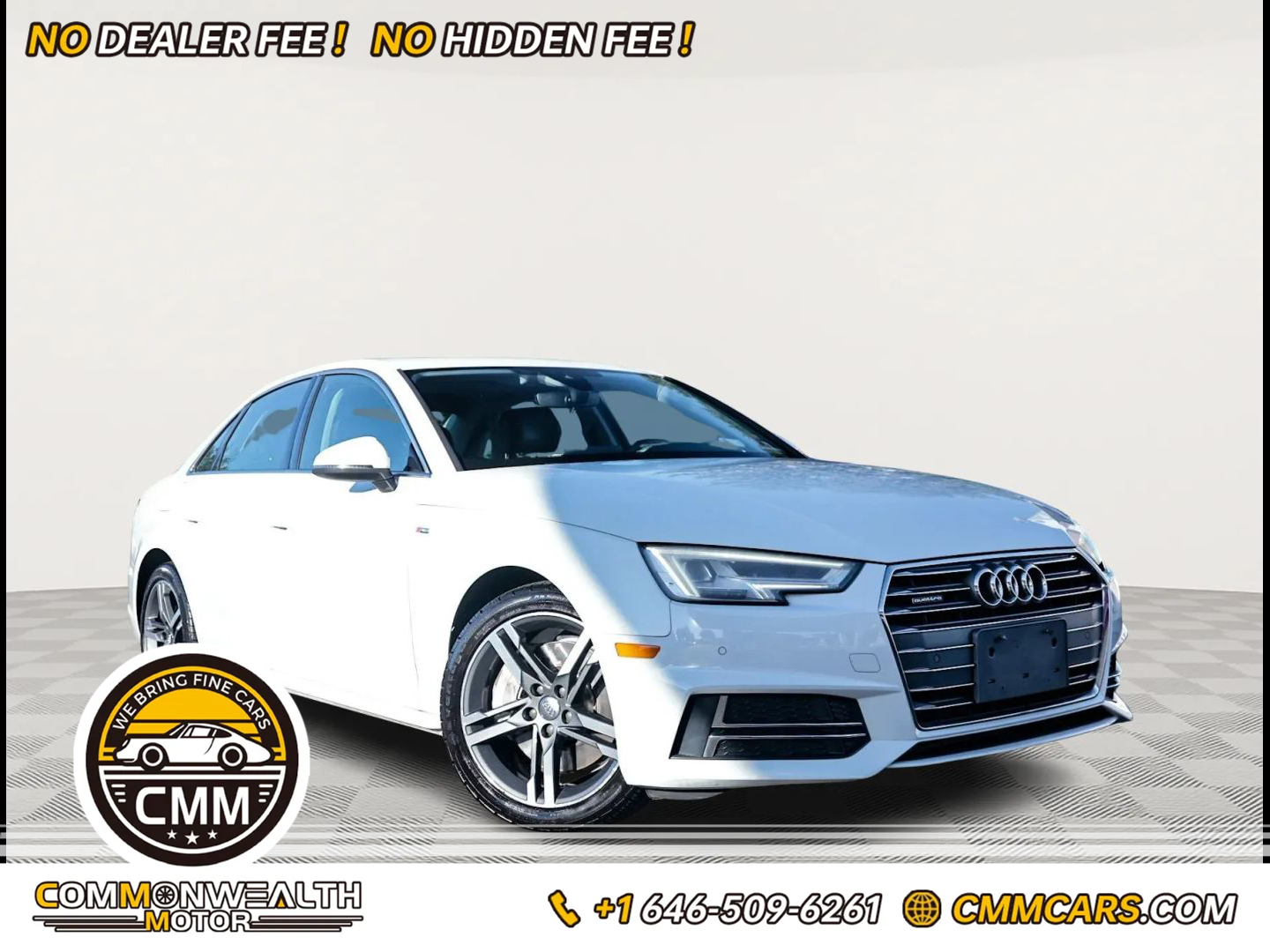
What kind of car is the Audi A4?

6Answers
StEverett
09/05/2025, 02:05:07 AM

Audi A4 is a mid-size car, which belongs to the same class as BMW 3 Series and Mercedes-Benz C-Class. More relevant information is as follows: 1. Engine: The Audi A4 is equipped with two types of engines: a low-power version 2.0-liter turbocharged engine and a high-power version 2.0-liter turbocharged engine. The low-power version 2.0-liter turbocharged engine of the Audi A4 delivers 190 horsepower and a maximum torque of 320 Nm. The engine's maximum power output is achieved between 4,200 and 6,000 rpm, while the maximum torque is available between 1,450 and 4,200 rpm. This engine features hybrid injection technology and utilizes an aluminum cylinder head with a cast iron cylinder block. The high-power version 2.0-liter turbocharged engine produces 252 horsepower and a maximum torque of 370 Nm. The engine's maximum power output is achieved between 5,000 and 6,000 rpm, while the maximum torque is available between 1,600 and 4,500 rpm. This engine also features hybrid injection technology and uses an aluminum cylinder head with a cast iron cylinder block. 2. Dual-clutch Transmission: The dual-clutch transmission enhances gear shifting speed and transmission efficiency. It is a product developed based on manual transmissions, and its structure is similar to that of a manual transmission.

Was this review help?
106
Share
LaJohn
09/17/2025, 02:26:23 AM

I've always been a car enthusiast and am fascinated by the history of the Audi A4. As the backbone of the Audi family, it has gone through several generations since its debut in 1994, initially replacing the Audi 80. Each update has enhanced technology and safety features. For example, the first generation emphasized sporty driving, later introducing turbocharged engines and the quattro all-wheel-drive system. Nowadays, the new models even come with hybrid versions, which are eco-friendly and fuel-efficient. The A4 is positioned in the luxury midsize car market, competing with the Mercedes-Benz C-Class and BMW 3 Series, but Audi's balanced style makes it suitable for daily commutes and occasional high-speed drives. The body design is classic and timeless, while the interior has evolved from simplicity to a more digital feel, with technologies like the virtual cockpit making driving more enjoyable. As a long-time fan, I believe the A4's evolution reflects Audi's innovative spirit, and it's still worth considering as a used car due to its strong resale value and consistently excellent driving experience.

Was this review help?
5
Share
Expand All
McHarper
10/31/2025, 02:57:25 AM

When testing various cars, the Audi A4 gives me a very comfortable feeling. Its engine is usually a 2.0-liter turbocharged unit, providing quick starts and smooth acceleration. When paired with the quattro all-wheel drive, it remains stable even on rainy or snowy roads. In terms of handling, the steering wheel is precise and agile, and the suspension leans towards comfort without losing its sporty feel, ensuring a smooth ride even on winding roads. Fuel consumption is well-controlled, averaging around 8 liters in the city and even less on the highway. The sound insulation is excellent, with almost no wind or engine noise inside the cabin, which is a big plus for long-distance driving. The seats are ergonomically designed, making hours of driving comfortable without back pain. Safety features are comprehensive, including an automatic braking system, which provides peace of mind. The infotainment system responds quickly and supports CarPlay for convenient navigation and music. I believe the A4 successfully balances power and comfort, making it ideal for those who want both spirited driving and practicality.

Was this review help?
18
Share
Expand All
Kendra
12/14/2025, 02:05:26 AM

As an ordinary mom, I chose the Audi A4 for its exceptional practicality. The spacious interior is perfect for daily family use—the back seat comfortably fits two kids plus a car seat without feeling cramped, and the trunk easily accommodates a stroller and multiple storage bins. With modest fuel consumption, a single tank lasts about ten days for my weekly grocery runs and school commutes covering dozens of kilometers. The durable and easy-to-clean interior materials handle kids’ snack spills effortlessly. Safety features like blind-spot monitoring give me peace of mind when driving my children to school. Dual-zone air conditioning keeps the whole family cool and comfortable in summer. Its compact size makes city parking a breeze, though the trunk is smaller than an SUV’s and can’t hold as much. Long maintenance intervals, reliable quality, and fewer issues justify the slightly higher upkeep costs for hassle-free ownership. Overall, the A4 is my dependable daily companion—comfortable and low-maintenance.

Was this review help?
11
Share
Expand All
OAlexa
02/03/2026, 03:05:38 AM

In the business circle, I've seen quite a few Audi A4s. It's positioned as a mid-to-high-end luxury car, competing fiercely with the Mercedes-Benz C-Class and BMW 3 Series. I think its highlights lie in design and technology, such as its streamlined and understated yet elegant exterior, modern touchscreen interior controls, and a more affordable price compared to its peers, offering good value for money. It has stable market performance, with younger consumers favoring the sporty S-line version and long-time users preferring the high-performance S4 model with strong power. Its resale value is above average, making it easy to sell second-hand. Technological features like LED headlights with long-range illumination, quick system updates, and safety configurations such as collision prevention attract buyers. As a business car, its brand image is professional and highly comfortable, with many customers praising the rear seats. I believe the A4 is a wise choice in the midsize car market.

Was this review help?
3
Share
Expand All
LeilaniRose
04/29/2026, 12:42:29 PM

I bought an Audi A4 five years ago and the experience has been fantastic. It's my first luxury car, chosen for its understated yet refined exterior, comfortable ride that doesn't fatigue on long trips, and excellent seat support. The engine runs quietly with an average fuel consumption of around 7 liters, which is even more economical on highways. Maintenance costs are slightly higher but it has few faults and strong reliability. The space is sufficient for four people, and the trunk can accommodate luggage. Minor issues occasionally arise, like the touchscreen being slow to respond, but after-sales service resolves them quickly. Features like automatic wipers and connected navigation are a joy to use. When it's time to change cars, I'll definitely consider the Audi series again because the A4's quality is trustworthy and a pleasure to drive.

Was this review help?
5
Share
Expand All
More Q&A

Which Generation Does the 2021 Camry Belong To?

The 2021 Camry belongs to the eighth generation. The Camry models produced from 2017 onwards, including the latest versions, all fall under the eighth generation. The 2021 Camry comes in ten variants, all with the same body dimensions: 4885mm in length, 1840mm in width, and 1455mm in height, with a wheelbase of 2825mm. In terms of fuel tank capacity, the 2.5S Sport, 2.0E Elite, 2.5G Luxury, 2.5Q Flagship, 2.0G Luxury, and 2.0S Sport models have a 60L fuel tank. The Hybrid 2.5HQ Flagship, Hybrid 2.5HGVP Leading, Hybrid 2.5HS Sport, and Hybrid 2.5HG Luxury models have a 49L fuel tank. Regarding fuel consumption, according to the official NEDC combined figures, the 2.5S Sport, 2.5G Luxury, and 2.5Q Flagship models consume 6L/100km; the 2.0E Elite consumes 5.5L/100km; the Hybrid 2.5HQ Flagship, Hybrid 2.5HGVP Leading, Hybrid 2.5HS Sport, and Hybrid 2.5HG Luxury models consume 4.1L/100km; the 2.0G Luxury consumes 5.7L/100km; and the 2.0S Sport consumes 5.8L/100km. In terms of powertrain, this model is equipped with two engines: a 2.0-liter naturally aspirated engine and a 2.5-liter naturally aspirated engine. The hybrid version also uses a 2.5-liter naturally aspirated engine, but its tuning differs from the gasoline version. The 2.0-liter naturally aspirated engine delivers 178 horsepower and 210 Nm of maximum torque, achieving peak torque at 4400-5200 rpm and peak power at 6600 rpm. This engine features hybrid injection technology and an aluminum cylinder head and block. It is paired with a CVT transmission. The 2.5-liter naturally aspirated engine produces 209 horsepower and 250 Nm of maximum torque, achieving peak power at 6600 rpm and peak torque at 5000 rpm. This engine also features hybrid injection technology and an aluminum cylinder head and block. It is paired with an 8-speed automatic transmission. Historical Camry Release Timeline: First Generation: 1982-1986; Second Generation: 1986-1991; Third Generation: 1991-1996; Fourth Generation: 1996-2001; Fifth Generation: 2001-2006; Sixth Generation: 2006-2011; Seventh Generation: 2011-2017; Eighth Generation: 2017-Present.
110
Share

What Causes the Engine Warning Light to Illuminate in a Buick Vehicle?

There are primarily 7 reasons for the engine warning light to illuminate: Sensor malfunction: The sensors referred to here include those for coolant temperature, crankshaft position, air flow, intake air temperature, oxygen sensors, etc. When these sensors are damaged, have poor contact, or experience signal interruption, the vehicle's ECU cannot accurately obtain engine data, which will trigger the engine warning light. Fuel quality issues: If fuel and engine oil are not added as required by the manufacturer, it may cause engine wear, leading to the illumination of the warning light. Poor combustion of the air-fuel mixture: Poor combustion can result in engine carbon buildup or knocking. Once detected by the oxygen sensor and reported to the ECU, the warning light will illuminate as an alert. Spark plug failure, ignition coil failure, fuel pump failure, and fuel line blockages can all cause poor combustion of the engine's air-fuel mixture. Turbocharging issues: The intake turbocharging pipeline and turbocharger can also cause the engine warning light to illuminate. The most common issue is turbocharger damage, accompanied by symptoms such as oil leaks, excessive oil consumption, reduced power, metallic noises, and blue or black smoke from the exhaust pipe. Intake issues: If there is a problem with the vehicle's intake, it may lead to engine pipeline blockages, and in severe cases, cause the engine warning light to illuminate. A dirty air filter that is not cleaned regularly can lead to intake problems. Exhaust issues: Exhaust faults can also cause the engine warning light to illuminate. The rear oxygen sensor, catalytic converter, exhaust camshaft, and bearing failures are all causes of exhaust problems, with the catalytic converter being the most common. Using leaded gasoline, lead or silicon-containing lubricant additives, physical damage to the catalytic converter, or faults in the engine's fuel supply system can easily lead to catalytic converter failure. Anti-theft system malfunction: If the vehicle's electronic anti-theft system malfunctions, or if the anti-theft controller does not match the engine electronic controller, the anti-theft system can also prevent the engine from operating normally, while the engine warning light illuminates. If the engine warning light illuminates, follow these steps: First, check if the engine is running normally and if there are issues such as shaking or black smoke. If so, avoid restarting the engine. Particularly, do not restart the engine if the red warning light is on. If the engine can be started, turn it off for 5-10 minutes. Without pressing the brake, press the start button once or turn the key halfway to the 'on' position without depressing the clutch. The vehicle will perform a self-check after powering on. Wait for 5-10 seconds and observe if the warning light on the dashboard turns off. If the warning light remains on, visit a service station as soon as possible to identify the cause. The service station can use a portable diagnostic tool to read the fault codes, obtain fault information, and perform targeted repairs.
103
Share

What is the working principle of an automatic transmission (AT)?

Automatic transmission (AT) working principle: In a space filled with hydraulic oil, two turbine blades are installed, connected to the power input end and output end respectively. The powerful vortex generated by the impeller at the power input end drives the impeller at the output end, thereby achieving power transmission. The core of the automatic transmission lies in achieving automatic gear shifting, which uses clutch shifting to enable uninterrupted power shifting, ensuring smooth gear changes. Automatic shifting means that while the car is in motion, the driver presses the accelerator pedal as needed during the driving process, and the automatic transmission can automatically shift into different gears based on the engine load and the vehicle's operating conditions.
115
Share

What does one-touch window control mean?

One-touch window control refers to a system where the car window glass can be fully raised or lowered with a single press of a button. Generally, mid-to-high-end vehicle models are equipped with this one-touch window function, primarily designed for the convenience of drivers and passengers, avoiding distraction caused by continuous window operation and thereby improving safety. The window control switch with one-touch function has two positions: the first position works like a regular power window switch, while the second position allows the window to automatically open or close completely with just a single press and release. With conventional power windows, the user needs to hold the switch until the window reaches the desired position, releasing the button to stop the movement.
101
Share

What is the working principle of an automatic transmission in cars?

The working principle of an automatic transmission in cars: It utilizes planetary gear mechanisms to change gears, automatically adjusting the gear ratio based on the degree of throttle pedal input and vehicle speed changes. The driver only needs to control the speed by operating the accelerator pedal. Automatic transmissions are easy to operate, provide a comfortable driving experience, and help reduce driver fatigue. There are three common types of automatic transmissions in cars: Hydraulic Automatic Transmission (AT), Continuously Variable Transmission (CVT), and Automated Manual Transmission (AMT). Among them, the Hydraulic Automatic Transmission (AT) consists of a torque converter, planetary gears, and a hydraulic control system, achieving gear changes and torque variation through hydraulic power transmission and gear combinations.
106
Share

Which Mercedes-Benz models have a panoramic sunroof?

Mercedes-Benz models equipped with panoramic sunroofs include: A-Class, E-Class, GLA, GLC, GLB, C-Class 260L, and 260 4MATIC. Panoramic sunroofs can be categorized into fixed type, segmented opening type, and full-opening type. Without structural damage, the service life of a car sunroof can exceed 10 years, and the same applies to panoramic sunroofs. Mercedes-Benz is a renowned German automotive brand celebrated for luxury and high performance, headquartered in Stuttgart, Germany. As a member of Daimler AG, its product portfolio encompasses various passenger vehicles and medium-to-large commercial vehicles.
115
Share
Cookie
Cookie Settings
© 2025 Servanan International Pte. Ltd.