···
Log in / Register

what cars can you drive on your learners nsw

5Answers
LeManuel
12/24/2025, 06:07:05 AM

On your learner licence in NSW, you can drive any car that is listed on the Official Australian Rollover Risk Rating (ARRR) list and has a power-to-weight ratio of no more than 130kW per tonne. The most critical rule is that the vehicle must be a passenger car or car-based derivative; you cannot drive motorcycles, trucks, or high-performance vehicles. The car must also be registered, have a supervising driver seated next to you who holds a full Australian licence, and display L-plates clearly on the front and back.

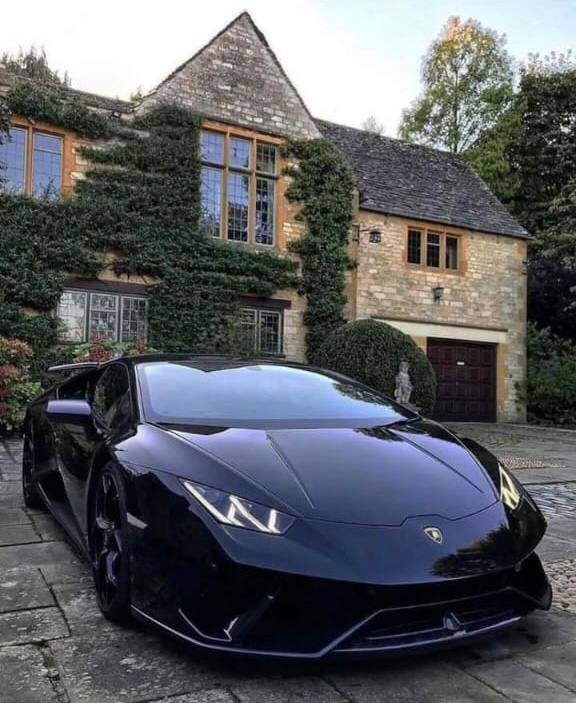
The power-to-weight rule is designed to prevent learner drivers from using high-powered vehicles that could be difficult to control. To calculate this ratio, you divide the engine's power in kilowatts (kW) by the vehicle's tare mass (empty weight) in tonnes. Most common small to medium cars, like a Toyota Corolla or Hyundai i30, fall well within this limit. However, many sports cars and high-performance variants of regular models exceed it and are off-limits.

A key resource is the Vehicle Safety Risk Assessor (VSRA) tool provided by Transport for NSW. You can enter any car's make, model, and year to get an instant yes/no answer on its eligibility. It's the most reliable method, as it accounts for all specific variants.

Example of Eligible Cars (Power-to-Weight Ratio)Example of Prohibited Cars (Exceed 130kW/t)
Toyota Corolla Ascent (72 kW/t)Ford Mustang GT (192 kW/t)
Hyundai i30 Active (82 kW/t)Volkswagen Golf GTI (142 kW/t)
Mazda 3 Neo (82 kW/t)Subaru WRX (149 kW/t)
Kia Cerato S (81 kW/t)BMW M3 (Various models exceed limit)
Honda Civic VTi (88 kW/t)Nissan 370Z (175 kW/t)

Finally, the vehicle must not have any prohibited modifications, such as engine swaps that increase power beyond the limit or certain suspension alterations. Always double-check using the official VSRA tool before you get behind the wheel to ensure you're complying with the law and staying safe.

Was this review help?
104
Share
DelAshlyn
12/31/2025, 11:34:17 PM

Stick to the common, sensible cars. Think Toyota Corolla, Mazda 3, Hyundai i30—the kind of cars you see everywhere. They're automatically legal, cheap to run, and forgiving for a new driver. The main thing to watch out for is the "sleeper" sports version of a normal car. A regular Ford Focus is fine, but a Focus ST is not. Just use the official government website checker; type in the car's details, and it gives you a straight yes or no. Don't guess, just check.

Was this review help?
19
Share
Expand All
ColeAnn
01/08/2026, 12:01:51 PM

From an instructor's view, the best learner car is safe and easy to handle. The NSW rules support this by banning overly powerful cars. Beyond legality, choose a car with good visibility, light steering, and predictable handling. A small hatchback is ideal. The rules aren't there to be a buzzkill; they're based on safety data to reduce crash risks for inexperienced drivers. Focus on learning fundamental skills in a suitable car—smooth steering, braking, and observation—not on what's fast. The right car builds confidence correctly.

Was this review help?
10
Share
Expand All
DiEmerson
01/08/2026, 12:04:05 PM

I remember this being confusing when my son got his Ls. The "130 kilowatts per tonne" sounds like rocket science, but you don't need to do math. The government has a free online checker. You just pick the car's make, model, and year from dropdown menus, and it instantly tells you if it's legal. We used it to check a used Ford Falcon he liked, and it was a no-go. We ended up with a Mazda 2. It's that simple—use the tool, get the answer, avoid a fine.

Was this review help?
17
Share
Expand All
EliFitz
01/15/2026, 07:40:07 PM

The legal foundation is clear: the vehicle must be a class 'C' vehicle (passenger car) and meet the power-to-weight criteria. The onus is on the learner driver (and the supervising driver) to ensure compliance. Relying on the official VSRA tool is your best defense, as it reflects the most current database. Driving a prohibited vehicle on a learner licence can result in significant fines and demerit points, potentially delaying your progress to a provisional licence. Always verify eligibility through the official Transport for NSW website to ensure full compliance.

Was this review help?
5
Share
Expand All
More Q&A

What does the automotive ACM module mean?

Automotive ACM module, the full English name is Auxiliary-Control-Module, which means auxiliary control module in Chinese. Definition of ACM module: The ACM (Active Control Mount) system needs to be connected to the engine's intake manifold through an electromagnetic control valve (ECM), which controls it. Function of ACM module: Under different conditions, the ACM (Active Control Mount) system provides corresponding forces to counteract the engine's impact inertia, effectively absorbing engine vibrations and the engine shake during idle start-stop functions, achieving more stable driving control and ride comfort.
108
Share

What tires are best for the Changan CS75?

Yokohama tires are the tires used for the Changan CS75, with the specification being 225/65R17. Yokohama has developed tire design technology that reduces air resistance during vehicle operation. This technology, as a new eco-friendly method to decrease tire rolling resistance, improves the airflow around the tires during driving, thereby achieving fuel-saving and environmental benefits. Yokohama Tires, founded in 1917 and formerly known as Yokohama Rubber, officially changed its name in China to Yokohama in 2008. It has developed tire design technology that reduces air resistance during vehicle operation. When using Yokohama tires in daily life, the following points should be noted: Regularly inspect the tire surface for cracks, deformations, or other defects. Due to wear from driving, the tread grooves gradually become shallow. If the tread wears out completely, the tire will lose its drainage and anti-skid functions, significantly reducing the vehicle's performance. Small cracks may also pose a risk of tire blowouts at high speeds. Additionally, promptly remove pebbles lodged in the grooves. Try to park on level ground. Avoid parking on roads with thick, sharp, or pointed stones. Do not park near or in contact with petroleum products, acids, or other materials that may deteriorate rubber. After parking, the driver should not turn the steering wheel, as this action accelerates tire wear. Do not splash water to cool the tires. In hot weather or during high-speed driving, tires are prone to overheating, and the air pressure may increase. In such cases, park to allow the tires to cool naturally. Avoid releasing air to reduce pressure or splashing water to cool the tires, as this can lead to abnormal aging of the tread rubber. Avoid sudden braking. Try to minimize frequent or hard braking to prevent accelerated tread wear caused by dragging between the tires and the ground.
115
Share

What is the assist button in a car?

The assist button in a car refers to the auxiliary brake. When 'assist-plus' appears on the car dashboard, it indicates a system assisting during parking. Definition of auxiliary brake: An auxiliary brake is a safety assist device used when parking or reversing a car. Currently, the mainstream system consists of a reversing camera and an in-car display forming the parking assist system. Function of auxiliary brake: When reversing, the front display can show real-time video from the rear reversing camera, making reversing safer. The system is composed of ultrasonic sensors (commonly known as probes), a controller, and a display (or buzzer).
111
Share

What does a 7-speed wet dual-clutch transmission mean in cars?

Automotive 7-speed wet dual-clutch refers to a dual-clutch transmission with 7 forward gears, utilizing wet-type clutches. Definition of Dual-Clutch: Dual-clutch, namely Dual-Clutch Transmission (DCT), differs from conventional automatic transmission systems. It belongs to both manual and automatic transmissions, combining the flexibility of manual transmissions with the comfort of automatic transmissions while providing uninterrupted power output. Working Principle of Dual-Clutch: The dual-clutch automatic transmission is based on the manual transmission. Simply put, this transmission type has two clutches: one controls gears 1, 3, 5, and 7, while the other controls gears 2, 4, and 6. When using first gear, second gear is already prepared, similarly reducing shift time significantly with no delay.
103
Share

What are the hazards of running a car engine at 4000 RPM?

The hazard of running a car engine at 4000 RPM is significantly shortening the engine's lifespan. Pros and cons of running at 4000 RPM: When accelerating to overtake, temporarily increasing the RPM to 4000 to obtain maximum torque won't damage the engine. In fact, it can help remove carbon deposits from the engine to some extent, which benefits the engine. However, if the engine is frequently kept at around 4000 RPM, its lifespan will be substantially reduced. Conditions for 4000 RPM not harming the engine: Since 4000 RPM is generally around the peak torque or maximum power RPM range, there's a prerequisite for high RPM operation not damaging the engine - the coolant temperature gauge must reach about 90°C. Immediately revving the engine to 4000 RPM after startup is most harmful to the engine.
119
Share

What does CNG mean in cars?

CNG printed on a car indicates that the vehicle uses compressed natural gas as its fuel. Definition of CNG: CNG, or Compressed Natural Gas (abbreviated as CNG), is natural gas that has been pressurized and stored in a gaseous state within containers. The composition of CNG is the same as pipeline natural gas, with methane being the primary component. Advantages of CNG: CNG is an ideal alternative energy source for vehicles, with application technology that has become increasingly mature over decades of development. It features low cost, high efficiency, no pollution, and safe and convenient usage.
120
Share
Cookie
Cookie Settings
© 2025 Servanan International Pte. Ltd.