···
Log in / Register

How to Exit the Navigation System in Volkswagen Tiguan L?

6Answers
VanLandon
09/04/2025, 03:44:10 AM

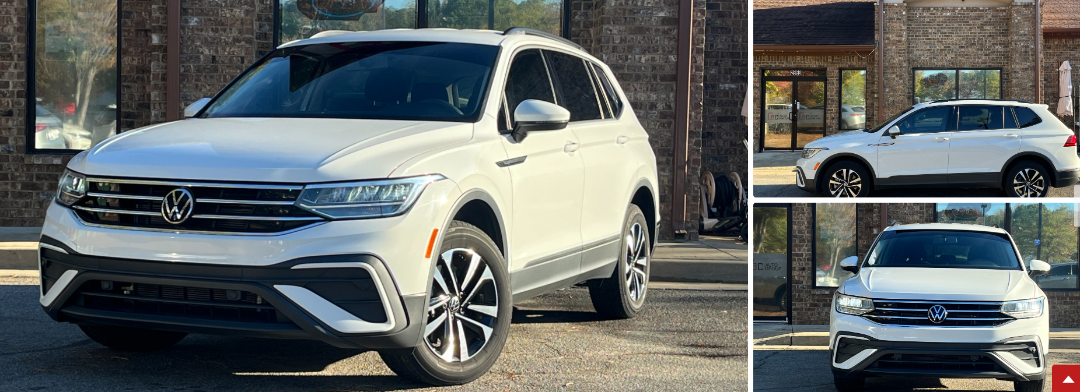
The method to exit the navigation system in Volkswagen Tiguan L is: locate the navigation settings, turn off the traffic alerts, or press the stop function on the navigation button again. Taking the 2021 Volkswagen Tiguan L as an example, it belongs to the mid-size SUV category, with body dimensions of: length 4712mm, width 1839mm, height 1673mm, wheelbase 2791mm, fuel tank capacity 60l, and curb weight 1650kg. The 2021 Volkswagen Tiguan L features a front suspension of MacPherson independent suspension and a rear suspension of multi-link independent suspension. It is equipped with a 2.0l turbocharged engine, delivering a maximum horsepower of 186ps, maximum power of 137kw, maximum torque of 320nm, and is paired with a 7-speed dual-clutch transmission.

Was this review help?
108
Share
LeCali
09/16/2025, 04:32:27 AM

As a long-time owner of the Volkswagen Tiguan L, I've found the navigation exit method quite straightforward. Usually, just press the NAV button on the steering wheel once to return to the main screen without distracting from driving. If you accidentally activate navigation, remember to look for the "Back" or "Exit" icon on the central control screen and tap it - the operation is intuitive. From a safety perspective, I recommend performing these operations when the vehicle is stationary rather than while driving. I've also developed the habit of regularly checking for system updates to prevent navigation freezing issues, ensuring smoother exits. Overall, the car is thoughtfully designed with well-positioned controls, making this method particularly convenient for frequent long-distance drivers like myself.

Was this review help?
3
Share
Expand All
ORowan
10/30/2025, 10:17:45 PM

As a frequent-driving novice, when using the Touareg L, I simply press the NAV button on the steering wheel control to exit navigation instantly without wasting any time. Alternatively, tapping the arrow icon at the bottom of the touchscreen also allows for a quick exit with minimal steps. The system even supports voice commands—just say "Close navigation" (requires prior voice setup). I often test different scenarios, like quickly exiting during active navigation, where the steering wheel button proves fastest. For improved stability, regular cache clearing is recommended—it noticeably enhances navigation responsiveness, a handy trick. Bottom line: keep it simple—key operations are conveniently centralized on the steering wheel.

Was this review help?
19
Share
Expand All
MacDaniel
12/13/2025, 09:25:47 PM

When driving, safety should be prioritized when exiting navigation. In the Tiguan L, there is a dedicated control button on the steering wheel—pressing the NAV button immediately returns you to the main menu with fewer steps and lower risk. Alternatively, you can tap the back button on the central control screen, but it's safer to operate when parked. I prefer to handle navigation exit after stopping to avoid distracted driving. If the system occasionally responds slowly, try restarting the central control screen by holding the power button for a few seconds. This method is both simple and reliable, and it can also extend the device's lifespan. Regular maintenance of the navigation software is also important, as updates can make the exit process more efficient.

Was this review help?
12
Share
Expand All
StAva
02/02/2026, 10:28:19 PM

Volkswagen Tiguan L owners share tips: To exit navigation, press the NAV button on the steering wheel or find the 'Exit' button on the touchscreen. I usually rely on the button for this function while driving—it's quick and lag-free. Safety first, so operating while parked is my preferred choice. In case of anomalies, like unresponsive buttons, manually turning off navigation in the settings also works—just go to system options from the main menu to find the exit. It's also recommended to occasionally connect CarPlay to test and ensure exiting navigation doesn't affect other entertainment functions.

Was this review help?
18
Share
Expand All
OBradley
04/28/2026, 03:08:08 PM

As a practical car owner, exiting the navigation in the Tiguan L is straightforward and efficient using the NAV button on the steering wheel. While tapping the return icon on the central control screen is also an option, steering wheel operation is safer, especially during high-speed driving. Personally, I also pay attention to voice control settings—if enabled, you can exit by voice command. Regularly updating the system helps avoid bugs and ensures stable navigation responses. For first-time users unsure of the process, the manual or online tutorials provide clear guidance. Safety is paramount; always ensure road conditions are safe before exiting navigation. Developing good habits can prevent accidents.

Was this review help?
3
Share
Expand All
More Q&A

what cars can you drive on your learners qld

On a learner licence in Queensland, you are permitted to drive any car that is classified as a light vehicle (up to 4.5 tonnes GVM) and has a seat capacity of up to 12 occupants, including the driver. The most critical restriction is the vehicle's power-to-weight ratio , which must not exceed 130 kilowatts per tonne . Furthermore, you cannot drive vehicles classified as high-performance, such as V8s, turbocharged or supercharged cars (with some specific exceptions), or modified vehicles that exceed the power limit. The primary goal of these rules is to ensure your safety by restricting access to overly powerful vehicles while you are gaining driving experience. The vehicle must also be in a safe and roadworthy condition, displaying L-plates clearly on the front and rear. Here is a quick reference for some common vehicle examples and their typical power-to-weight ratios: Vehicle Example Engine / Powertrain Typical Power-to-Weight Ratio (kW/t) Learner Legal in QLD? Toyota Corolla (base model) 1.8L Petrol ~ 80 kW/t Yes Hyundai i30 (base model) 2.0L Petrol ~ 85 kW/t Yes Mazda 3 (base model) 2.0L Petrol ~ 90 kW/t Yes Ford Ranger / Toyota Hilux (4x2, base diesel) 2.2L / 2.4L Turbo Diesel ~ 60-70 kW/t Yes (but check specific variant) Volkswagen Golf GTI 2.0L Turbo Petrol ~ 160 kW/t No Subaru WRX 2.5L Turbo Petrol ~ 185 kW/t No Most V8-powered vehicles (e.g., Ford Falcon GT) V8 Petrol Typically over 200 kW/t No It is your responsibility to confirm a vehicle's power-to-weight ratio before driving. The official Queensland Government website provides a vehicle suitability check tool where you can enter a specific car's registration number to get a definitive answer. Always double-check with your supervising driver and refer to the latest rules on the Department of Transport and Main Roads website, as regulations can be updated.
104
Share

what cars can you drive without a license uk

In the UK, you cannot legally drive any car on public roads without a valid driving licence. The law is very clear on this point for standard passenger vehicles. However, there are a few specific categories of low-speed, low-power vehicles that can be used without a car licence, but they are not what most people consider a "car." The primary options are certain types of invalid carriages (modern mobility scooters and powered wheelchairs) and, under very specific conditions, some E-scooters in official rental trials. The key factor is where the vehicle is used. On private land , with the landowner's permission, the rules are different, and you could drive a car without a licence. But for public roads, the requirement for a full driving licence is absolute for cars. For mobility vehicles, there are classifications. Class 3 invalid carriages are the most capable, capable of speeds up to 8 mph (4 mph off-road), and must be registered with the DVLA if used on roads. They require users to be at least 14 years old. The following table outlines the main alternatives to a car that can be used without a licence on public roads: Vehicle Type Max Speed Where It Can Be Used Age Requirement Licence Required? Key Restrictions Class 2 Invalid Carriage 4 mph Pavements 14+ No Not legal on roads. Class 3 Invalid Carriage 8 mph (4 mph on pavements) Roads & Pavements 14+ No Must be registered with DVLA; requires lights/indicators if used on roads. Privately-Owned E-scooter Varies Private Land Only N/A No Illegal on public roads, pavements, or cycle lanes. Official Rental Trial E-scooter 15.5 mph Public roads in trial areas 16+ (18+ in London) Full or Provisional Car Licence Must be part of government-approved rental scheme; insurance included. The most critical point is the distinction between private and public land. While a licence isn't needed to drive a car on your own property, doing so on any public highway is a serious offence that can lead to significant fines, penalty points, and even imprisonment.
114
Share

what age do you face infant car seat forward

The safest and most recommended age to turn a child's car seat forward-facing is at least 2 years old . However, age is just one factor; the key is to keep your child rear-facing for as long as possible, until they reach the maximum height or weight limit allowed by their specific car seat. This practice is backed by the American Academy of Pediatrics (AAP) and safety data from the National Highway Traffic Safety Administration (NHTSA), which show that rear-facing seats significantly reduce the risk of injury in a crash by better supporting the child's head, neck, and spine. The transition should not be rushed. Most convertible car seats on the market today have high rear-facing limits, allowing children to remain in the safer rear-facing position well beyond their second birthday. Car Seat Type Typical Rear-Facing Weight Limit Typical Rear-Facing Height Limit Recommended Minimum Age to Consider Forward-Facing Infant-Only Seat 22-35 lbs 29-35 inches N/A (Always rear-facing) Convertible Seat 40-50 lbs 40-49 inches At least 2 years old All-in-One Seat 40-50 lbs 40-49 inches At least 2 years old The primary reason for this guideline is developmental. A young child's skeleton is still forming. Their vertebrae are connected by stretchy cartilage, not solid bone, and their heads are proportionally larger and heavier than an adult's. In a frontal crash (the most common and severe type), a rear-facing seat cradles the child's entire body, distributing the immense crash forces evenly across the shell of the seat. In a forward-facing seat, the same forces would be concentrated on the harness straps, pulling violently on the child's shoulders and neck, which can lead to severe spinal cord injuries. Always check your specific car seat's manual for its exact limits. The transition should only happen when your child's weight or height exceeds the rear-facing limit, not just because they have reached a certain age. Their legs touching the back of the vehicle seat is not a safety concern and is not a reason to turn them around prematurely.
112
Share

what cars can use the hov lane in california

In California, you can use the HOV (High-Occupancy Vehicle) lane if your vehicle meets one of three main criteria: it has the required number of occupants (typically 2 or 3+), it is a zero-emission or plug-in hybrid electric vehicle with a valid CAV decal, or it is a motorcycle. The rules can vary by specific highway and time of day, so checking local signage is critical. Eligible vehicles at a glance: Vehicle Type Typical Occupancy Requirement Special Decal/Plate Required? Key Details Standard Car, Truck, SUV 2+ or 3+ (varies by lane) No Most common use; driver plus one or more passengers. Motorcycle 1 (rider only) No Always permitted; considered a high-occupancy vehicle. Zero-Emission Vehicle (ZEV) 1 (driver only) Yes (CAV Decal) Includes battery electric vehicles (BEVs) like Teslas. Plug-in Hybrid Electric Vehicle (PHEV) 1 (driver only) Yes (CAV Decal) Must be approved by the CA DMV; program is transitioning. Public Transit Buses Varies No Authorized for public transportation. Certain Military Vehicles Varies No As specified by the California Vehicle Code. The program for clean air vehicles is the most complex. The California Department of Motor Vehicles (DMV) issues Clean Air Vehicle (CAV) decals for eligible vehicles. This includes pure battery electric vehicles (BEVs) and plug-in hybrid electric vehicles (PHEVs) from an approved list. However, it's crucial to know that this program is phasing out. New decals are valid until September 30, 2025, and HOV lane access for these single-occupant clean vehicles will expire on that date, regardless of your decal's expiration date. Always look for posted signs. Some lanes, known as HOT lanes (High-Occupancy Toll lanes), allow single-occupant vehicles to use the lane by paying a toll via a FasTrak® transponder. The rules are strictly enforced by the California Highway Patrol, and fines for violations are significant. The best practice is to verify your eligibility based on your specific vehicle and your route before you travel.
115
Share

what car can fit three car seats in the back

The short answer is that you'll need a vehicle with a wide rear bench seat and, ideally, three sets of LATCH anchors to securely install three car seats side-by-side. The most reliable choices are large SUVs, minivans, and full-size sedans . Models like the Honda Pilot, Toyota Highlander, and Chevrolet Suburban are specifically designed for this purpose. Many midsize SUVs, which are popular with families, often cannot accommodate three car seats safely due to a narrower cabin. The key measurement is the hip room or shoulder room in the back seat. You need a minimum of about 59 inches of hip room to have a realistic chance. Even with a wide seat, the type of car seats matters immensely. Using a combination of narrower, slim-profile car seats is often necessary. For example, using three convertible seats might not work, but two convertible seats with a narrow infant seat or a booster in the middle could be the solution. Vehicle Model Vehicle Type Rear Hip Room (inches) 3 Sets of LATCH Anchors? Key Consideration Chevrolet Suburban Full-Size SUV 65.2 Yes Ample space for even the widest seats. Honda Odyssey Minivan 63.1 Yes (in some trims) Sliding doors make loading easier. Toyota Highlander 3-Row SUV 55.3 No (usually 2 full sets) 3rd row might be needed for 3rd seat. Chrysler 300 Full-Size Sedan 56.7 No Surprising width, but door access is tight. Kia Telluride 3-Row SUV 55.7 No Popular, but 2nd row width is a limitation. Always check the specific car seat manuals and your vehicle's owner's manual for compatibility. The safest installation is one where each seat can be secured without interfering with the others. If the physical fit is too tight, it can compromise the security of the installation. The most foolproof method is to take your actual car seats to the dealership or a certified Child Passenger Safety Technician (CPST) for a trial fit before you buy the vehicle.
104
Share

is it legal to sell used car seats in canada

Yes, it is generally legal to sell used car seats in Canada. However, doing so is heavily discouraged by Transport Canada, safety advocates, and most medical professionals due to significant risks. The legality comes with a major caveat: you are breaking the law if you sell a car seat that is expired, has been in a moderate or severe crash, is missing parts, or has an unknown history. The seller is legally responsible for the product's safety. The primary concern is the car seat's history . You can never be 100% certain about its past. It may have been involved in a crash that compromised its structural integrity in ways that aren't visible. Furthermore, all car seats have an expiration date (typically 6 to 10 years from manufacture), which is stamped on the shell. The plastics and materials degrade over time due to temperature changes and sunlight exposure, making them less effective in an impact. Selling a used car seat also means it may not have the current safety features or meet the latest Transport Canada safety standards (CMVSS 213). There's also the risk of missing instruction manuals or crucial components. If you must sell or buy a used seat, follow these strict guidelines: Check the expiration date. Never use or sell an expired seat. Get a full history. Only accept a seat from someone you trust implicitly, who can guarantee it has never been in a crash. Inspect thoroughly. Look for cracks in the plastic, frayed harness straps, and ensure all parts are present. Have the manual. Proper installation is critical for safety. While not illegal in a blanket sense, the potential liability and safety risks make selling a used car seat a practice best avoided. Province/Territory Key Regulation / Standard Enforcement Focus All of Canada Must comply with Canada Motor Vehicle Safety Standards (CMVSS 213) Illegal to sell non-compliant or expired seats Ontario Consumer Protection Act holds sellers liable for product safety Focus on misrepresentation or sale of dangerous goods British Columbia Follows federal CMVSS; retailers prohibited from selling non-compliant seats Emphasis on retail sales compliance Quebec Civil Code implies warranty of quality, making seller liable for hidden defects Stronger consumer protection for buyers Alberta Sale of Goods Act applies, requiring goods to be "merchantable" and fit for purpose Case-by-case basis if a safety issue leads to harm
105
Share
Cookie
Cookie Settings
© 2025 Servanan International Pte. Ltd.