···
Log in / Register

can you put snow chains on any car

5Answers
McMaci
12/20/2025, 03:00:57 PM

No, you cannot put snow chains on any car. Using chains on a vehicle not designed for them can cause severe damage to the tires, brakes, wheel wells, and chassis. The primary factor is tire clearance—the physical space between your tire and the surrounding wheel well, suspension, and brake components. Most modern cars, especially those with all-wheel drive (AWD) and low-profile performance tires, have very tight clearances that cannot accommodate traditional link chains.

Before considering chains, you must check your vehicle's owner's manual. It will explicitly state if chains are permitted and, if so, which tire sizes and types are approved. Many AWD and sports cars explicitly prohibit chains due to the risk of damage. For these vehicles, alternative traction devices like textile snow socks or low-profile cable chains are often recommended, as they require less clearance.

Using the wrong chains or installing them incorrectly is dangerous. A broken chain can whip around and sever brake lines or electrical wiring. Furthermore, driving faster than the recommended speed limit (typically 30 mph or less) with chains can cause them to fail.

Vehicle TypeChain CompatibilityRecommended AlternativeKey Consideration
Sedan with All-Season TiresOften compatible with low-profile cablesWinter TiresCheck owner's manual for specific clearance requirements.
AWD SUV/CrossoverVaries; often restricted to "S-Class" cable chainsSnow Socks, Winter TiresAWD helps with acceleration, not braking; chains may still be legally required.
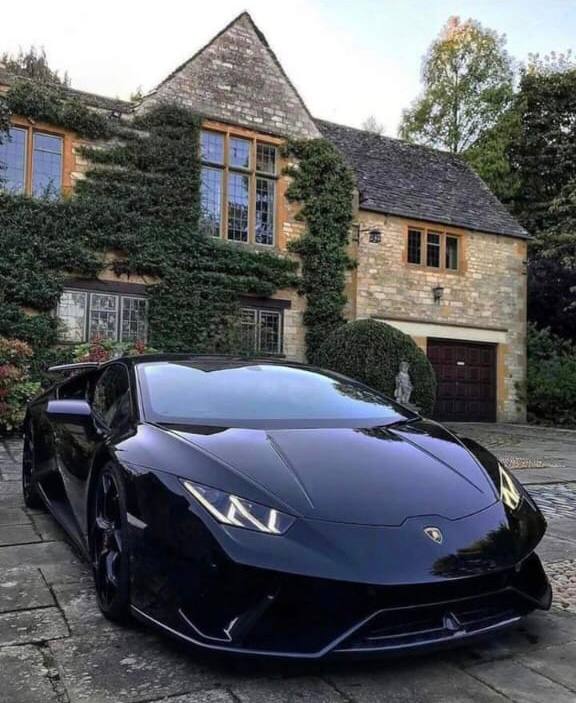
Performance Car (Low-Profile Tires)Almost always prohibitedDedicated Winter Tire SetThe only safe option is switching to winter tires for the season.
Truck/Full-Size SUVTypically compatible with traditional link chainsStudded Snow TiresAmple clearance allows for robust chains, ideal for severe conditions.
Electric Vehicle (EV)Often restricted due to regen braking and tight clearancesSpecific EV-approved cables or snow socksConsult the manual; chains can interfere with sensors and braking systems.

The safest approach is to equip your car with dedicated winter tires, which provide superior traction in cold, icy, and snowy conditions without the limitations and hazards of chains. Chains are best reserved for short-term, severe weather encounters where they are legally mandated.

Was this review help?
116
Share
DeAsher
12/28/2025, 04:55:12 PM

Check your owner's manual—it’s the final word. My buddy learned this the hard way. He threw chains on his new SUV without looking and ended up with a four-figure repair bill for shredded brake lines and a cracked fender liner. The manual will tell you if it's okay, and if it is, it'll specify the exact type, like "S-class" cable chains. Don't guess; it's a costly mistake.

Was this review help?
20
Share
Expand All
MacLilliana
01/05/2026, 01:40:10 AM

It's not just about the car; it's about the tires. If you have wide, low-profile performance tires, there's probably no physical space for chains. Even on a tough-looking truck, certain wheel and tire packages can have minimal clearance. You need a solid inch of space all around the tire. Before buying, do the simple finger test: can you fit your fingers between the tire and the suspension components? If not, chains are a no-go.

Was this review help?
17
Share
Expand All
DallasDella
01/12/2026, 01:40:07 PM

Legally, in many mountain passes, you must have chains or traction devices in your vehicle during winter storms, even if you have AWD. The key is having the correct, approved device for your car. Using prohibited chains can get you a fine and leave you stranded if they cause damage. Your best bet is to call your local tire shop or dealership. They know your specific model and what’s safe and legal for your area. It’s a quick call that saves a lot of hassle.

Was this review help?
16
Share
Expand All
KaiRose
01/19/2026, 11:24:49 AM

As a parent, my first thought is safety for my family. Chains can be risky if they break. For our minivan, which can't use traditional chains, we switched to snow socks. They're made of a durable textile fabric and are much easier to put on. They provide great traction in deep snow and are perfectly legal where we travel. It's a safer, simpler solution that gives us peace of mind on snowy road trips without worrying about damaging the car.

Was this review help?
12
Share
Expand All
More Q&A

What Materials Are Needed for Electric Vehicle Registration?

For electric vehicle registration, you need to drive the car to the registration office and bring the invoice, certificate of conformity, ID card, and driver's license. Below are the relevant details about vehicle registration: 1. Purchase invoice: vehicle certificate of conformity, ID card or organization code certificate and its copy used for issuing the invoice, compulsory insurance policy, tax payment certificate, temporary residence permit for non-locals, payment of vehicle purchase tax, submission of materials (copy of ID card or organization code certificate used for issuing the invoice, copy of vehicle certificate of conformity, copy of the first page of the purchase invoice, and tax declaration form). However, the original first page of the invoice and the original vehicle certificate of conformity must be brought. 2. Notes: take photos, grind the code, print the motor vehicle parameter table, and indicate on the original certificate of conformity whether the vehicle needs to go through the inspection line; external inspection, go through the inspection line if required, otherwise get the serial number; file submission, take photos of the number, pay the fee, 225 for going through the inspection line, 125 for not going; registration, affix the environmental card, and receive the driving license and vehicle registration certificate.
104
Share

What are the reasons why the key cannot be pulled out but can still be turned?

The reasons why the key cannot be pulled out but can still be turned are: 1. The key is used too infrequently, resulting in insufficient smoothness; 2. The lock cylinder requires lubrication. Precautions for using car keys include: 1. Do not place them together with electronic devices; 2. Avoid throwing or tossing the car key carelessly; 3. Do not use incorrect car key batteries; 4. Do not store the spare key inside the vehicle; 5. Prevent the smart key from being exposed to high temperatures or coming into contact with liquids; 6. Avoid placing keys together with metal objects. The functions of a car key include: 1. Vehicle locating feature; 2. Closing windows after engine shutdown; 3. Window opening function; 4. Trunk opening capability; 5. Driver's door-only unlocking function.
104
Share

How to Turn on the Cold Air in Chevrolet Cavalier?

The method to turn on the cold air in Chevrolet Cavalier is as follows: 1. Turn on the automatic adjustment of the car's air conditioning, which is the AUTO button; 2. Press the AC button twice. The AC button can switch between warm air and cold air. Pressing it once turns on the warm air, and pressing it twice turns on the cold air; 3. Rotate the knob to adjust the temperature. The red arrow is the button to increase the temperature, and the blue arrow is the button to decrease the temperature. Turn towards the blue arrow for cold air; 4. After adjusting the temperature, press the MODE button to adjust the air outlet mode as needed, and the air conditioning can be turned on normally. In terms of body size, the Cavalier has a length, width, and height of 4474mm, 1730mm, and 1471mm respectively, with a wheelbase of 2600mm. The body type is a 4-door, 5-seater sedan, equipped with a 1.0T L3 turbocharged engine, with a maximum horsepower of 125ps and a maximum torque of 180nm, matched with a 6-speed automatic transmission.
114
Share

What does it mean when the eco light on the car dashboard is on?

When the eco indicator light on the car is illuminated, it indicates that the vehicle's economy mode has been activated. Eco is an English abbreviation formed from the words Ecology (environmental protection), Conservation (energy saving), and Optimization (power). The Eco mode is further divided into active eco driving mode and non-active eco driving mode. Eco mode can be categorized into active and non-active types, with the difference being that the active type has its own dedicated button, allowing the driver to choose whether to activate it. When the driver presses the Eco mode switch, the dashboard indicator light will illuminate, and the vehicle will automatically begin adjusting settings such as throttle opening, transmission shift logic, and air conditioning output power. Non-active Eco mode does not have a dedicated button. When the dashboard Eco indicator light is on, it serves only as a reminder function. The Eco system automatically evaluates driving behavior, and if the current driving operation achieves the optimal fuel supply, the dashboard will simultaneously display the Eco indicator light. Most vehicles use the active Eco driving mode, which means there is a separate switch button. Therefore, during daily driving, the Eco mode can be activated. However, it is unnecessary to enable Eco mode when the speed exceeds 120 km/h, during idle parking, in N/P gear, or in manual mode, especially when climbing hills, as this does not reflect the fuel-saving characteristics of Eco mode. Additionally, the Eco mode typically becomes ineffective under the following conditions: When the vehicle speed exceeds 120 kilometers per hour, the car prioritizes speed, and the Eco mode automatically deactivates. During idle parking or when in N/P gear or manual mode, the Eco mode may also become ineffective. When high torque output is required, such as when climbing a hill, the engine control unit will prioritize ensuring sufficient power to drive the vehicle, and the Eco mode will not function in this scenario either.
116
Share

What is an A1 Driver's License?

An A1 driver's license is a license for driving large passenger vehicles. The vehicles permitted under an A1 license include large buses with a capacity of 20 or more passengers, as well as passenger vehicles with a body length exceeding 6 meters. Other vehicle types permitted under an A1 license include: A3 (city buses), B1 (medium-sized passenger vehicles), B2 (large trucks), C1 (small cars), C2 (small automatic transmission cars), C3 (low-speed cargo vehicles), C4 (three-wheeled vehicles), and M (wheeled self-propelled machinery). According to the 'Regulations on the Application and Use of Motor Vehicle Driver's Licenses,' the requirements for obtaining an A1 license are as follows: Height must be at least 155 centimeters; Vision: Naked or corrected vision in both eyes must reach at least 5.0 on the logarithmic visual acuity chart; Color vision: No red-green color blindness; Hearing: Ability to discern the direction of sound sources with each ear at a distance of 50 centimeters from a tuning fork; Upper limbs: Both thumbs must be intact, and each hand must have at least three other fingers intact, with normal limb and finger movement; Lower limbs: Both lower limbs must be intact with normal movement, and the length difference must not exceed 5 centimeters; Torso and neck: No movement dysfunction; Age requirement: Applicants for large passenger vehicle licenses must be between 22 and 60 years old. An A1 license cannot be obtained initially; it can only be acquired through an upgrade. Unlike C1 or B2 licenses, one cannot apply for an A1 license directly. Starting from the most common C1 license, one must first upgrade to an A3, B1, or B2 license before being eligible for an A1 upgrade. The specific conditions are as follows: Hold an A3 or B1 license for at least two years, with no record of accumulating 12 or more penalty points in the current scoring cycle or the last three consecutive scoring cycles; Hold a B2 license for at least three years, with no record of accumulating 12 or more penalty points in the current scoring cycle or the last three consecutive scoring cycles; Hold an A2 license for at least one year, with no record of accumulating 12 or more penalty points in the current scoring cycle or the last three consecutive scoring cycles. Meeting any one of these conditions qualifies one for an upgrade. A1 License: The permitted vehicles under an A1 license include large buses with a capacity of 20 or more passengers, as well as passenger vehicles with a body length exceeding 6 meters. Other permitted vehicle types include: A3 (city buses), B1 (medium-sized passenger vehicles), B2 (large trucks), C1 (small cars), C2 (small automatic transmission cars), C3 (low-speed cargo vehicles), C4 (three-wheeled vehicles), and M (wheeled self-propelled machinery). According to the appendix of the 'Regulations on the Application and Use of Motor Vehicle Driver's Licenses,' driver's licenses are classified into 16 categories: A1, A2, A3, B1, B2, C1, C2, C3, C4, C5, D, E, F, M, N, and P. The Ministry of Public Security has refined the license categories into 15 types, with new licenses issued during annual inspections or verifications. C1 License: Many people believe that a C1 license only permits driving small vehicles with up to 7 seats. However, C1 licenses allow driving small vehicles with up to 9 seats and a body length not exceeding 6 meters. Vehicles like Jinbei or Ruifeng can be driven with a C1 license as long as they meet these criteria. Other permitted vehicle types under a C1 license include C2 (small automatic transmission cars), C3 (low-speed cargo vehicles), and C4 (three-wheeled vehicles). C2 License: The C2 license is another common type, permitting the driving of automatic transmission cars with up to 9 seats and a body length not exceeding 6 meters. Note that C2 license holders cannot drive manual transmission vehicles. B1 License: The B1 license permits driving medium-sized passenger vehicles, defined as those with a length not exceeding 6 meters and a seating capacity of 10 to 19 passengers. Other permitted vehicle types include C1 (small cars), C2 (small automatic transmission cars), C3 (low-speed cargo vehicles), C4 (three-wheeled vehicles), and M (wheeled self-propelled machinery). B2 vehicles are not permitted under a B1 license. B2 License: The B2 license allows driving heavy or medium-sized trucks or large, heavy, or medium-sized specialized operation vehicles. Heavy and medium-sized trucks are primarily cargo vehicles, such as the large dump trucks commonly seen on roads. Other permitted vehicle types under a B2 license include C1 (small cars), C2 (small automatic transmission cars), C3 (low-speed cargo vehicles), C4 (three-wheeled vehicles), and M (wheeled self-propelled machinery), which is the same as the B1 license. A2 License: The A2 license permits driving tractor-trailers, which can only be operated by drivers holding an A2 license—even those with an A1 license cannot drive them. Other permitted vehicle types under an A2 license include B1 (medium-sized passenger vehicles), B2 (large trucks), C1 (small cars), C2 (small automatic transmission cars), C3 (low-speed cargo vehicles), C4 (three-wheeled vehicles), and M (wheeled self-propelled machinery). A3 License: The A3 license is somewhat unique, as it primarily permits driving city buses. Other permitted vehicle types include C1 (small cars), C2 (small automatic transmission cars), C3 (low-speed cargo vehicles), and C4 (three-wheeled vehicles). However, A3 license holders cannot drive B1 or B2 vehicles. Although buses and large passenger vehicles may look similar, and some buses may even be longer, an A3 license does not permit driving large passenger vehicles. The classification of driver's licenses into 16 categories is based on the driving difficulty and safety requirements of different vehicle types. This system further refines the existing A (large passenger vehicles), B (large trucks), and C (small cars) categories, adding D, E, F, M, N, and P levels. Under the new regulations, first-time applicants cannot apply for an A1 (large passenger vehicle) license. Eligible vehicle types for first-time applicants include city buses, large trucks, small cars, small automatic transmission cars, low-speed cargo vehicles, three-wheeled vehicles, ordinary three-wheeled motorcycles, ordinary two-wheeled motorcycles, light motorcycles, wheeled self-propelled machinery, trolleybuses, and trams. For temporary residents applying for a license for the first time, only C-category licenses (small cars, small automatic transmission cars, low-speed cargo vehicles, and three-wheeled vehicles) are available. Motorcycle licenses are not permitted.
112
Share

How to Troubleshoot When the Citroen ABS Light Comes On?

ABS light illumination can indicate various conditions, each with different causes and solutions as follows: Condition 1: ABS warning light stays constantly on (most common). Cause 1: The ABS wheel speed sensor's sensing area is covered by mud, sludge, or other contaminants, affecting its ability to detect speed signals. This prevents the ABS control unit from determining vehicle speed or wheel slip rate, thus failing to issue proper braking commands. Solution: Clean the wheel speed sensor and adjust its clearance with the tone ring to restore normal function. Cause 2: Loose system wiring connections or poor ABS relay contact causing signal issues. Solution: Inspect wiring connections and resecure any loose parts. Condition 2: ABS warning light intermittently illuminates but turns off during acceleration. Cause: Battery voltage drops below 10.5V when multiple electrical components are used. The light extinguishes when engine RPM increases and voltage rises. Possible low voltage supply to ABS system due to poor terminal contact or grounding issues. Solution: Check battery specific gravity; inspect charging system; examine power supply (e.g., voltage relay or poor power contacts). Condition 3: ABS light remains on after engine start until ignition is turned off. Cause: Poor grounding of ABS hydraulic valve body; faulty wiring connections at valve body; ABS control unit malfunction. Solution: Loosen then retighten valve body ground screw, cleaning contact surfaces if needed; check for enlarged connector gaps; replace ABS or ABS/ASR control unit. Condition 4: ABS light activates during high-speed driving. Cause: ABS control unit detects excessive speed difference between front and rear wheels; incorrect tire or wheel rim specifications. Solution: Verify proper tire/rim specifications per vehicle requirements (refer to fuel filler cap label). Condition 5: Intermittent ABS warning light activation. Cause: Improper brake light switch adjustment; internal switch contact issues. Solution: With engine running, fully depress brake pedal while manually pushing switch lever downward, then release pedal to reset position; replace brake light switch if needed. Important: When the ABS light is illuminated, avoid continued driving as it indicates anti-lock braking system failure. During emergency braking, wheel lock-up may cause loss of vehicle control, preventing proper deceleration or trajectory adjustment, creating significant safety risks.
119
Share
Cookie
Cookie Settings
© 2025 Servanan International Pte. Ltd.