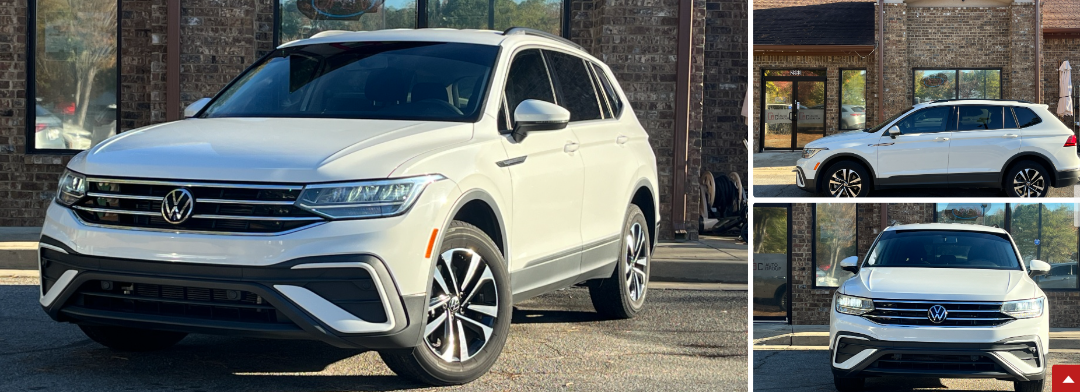
The auto start-stop button is located on the right side of the gear lever, marked with an 'A'. By default, it is in the 'on' state. To turn it off, simply press the button once. Below is a detailed introduction to the Tiguan: Configuration Parameters: The Shanghai Volkswagen Tiguan offers a total of 7 models across 4 versions: Urban Edition, Trendline, Comfortline, and Flagship. These models are equipped with Volkswagen's flagship 1.8TSI and 2.0TSI engines, delivering outstanding performance in both power and fuel efficiency. Paired with a 6-speed manual transmission or an Aisin 6-speed automatic transmission, the power is better utilized, providing robust performance while also being more environmentally friendly in terms of emissions. Compared to its prototype, the Volkswagen Tiguan, the Tiguan's body length has been increased by 68mm, and the wheelbase reaches 2684mm, placing it in the upper-middle level among its peers, aiming to meet the usage demands of Chinese consumers. The Tiguan's trunk capacity can be freely adjusted between 400L and 1530L, greatly enhancing its practicality, which is a key point of focus for an SUV model. Versions: Mainly divided into BlueMotion and Enjoyment versions.

As a Tiguan owner who has driven it for several years, I know exactly where the auto start-stop button is located. It sits on the center console to the right of the steering wheel, featuring a small circle with an 'A' icon, usually near the gear lever or drive mode selection area. The system defaults to ON every time you start the car, which is quite fuel-efficient and convenient. However, during heavy traffic when the engine keeps shutting off and restarting, the noise becomes annoying, so I've gotten used to turning it off for smoother driving. New owners might overlook its location at first, but simply look for the icon and press it once to toggle the start-stop function. Always prioritize driving safety – avoid fumbling with the center console while moving; operate it only when parked. Battery aging can affect this feature, so regular battery health checks can prevent malfunctions. Overall, it's a well-designed, practical feature that's easy to use.

As an automotive enthusiast, I studied this feature while test-driving the Tiguan. The auto start-stop button is prominently positioned in the center console area below the instrument panel, featuring a circled 'A' logo. It can be conveniently deactivated with a single press near the driver's seat. This system utilizes sensors to monitor vehicle status, automatically shutting off the engine during stops to reduce fuel consumption and emissions. Button placement varies slightly across model years, with newer versions potentially shifted toward the driver's side to prevent accidental activation. When enabled, it coordinates with the brake and electric parking systems, though frequent restarts may cause slight engine vibration, affecting driving smoothness. It's advisable to check voltage stability and avoid rainy-day malfunctions. Familiarizing yourself with its location enhances driving efficiency and peace of mind.

I often drive a Tiguan for commuting, and the button is located on the center console to the right of the steering wheel. Look for the small button with a circled 'A'. Its position is well-designed, and pressing it turns the start-stop function on or off. It's straightforward. If you encounter any issues, refer to the manual or consult a professional. Avoid operating it while driving to prevent distractions.

When I first got my Tiguan, I also couldn't find the auto start-stop button. A friend told me: it's on the center console, easily reachable near the driver's side, with an icon of a circle plus 'A'. Learning the button location helps focus on driving - safety first. Now I'm used to it; after toggling the start-stop state, the car stops more steadily at traffic lights, saving some fuel, but it's best to turn it off on slopes to avoid rolling. During rainy days, water flooding sensors might malfunction, so regular can prevent faults.

When driving the Tiguan, I prioritize comfort. The auto start-stop button is conveniently located near the driver's seat on the center console, featuring a circled 'A' for one-touch operation. In conjunction with the air conditioning system, turning off the start-stop may slightly reduce cooling efficiency, so manual adjustment of the fan speed is recommended during hot summer days to enhance cooling. The function automatically deactivates if the is low or overused, so maintaining the battery in advance ensures stability. The button is ergonomically designed and does not interfere with the interior space layout.