···
Log in / Register

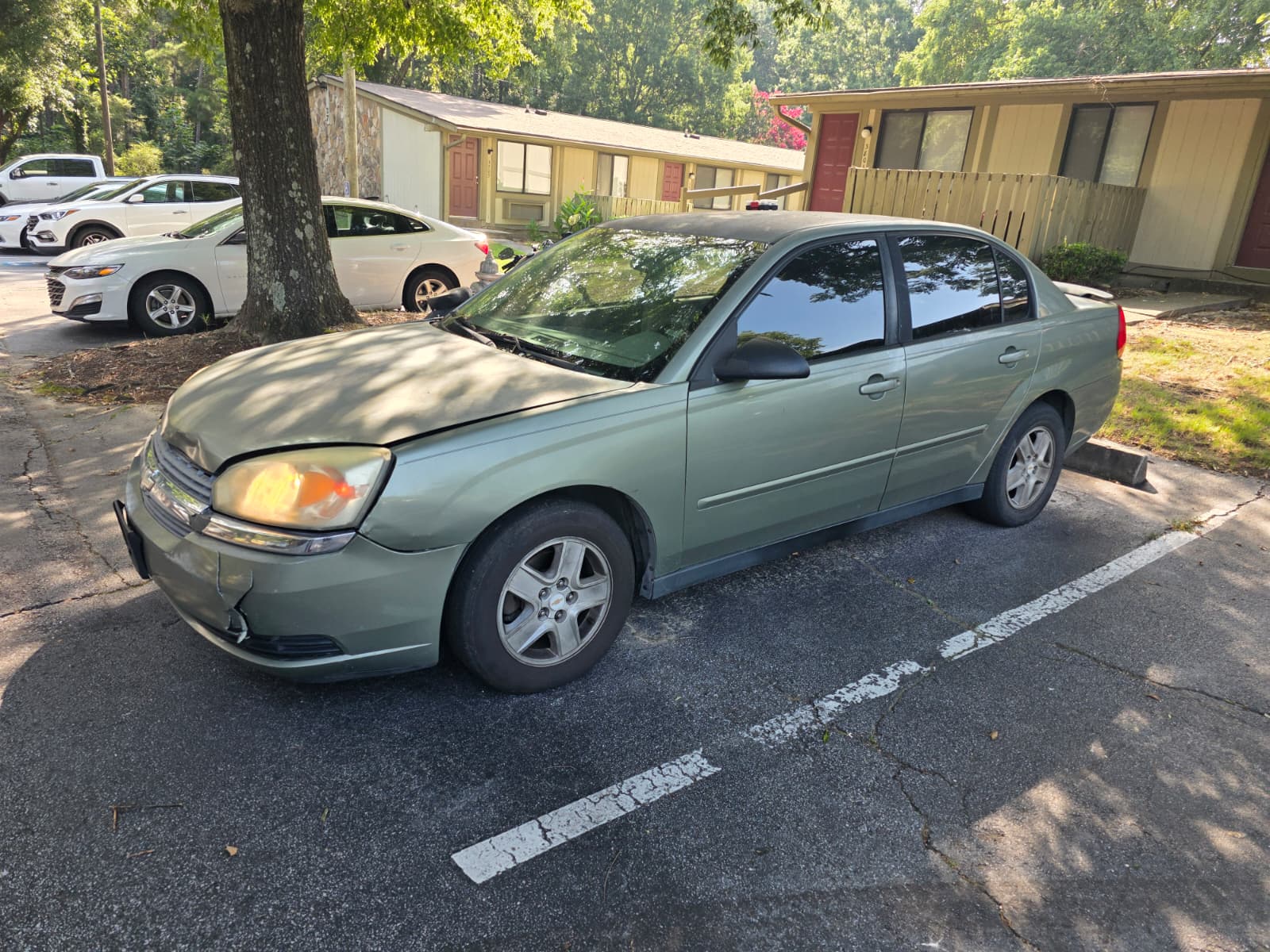
What does insurance salvage value vehicle mean?

6Answers
MacHope
07/29/2025, 11:01:46 AM

Insurance salvage value vehicle refers to the remaining usable value of an insured vehicle after it has been damaged in an accident. Below is relevant information: Influencing factors: A vehicle's salvage value is affected by many factors, such as the vehicle's brand, market recognition, usage duration, mileage, etc. Generally, the longer a vehicle has been used, the lower its ratio in salvage value calculation. Insurance value: Insurance value is the agreed value of the subject matter insured as stipulated in the insurance contract by both parties. The determination of insurance amount is based on the determination of insurance value.

Was this review help?
116
Share
MacEmiliano
08/13/2025, 03:38:30 AM

I only figured this out when I last handled an insurance claim. An insurance salvage car, to put it simply, is a vehicle that's been repaired after an accident, and the insurance company sells the replaced damaged parts as scrap. For example, if a headlight is smashed, they'll replace it and compensate you, but the insurance company will take that broken headlight, appraise its value—that's what's called insurance salvage. It's not just parts; if the whole car is totaled, the frame, engine, and other components that can be sold for parts also count as salvage. Insurance companies make some money back by collecting these scraps, while we car owners just need to ensure we get the full compensation and don't have to worry about these details. However, if you come across an unusually cheap used car, be cautious—it might be a high-salvage accident car processed by an insurance company.

Was this review help?
8
Share
Expand All
VonIker
10/11/2025, 02:01:08 AM

My best friend learned the hard way about what a salvage title car is when she bought one! She went for a cheap deal and ended up with a repaired accident car—just three months later, the chassis started creaking. The repair shop told her it was a salvage title vehicle that the insurance company had already written off. Simply put, after an accident, the insurance company assesses the car's value, pays out the claim, and then sells the wreck as scrap. These cars might look shiny and fixed on the outside, but they’re often patched up with used parts, and even the frame might still be bent. Insurers call this 'mitigating losses,' but it’s really the uninformed buyers who get burned. Later, we checked the insurance records and found out that legitimate repairs are logged in the system with a salvage rate—now we know to always pull the records before buying a used car!

Was this review help?
19
Share
Expand All
Tiffany
11/24/2025, 02:06:07 AM

After ten years in the repair shop, I've seen this practice countless times. Insurance companies always discuss salvage vehicle splits with me: after paying out for the totaled car, they send someone to haul away the scrap parts to be crushed into metal blocks. For example, a water-damaged engine worth 30,000 yuan—after the insurance pays you, they'll take the scrap engine to sell as waste. In our trade lingo, this is called 'buying salvage,' priced at scrap metal rates minus recycling labor costs. However, new regulations this year mandate specialized disposal for new energy vehicle batteries. Damaged lithium batteries can be recycled and reused, yet insurance companies are driving even harder bargains, since the battery alone can fetch several thousand yuan.

Was this review help?
15
Share
Expand All
LaAmy
01/14/2026, 03:38:10 AM

Having handled auto insurance claims investigation for six years, let me thoroughly explain the salvage value logic: When a vehicle is deemed a total loss, the residual value is assessed based on annual depreciation, which is the book salvage value. For example, if a five-year-old car has an insured damage amount of 100,000 yuan, and the salvage value at scrapping is assessed at 20,000 yuan, the insurance company will compensate you with 80,000 yuan in cash. The insurer then takes the accident vehicle and auctions it to auto repair shops. If it sells for 25,000 yuan, they even make a 5,000 yuan profit from the difference! Therefore, the newer the car, the more inclined the insurance company is to settle for a total loss claim. However, flood-damaged vehicles are at a disadvantage—the cost of dismantling and cleaning the chassis can exceed the vehicle's salvage value, making it most cost-effective for the insurance company to process it at scrap metal prices.

Was this review help?
12
Share
Expand All
Steve
04/10/2026, 11:44:44 PM

We in the transportation business care most about this residual value rate. Last year, our trailer was totaled in a crash, and the insurance company said the residual value would be deducted from the claim payment! Turns out they sold the wrecked frame at scrap metal prices, shortchanging us by three thousand yuan. What's worse, even though the new truck head was bought for 320,000 yuan, the insurance company insisted the post-accident residual value was only 40%. Later, someone in the know taught me to check component recycling prices: six aluminum alloy wheels could fetch 1,000 yuan, the diesel engine assembly was worth 8,000 yuan, and the transmission could be resold for 5,000 yuan—adding up to more than their estimated residual value! Next time I file a claim, I plan to have recycling dealers bid on it myself.

Was this review help?
15
Share
Expand All
More Q&A

What is the fuel consumption of the 1.5T Honda CR-V?

The fuel consumption of the Honda CR-V is 6.4 liters per 100 kilometers. Methods to reduce fuel consumption are as follows: Strive to reduce the vehicle's weight: The relationship between vehicle weight and fuel consumption is directly proportional. It is said that for every 10% reduction in vehicle weight, fuel consumption will decrease by a corresponding percentage. Improve the car's aerodynamics: The fuel consumption due to the drag coefficient of the car body will significantly decrease. The relationship between these two is also directly proportional. Maximize the thermal efficiency of the engine: Currently, the thermal efficiency of typical gasoline engines (i.e., the proportion of fuel converted into useful work) reaches over 30%, while diesel engines exceed 40%. This is the main reason why diesel engines have lower fuel consumption than gasoline engines.
119
Share

What is the suitable tire pressure in winter?

In winter, a tire pressure of 2.2 2.5 is generally suitable. Here are some details about winter tire pressure: 1. Cold tire pressure: A cold tire pressure between 2.2 2.5 is normal. It is usually recommended to maintain a cold tire pressure of 2.5, as this can result in lower fuel consumption, and during high-speed driving, the tire pressure can be kept within the safe range of up to 3.0. The required tire pressure for the same tire may vary when installed on different vehicle models. 2. Vehicle model: The standard tire pressure for each vehicle model is indicated in the user manual, on the inside of the fuel filler cap, or below the B-pillar on the front passenger side. Although manufacturers provide the optimal tire pressure values, adjustments should be made according to temperature changes.
105
Share

Is it necessary to buy the four-wheel drive version of Audi A4L?

The key factor depends on the driving environment. In regions with frequent rain and snow, choosing the four-wheel drive version is necessary for driving safety and to avoid skidding. Below is more information about the Audi A4L: 1. Introduction: The Audi A4L is a model officially released by Audi on November 16, 2008. The new Audi A4L features a completely new exterior and chassis design, with the front and rear resembling the Audi A5. 2. Advantages: The greatest advantages: stylish and dynamic exterior, smooth lines; exquisite interior craftsmanship, good configuration; excellent sound effects; spacious and practical interior, good comfort; classic brand.
115
Share

What are the symptoms of a faulty truck steering gear?

Truck steering gear failure symptoms include oil leakage, sticking, failure to return to position, abnormal noises, floating sensation, and heaviness. Below is a partial introduction regarding truck steering gears: 1. Causes: It is relatively easy to determine the specific type of damage. When issues arise while turning the steering wheel, you can use a jack to lift the two front wheels. If there is no change, the problem lies with the steering gear. 2. Manifestations: The manifestations include loud noises during steering, jerky steering wheel movements, increased heaviness in the steering wheel, and inaccurate direction pointing during steering. Steering pumps mainly consist of several types such as vane, gear, plunger vane, and gear types.
117
Share

Which year's vehicles meet the China III emission standard?

Vehicles produced in 2008 meet the China III emission standard. Here is some information about the China III standard: 1. China III: The China III standard was officially implemented on July 1, 2008, marking the "starting time" of China III. On July 1, 2011, the China IV standard was introduced, marking the "starting time" of China IV. 2. Manufacturing period: The majority of vehicles manufactured in China between 2008 and 2011 comply with the China III standard. The China III standard was first implemented on July 1, 2007, and the China IV standard replaced it on July 1, 2010, ending the China III era. Generally speaking, vehicles produced between 2007 and 2010 all meet the China III standard.
106
Share

How to Use the Fit Steering Wheel?

Fit steering wheel should be unlocked before use. Here are some instructions on how to use the Fit steering wheel: 1. Fit Steering Wheel: If the steering wheel is locked after getting in the car, insert the key first, then generally turn the steering wheel in the opposite direction while turning the key, which should allow the key to turn easily. For keyless start vehicles, it's also simple—press the keyless start button first when starting the car, then turn the steering wheel left and right. 2. Fit Steering Wheel Lock: Outside the Fit's door, pull the door handle to open the door. After entering the vehicle's cockpit, turn the key below the steering wheel to power on and start the vehicle; otherwise, the steering wheel cannot be unlocked.
109
Share
Cookie
Cookie Settings
© 2025 Servanan International Pte. Ltd.