···
Log in / Register

what are the expensive cars

5Answers
LaEmmanuel
12/19/2025, 01:57:39 AM

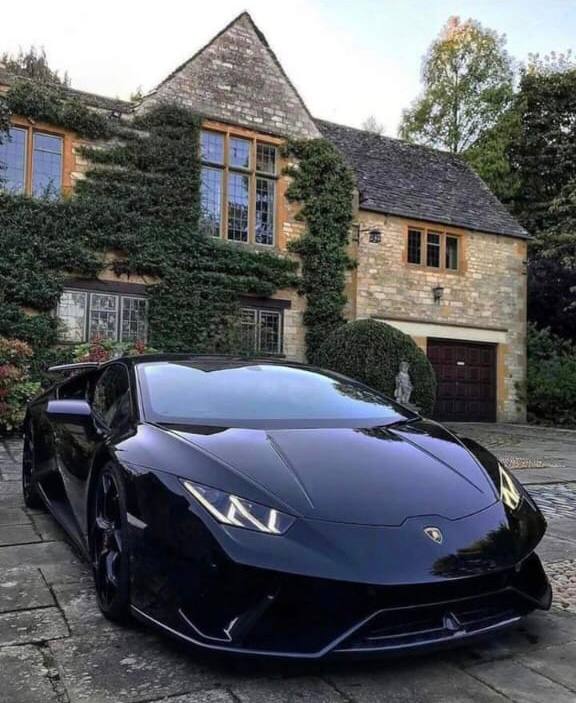
Expensive cars are typically defined by a high starting price, often exceeding $100,000, and are characterized by exclusive branding, exceptional performance, handcrafted luxury, and cutting-edge technology. Brands like Rolls-Royce, Ferrari, and Lamborghini are quintessential examples, but high-end models from Porsche, Mercedes-Benz, and Bentley also dominate this segment. The high cost is justified by low-volume production, bespoke customization options, and the use of rare, high-quality materials. Owning such a vehicle is as much about the status and experience as it is about transportation.

The price tag isn't just for the badge; it buys you engineering excellence. This includes powertrains capable of astonishing 0-60 mph times (often under 3.5 seconds), advanced carbon-fiber construction for weight savings and rigidity, and chassis tuned for both comfort and razor-sharp handling. Inside, you'll find amenities that rival five-star hotels, with massaging seats, exotic wood or carbon fiber trims, and state-of-the-art infotainment systems.

Beyond the initial purchase, ownership costs are a significant factor. Insurance premiums are substantially higher, maintenance requires specialized technicians, and depreciation can be steep for all but the most exclusive models. However, certain limited-production hypercars or classic icons can sometimes appreciate in value, becoming investments.

Vehicle ModelStarting Price (USD)Horsepower0-60 mph (seconds)Key Luxury/Performance Feature
Rolls-Royce Ghost~$350,000563 hp4.6 sBespoke Starlight Headliner
Ferrari SF90 Stradale~$625,000986 hp2.5 sPlug-in hybrid V8 powertrain
Lamborghini Aventador~$500,000770 hp2.8 sCarbon fiber monocoque chassis
Porsche 911 Turbo S~$210,000640 hp2.6 sRear-axle steering
Bentley Flying Spur~$220,000542 hp4.1 sDual-clutch air suspension
Mercedes-Maybach S-Class~$190,000496 hp4.5 sExecutive rear seats with massage
Aston Martin DBS~$330,000715 hp3.2 sHandcrafted leather interior

Ultimately, an expensive car serves as the pinnacle of automotive achievement, offering an unparalleled blend of performance, comfort, and prestige that is unattainable in mass-market vehicles.

Was this review help?
115
Share
OHaley
12/26/2025, 06:18:57 PM

For me, an expensive car is one that makes you stop and stare when it drives by. It's not just about the price on the window sticker; it's the presence. We're talking about cars from brands like Rolls-Royce or Lamborghini—vehicles you rarely see. The doors close with a solid thunk, the interior is dead quiet, and everything you touch feels expensive. It’s the difference between a regular luxury sedan and something that feels like a private jet on wheels. The cost is in the details you can’t get anywhere else.

Was this review help?
19
Share
Expand All
OLaila
01/03/2026, 03:10:13 AM

It’s the feeling. You press the start button and the engine erupts with a sound that gives you chills. The acceleration pins you to your seat in a way that’s almost surreal. But it’s not just raw speed. It’s the smell of the hand-stitched leather, the way it glides over broken pavement without a shudder, and the knowledge that hundreds of hours of craftsmanship went into its creation. An expensive car is a sensory experience that transforms every drive into an event, making even a trip to the grocery store feel special.

Was this review help?
10
Share
Expand All
AmyLynn
01/10/2026, 03:10:11 PM

Think of it as a statement of success and a terrible financial decision, all in one. You're paying for exclusivity and brand heritage that dates back decades. However, the real expense hits after you drive it off the lot. Insurance is astronomical, a simple oil change can cost a small fortune, and they lose value incredibly fast unless it's a super-rare collector's item. For some, that depreciation is just the cost of admission to a club. It’s less about the car itself and more about what it represents to everyone else.

Was this review help?
18
Share
Expand All
DeCalvin
01/17/2026, 07:36:53 PM

From a pure engineering standpoint, these cars push the boundaries of what's possible. The money goes into extensive research and development for materials like carbon fiber and advanced aerodynamics. You're getting a chassis and suspension system engineered to handle immense power while providing feedback and comfort. The technology, from hybrid powertrains to advanced driver-assistance systems, is often years ahead of mainstream models. The high cost reflects the immense investment required to achieve marginal gains in performance, efficiency, and safety that trickle down to more affordable cars later.

Was this review help?
15
Share
Expand All
More Q&A

What is the purpose of the three-line rule for the hill start in Subject 2?

It is to confirm whether the front of the car is parked in the correct position. The following is a related introduction to Subject 2: 1. Overview: Subject 2, also known as the small road test, is part of the motor vehicle driver's license assessment and is the abbreviation for the field driving skills test. The test items for cars C1 and C2 include five mandatory items: reversing into a garage, parallel parking, stopping and starting on a slope, turning at a right angle, and driving on a curve (commonly known as the S-curve). Some regions also include a sixth item: collecting a card on a highway. 2. Teaching aids: Teaching software: Students can learn traffic regulations through driver simulation test software on mobile or computer terminals. Teaching books: "Safe Driving Starts Here," compiled by the Ministry of Transport of the People's Republic of China. Driving learning materials can be uniformly purchased and distributed by the driving school or purchased by students at their own expense.
111
Share

Does the ten-day retake period for Subject 2 include weekends?

Subject 2 retake ten days does not include Sundays. Below is relevant information about Subject 2: 1. Overview: Subject 2, also known as the small road test, is part of the motor vehicle driver's license examination. It refers to the field driving skills test. The C1/C2 test items include five compulsory items: reverse parking, parallel parking, stopping and starting on a slope, right-angle turns, and curve driving (commonly known as S-curves) (some regions have a sixth item, high-speed card collection). 2. Teaching aids: Teaching software: Students can learn traffic regulations through driver simulation test software on mobile or computer; Teaching materials: "Safe Driving Starts Here" compiled by the Ministry of Transport of the People's Republic of China. Driving study materials can be uniformly purchased and distributed by the driving school, or students can purchase them at their own expense.
113
Share

Is there a venue fee for the make-up test of Subject 2?

Some places require it, depending on the local regulations. Below is relevant information about Subject 2: 1. Overview: Subject 2, also known as the small road test, is part of the motor vehicle driver's license examination. It refers to the field driving skills test. For small vehicles (C1 and C2), the test items include five mandatory components: reverse parking, parallel parking, stopping and starting on a slope, right-angle turns, and curve driving (commonly known as the S-curve). Some regions also include a sixth item: high-speed toll card collection. 2. Teaching aids: Teaching software: Students can use driver simulation test software on mobile or computer devices to study traffic regulations. Teaching materials: "Safe Driving Starts Here," compiled by the Ministry of Transport of the People's Republic of China. Driving schools may provide learning materials uniformly, or students may purchase them at their own expense.
110
Share

What are the requirements for the slope section in Subject 2?

After the vehicle comes to a stop, the front bumper of the car or the front axle of the motorcycle must not be positioned beyond the marker pole line, with a tolerance of no more than 50 centimeters in either direction. Below is a relevant introduction about Subject 2: 1. Overview: Subject 2, also known as the small road test, is part of the motor vehicle driver's license examination and refers to the field driving skills test. For small vehicles (C1 and C2), the test items include five mandatory sections: reversing into a garage, parallel parking, stopping and starting on a slope, turning at a right angle, and driving through curves (commonly known as S-turns). Some regions may include a sixth item: high-speed card collection. 2. Teaching aids: Teaching software: Students can use driver simulation test software on mobile or computer devices to study traffic regulations. Teaching materials: "Safe Driving Starts Here," compiled by the Ministry of Transport of the People's Republic of China. Driving schools may provide learning materials uniformly, or students may purchase them at their own expense.
113
Share

Which way to turn the steering wheel for right reverse parking?

When performing right reverse parking, turn the steering wheel to the right. Below is relevant information about reverse parking: Reverse parking assessment: Reverse parking is a mandatory test item for obtaining a small car driver's license, assessing the driver's ability to maneuver the vehicle in a confined space. It serves as an evaluation point in driving tests, requiring candidates to correctly reverse the vehicle into a parking space from both sides while in motion. Common types of reverse parking: The first is "non"-shaped reverse parking, commonly seen in shopping malls. The second is roadside "one"-shaped reverse parking, also known as parallel parking. The third is the less common diagonal reverse parking.
119
Share

Should I Pay the Retake Fee or Schedule the Exam First for Subject 2?

For the Subject 2 retake, you must pay the retake fee online in advance before you can schedule the exam. Below is relevant information about Subject 2: 1. Overview: Subject 2, also known as the small road test, is part of the motor vehicle driver's license assessment. It refers to the field driving skills test. For small vehicles C1 and C2, the test items include five mandatory components: reversing into a garage, parallel parking, stopping and starting on a slope, right-angle turns, and curve driving (commonly known as S-turns). Some regions also include a sixth item: high-speed toll card collection. 2. Teaching Aids: Teaching Software: Students can use driver simulation test software on mobile or computer devices to study traffic regulations; Teaching Materials: "Safe Driving Starts Here" compiled by the Ministry of Transport of the People's Republic of China. Driving schools may provide learning materials uniformly, or students may purchase them at their own expense.
111
Share
Cookie
Cookie Settings
© 2025 Servanan International Pte. Ltd.