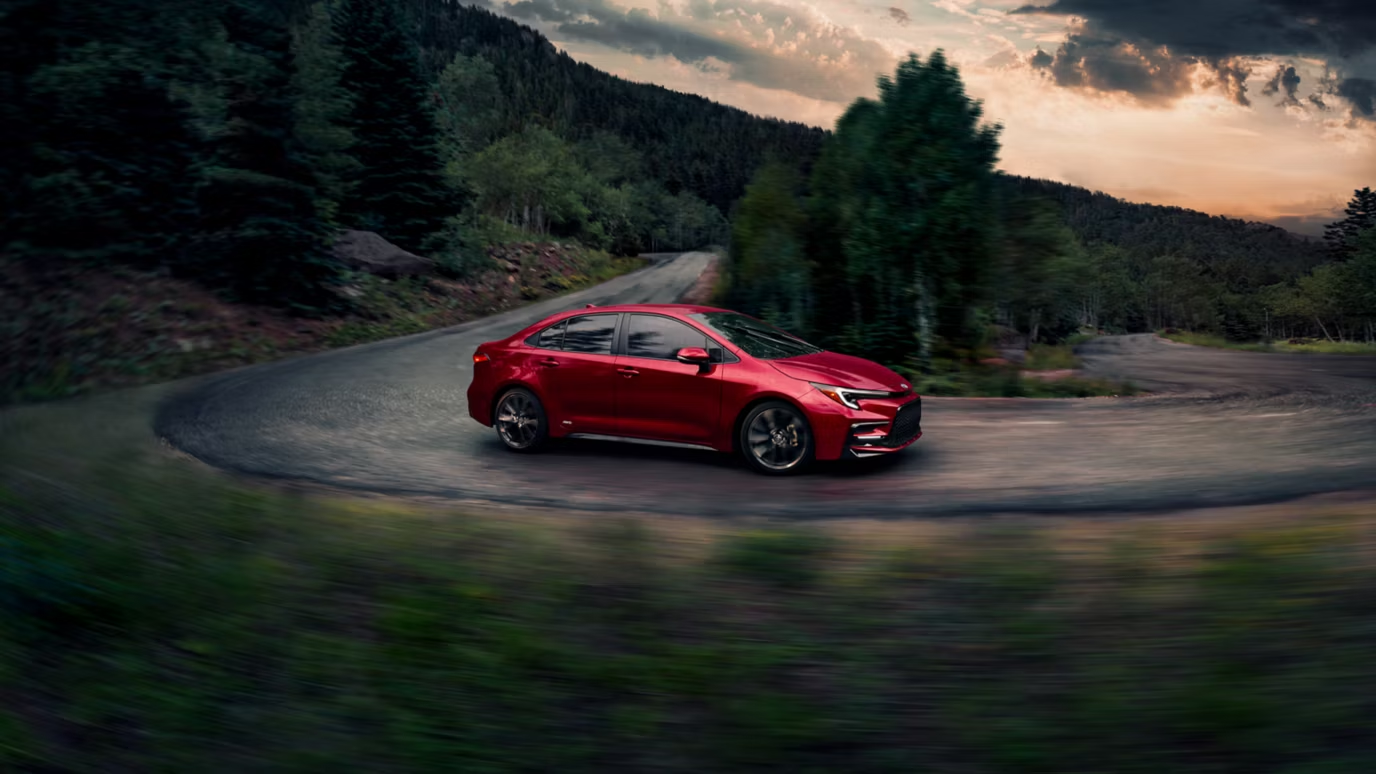
Toyota's new Corolla can achieve optimal engine performance with either 92-octane or higher-grade unleaded gasoline. Under normal circumstances, there is no significant need to use 95-octane gasoline. allows the use of ethanol-blended gasoline with up to 10% ethanol content. Gasoline grades: The real difference between 92, 95, and 98-octane gasoline lies in the ratio of isooctane to n-heptane. 92-octane gasoline consists of 92% isooctane and 8% n-heptane, 95-octane consists of 95% isooctane and 5% n-heptane, and 98-octane consists of 98% isooctane and 2% n-heptane. Anti-knock performance: The proportion of isooctane affects the anti-knock performance of different gasoline grades. The higher the isooctane content, the better the anti-knock performance of the gasoline. Different engines have varying requirements for gasoline's anti-knock performance. Generally, higher-priced models have engines with more powerful output.

I've been driving a Corolla for over five years and have always used 92-octane fuel, which feels quite cost-effective. 92-octane fuel is about two yuan cheaper per liter, saving me dozens of yuan a month—very economical for a working professional. The Corolla's engine is designed to be compatible with 92-octane fuel, and the manual clearly states that 92-octane or higher is sufficient, so I've never switched to 95-octane. Occasionally, friends recommend trying 95-octane, saying it might provide smoother power, but in reality, there's hardly any noticeable difference, especially for city commuting. By the way, no need to worry too much about engine issues with lower-octane fuel—the Corolla is very durable and won't develop major problems with long-term use. In short, just follow the manual and don't waste money upgrading the fuel grade.

As a frequent long-distance driver, I've compared 92 and 95 octane fuels. For the Corolla engine, using 92 octane is the standard configuration. However, if you're the type who enjoys spirited driving, using 95 octane can reduce the risk of engine knocking and provide slightly better acceleration response. The cleaning components in 95 octane fuel are superior, offering long-term protection for fuel injectors and preventing carbon buildup. That said, the manual recommends 92 octane as sufficient, so there's no need to spend extra money on an upgrade unless you're pushing hard on the highway. A related issue is avoiding the wrong octane rating—using one that's too high might mislead the sensors and potentially harm the engine. Remember, balancing cost and actual needs is key.

As an old-timer who's been driving for thirty years, I can tell you the Corolla runs just fine on 92 octane - it's the most hassle-free option. 95 octane costs way more but doesn't make enough difference to be worth it. The manual recommends 92, so just follow that. For city commuting, 92 is plenty; only consider 95 for highway driving, and even then it's usually a waste. Take it from experience - don't overcomplicate things. You're better off saving that money for proper car .

Having seen countless cases at the dealership, the most reliable choice for Corolla is 92 octane fuel. The manual requires 92, and theoretically, using 95 can make the engine run smoother with reduced minor vibrations, but the difference is negligible in daily driving. On the flip side, consistently using the wrong fuel grade may lead to carbon buildup or emission issues, which isn't worth the risk. It's recommended to regularly check the fuel system and air filter, as these provide better protection than upgrading the fuel grade. Saving money with peace of mind is the way to go.

As a family car user, safety is the top priority. The Corolla manual states that 92-octane fuel is suitable for daily use, and I consistently stick to 92-octane without taking risks. While 95-octane is slightly more expensive and theoretically offers smoother engine response, the actual difference is negligible, especially when commuting with kids. Saving money on fuel is more practical, and it also prevents the potential risks of using unnecessarily high-octane fuel. Remember, steady driving and regular are far more important—just follow the manufacturer's fuel recommendation for the safest approach.