···
Log in / Register

How to Reset the Tire Pressure Light on a Civic?

6Answers
ValentinaMarie
07/28/2025, 11:33:27 PM

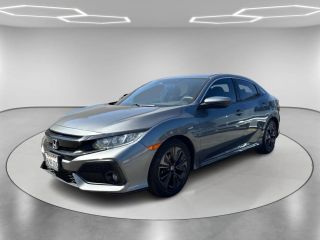
The method to reset the tire pressure light on a Civic: 1. Park the car and shift to P (Park) mode; 2. Navigate to the vehicle settings on the central control screen, select tire pressure monitoring, and confirm the calibration; 3. The tire pressure monitoring indicator will light up. After the tire pressure returns to the normal value, wait for a while before driving, and the light will automatically reset. The Civic is equipped with a tire pressure monitoring system that monitors the vehicle by comparing the rolling radius and rotational characteristics of each wheel and tire to determine if one or more tires are significantly underinflated while driving. The Civic has a body length of 4649mm, width of 1800mm, height of 1416mm, and a wheelbase of 2700mm.

Was this review help?
118
Share
Abel
08/12/2025, 10:27:36 AM

I've been driving a Civic for many years, and that tire pressure light coming on is really annoying, but don't worry, the method to reset it is actually quite simple. The first step is to check if all tire pressures are at the correct values. The recommended pressures for Civics are usually written on the door frame or in the owner's manual, typically around 2.2 or 2.3 BAR for the front and similar for the rear. If the pressure is too low or high, use a tire pressure gauge to measure and adjust it to the standard value. Then locate the reset button on the dashboard—the position varies by model year. Mine is a 2018 model, and the button is on the left side of the steering wheel; just press and hold it for a few seconds. Remember to do this after starting the car—if the light goes off, it means it worked. If it stays on, there might be a slow leak or a sensor issue, and it's time to visit a shop. Making it a habit to check tire pressure every two weeks can prevent the light from coming on unnecessarily, keeping things worry-free and safe. After driving for so many years, handling these small issues yourself is the most reliable way.

Was this review help?
1
Share
Expand All
Eli
10/02/2025, 02:42:41 AM

Hey buddy, I also drive a Civic. Don't panic when the tire pressure light suddenly comes on. Follow my experience to fix it. First check if the tires are flat, use a tire pressure gauge or go to a gas station with free air to check. The standard pressure is on the door label, roughly 220KPA for front tires and 230KPA for rear tires. After adjusting all tires, start the car and find the SET button near the steering wheel, hold it for a few seconds until the light goes off. If there's no button, newer Civics might have the reset option in the center screen settings menu - just find the tire pressure reset option and tap it. Always check pressure before highway driving to avoid blowout risks. Remember, fix it promptly when the light comes on - safety first. Here's a pro tip: make this a habit and you'll drive with more peace of mind, never worrying about late-night issues again.

Was this review help?
2
Share
Expand All
AdrielMarie
11/15/2025, 03:26:03 AM

To reset the Civic's tire pressure light is quite simple. Here's a direct method: First, check the pressure - use a tire gauge to measure all four tires to the recommended value, usually listed on the driver's door jamb (around 230 KPA). Second, adjust the pressure and start the car. Third, locate the reset button based on your model - older versions have it under the dashboard, while newer models require accessing the infotainment screen. Confirm the reset and the light should turn off. If it doesn't work, there might be a system fault or actual tire issues requiring inspection. As routine maintenance, check every 1,000 km to prevent potential problems.

Was this review help?
17
Share
Expand All
Jeanette
01/05/2026, 10:16:39 PM

I've dealt with the Civic's tire pressure light coming on several times. First, don't panic—the light is just alerting us to potential risks that need immediate attention. The key is verifying proper tire pressure. Measure each tire and adjust to the manual's specified values. After starting the car, locate the reset function—most models have either a button near the steering wheel or a long-press option in the infotainment menu. If the light persists, it indicates potential hazards—stop immediately to inspect tires rather than driving with the warning illuminated. Regular maintenance like monthly pressure checks helps prevent recurrence. These seemingly minor details are crucial for safety—owning a Civic has made me more attentive to such precautions.

Was this review help?
13
Share
Expand All
BrandonDella
04/02/2026, 04:41:52 AM

To reset the Civic tire pressure light, follow the standard procedure: First, check if the tire pressure meets the required standards, using a tool to measure accurately within the recommended range of 220-230 KPA. After adjusting all tires, start the car. Locate the reset button, which may vary significantly by model—older cars require holding a button on the steering wheel side for a few seconds, while newer models may need selecting the reset option in the central control system. Once the operation is complete, the light should turn off. Common issues like uneven pressure or faulty sensors can cause the light to stay on, so timely repairs are necessary. It's advisable to check tire pressure every time you refuel; making it a habit can prevent the light from coming on and ensure safer, more efficient driving.

Was this review help?
12
Share
Expand All
More Q&A

What is the actual fuel consumption of the 2018 Changan CS75?

The actual fuel consumption of the 2018 Changan CS75 is approximately 8.4 to 11.85 liters. The 2018 Changan CS75 features a five-door, five-seat SUV body structure with dimensions of 4650mm in length, 1850mm in width, and 1705mm in height. It has a wheelbase of 2700mm, front and rear track widths of 1565mm, a fuel tank capacity of 58 liters, and a luggage compartment capacity ranging from 520 to 1490 liters. The curb weight is 1625kg. The 2018 Changan CS75 is equipped with a MacPherson independent front suspension and a multi-link independent rear suspension. It is powered by a 1.5T turbocharged engine delivering a maximum horsepower of 178PS, a maximum power output of 131kW, and a maximum torque of 265Nm, paired with a 6-speed manual transmission.
101
Share

What is the actual measured fuel consumption of the Great Wall VV7?

The actual measured fuel consumption of the Great Wall VV7 is around 12 liters per 100 kilometers. Taking the 2021 Great Wall VV7 as an example, its body structure is a 5-door, 5-seat SUV with dimensions of 4760mm in length, 1931mm in width, and 1655mm in height. It has a wheelbase of 2950mm, a fuel tank capacity of 65 liters, a trunk capacity of 306 liters, and a curb weight of 1920kg. The 2021 Great Wall VV7 features a MacPherson independent front suspension and a multi-link independent rear suspension. It is equipped with a 2.0T turbocharged engine that delivers a maximum horsepower of 227 PS, a maximum power of 167 kW, and a maximum torque of 387 Nm, paired with a 7-speed dual-clutch transmission.
116
Share

What does roz/ron90-98 mean?

It represents the gasoline grade, indicating the octane rating range between 90 and 98 can be used. Relevant introductions are as follows: 1. Composition: Gasoline is composed of isooctane and heptane, and the proportion of isooctane is the actual octane rating of the gasoline. For example, the so-called 97-grade gasoline means isooctane accounts for 97% of the fuel composition, and heptane accounts for 3%. 2. RON: The value of RON/ROZ can directly reflect the compression ratio that the gasoline can withstand. When the gasoline quality is good, without impurities and other chemical substances that should not be contained, the RON value of gasoline is the most scientific, accurate, and commonly used standard to reflect the actual performance of gasoline.
107
Share

What is the actual fuel consumption of the Buick Envision 1.5t?

The actual fuel consumption of the Buick Envision 1.5t is approximately 8.9 to 11 liters per 100 kilometers. Taking the 2020 Buick Envision 1.5t as an example, its body structure is a 5-door, 5-seat SUV with dimensions of 4694mm in length, 1839mm in width, and 1686mm in height, with a wheelbase of 2750mm and a fuel tank capacity of 66 liters. The 2020 Buick Envision 1.5t features a front MacPherson independent suspension and a rear multi-link independent suspension. It is equipped with an inline 4-cylinder turbocharged engine, delivering a maximum horsepower of 169ps, a maximum power of 124kw, and a maximum torque of 250nm.
107
Share

What are the body dimensions of the Picasso?

The length, width, and height of the Picasso are 4287 mm, 1751 mm, and 1642 mm respectively, with a wheelbase of 2760 mm. Relevant information is as follows: The Picasso is equipped with two engines, one is a 1.6L naturally aspirated engine, and the other is a 2.0L naturally aspirated engine: 1. 2.0L naturally aspirated engine: The 2.0L naturally aspirated engine delivers 135 horsepower and a maximum torque of 190 Nm. This engine reaches its maximum power at 6000 rpm and its maximum torque at 4100 rpm. It features multi-point fuel injection technology and uses an aluminum alloy cylinder head and block. 2. 1.6L naturally aspirated engine: The 1.6L naturally aspirated engine produces 106 horsepower and a maximum torque of 142 Nm. This engine achieves its maximum power at 5750 rpm and its maximum torque at 4000 rpm. It also employs multi-point fuel injection technology and utilizes an aluminum alloy cylinder head with a cast iron cylinder block.
115
Share

What causes the Odyssey to have difficulty accelerating?

The reasons for the Odyssey's acceleration difficulty may include ignition system malfunctions, insufficient fuel injection, excessive engine carbon buildup, fuel system failures, engine system faults, or damage to the catalytic converter/turbocharger. Below are more detailed explanations: Specific causes: 1. Ignition system failure: Components like aging ignition coils or overdue spark plug replacement can cause insufficient ignition energy, poor combustion, weak engine acceleration, and illuminated engine warning lights. 2. Fuel system failure leading to low pressure: Insufficient fuel injection results in poor engine acceleration. 3. Excessive engine carbon buildup: This affects fuel atomization, leading to poor combustion, excessive emissions, and weak acceleration. 4. Engine system faults triggering emergency operation mode: This restricts engine power output, causing acceleration difficulties. Sensor failures (oxygen sensor, air flow meter, crankshaft position sensor, knock sensor, etc.) may trigger this mode. 5. Catalytic converter or turbocharger damage: In such cases, visit a repair facility for computer diagnostics to identify trouble codes and resolve the issue accordingly.
110
Share
Cookie
Cookie Settings
© 2025 Servanan International Pte. Ltd.