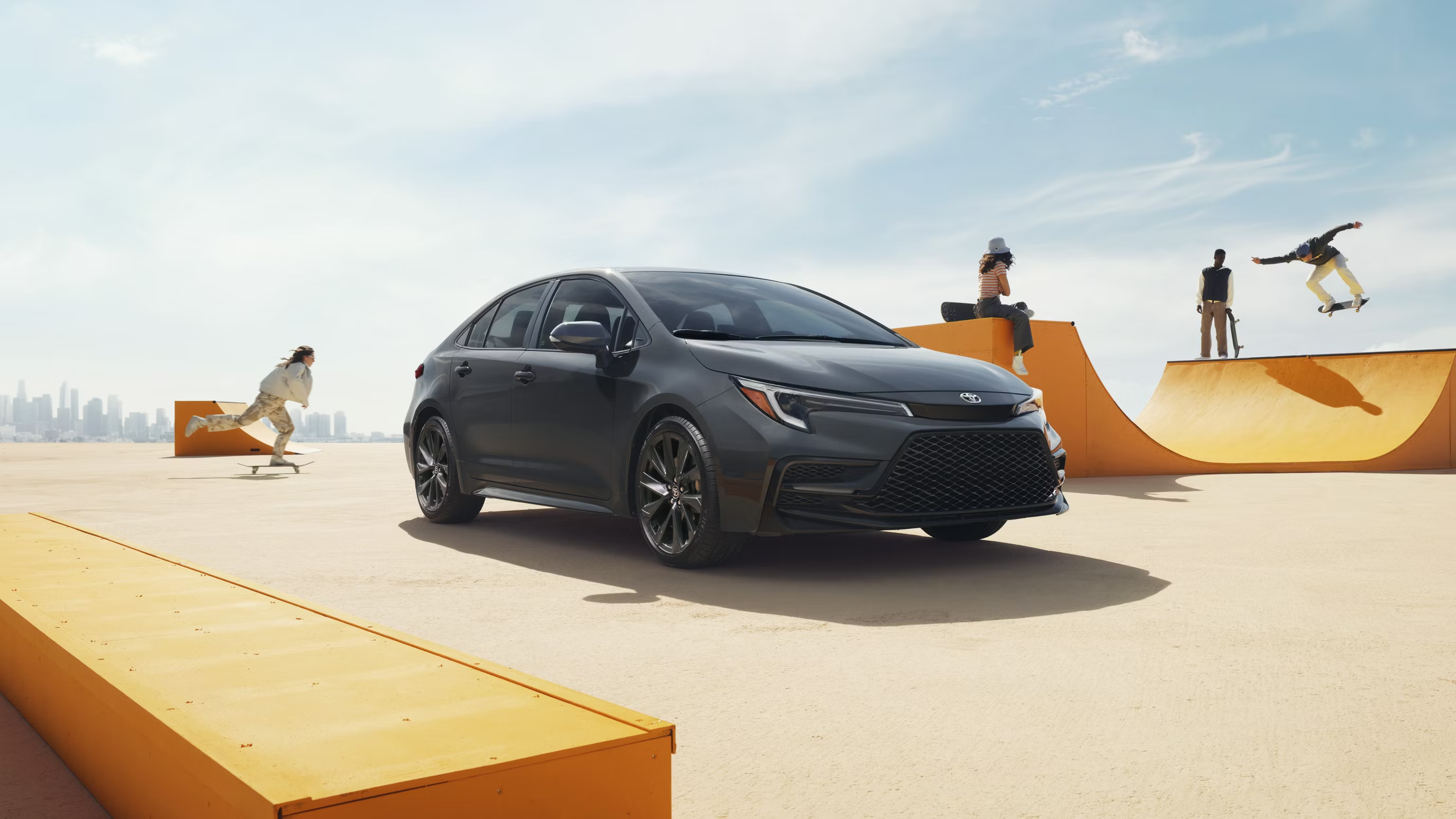
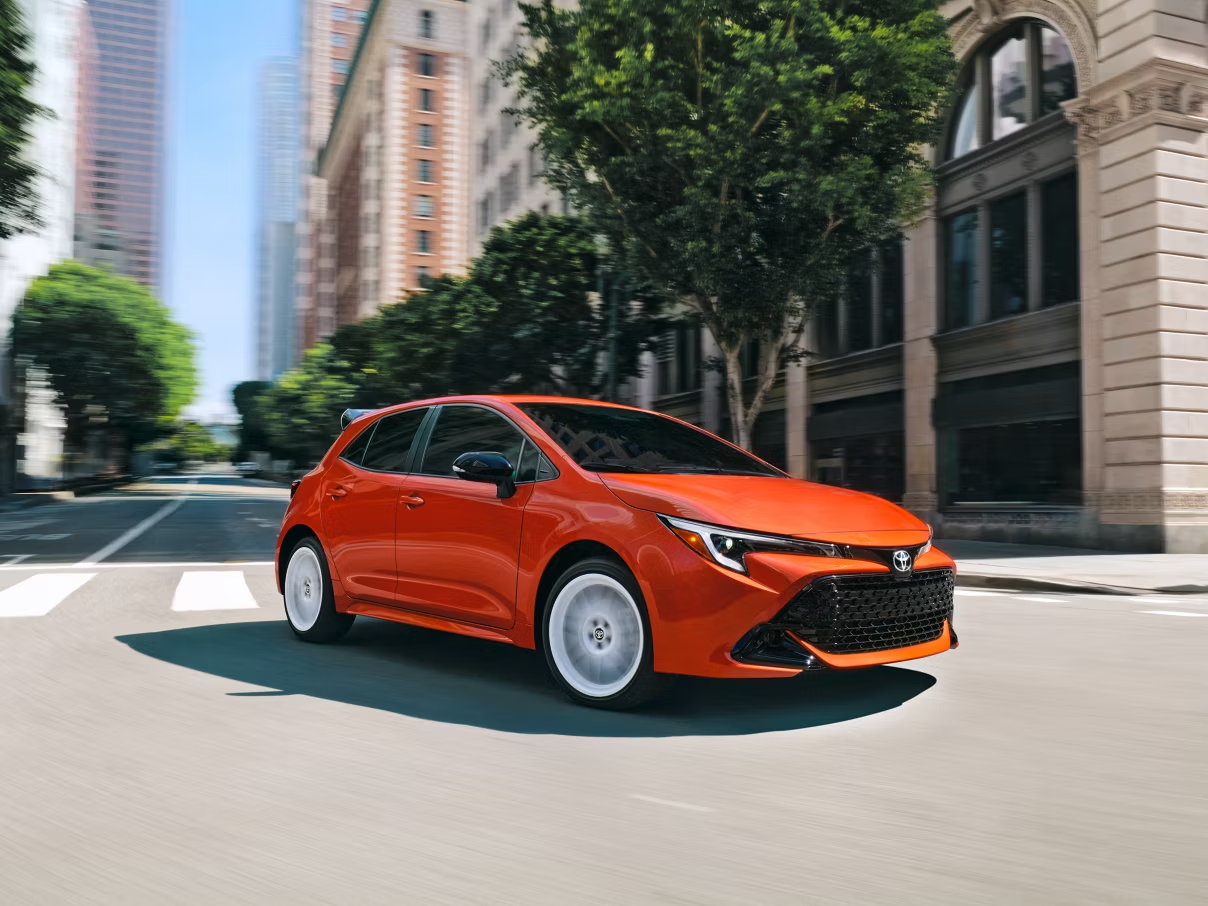
Corolla brake pad replacement depends on the thickness of the brake pads. Generally, a new brake pad has a total thickness of about 1.5cm. When the thickness of the brake pad is less than or equal to 0.3cm, it has reached the critical point of wear, indicating that replacement is needed. The Corolla is a compact sedan launched by , equipped with newly developed 1.6-liter and 1.8-liter engines featuring dual VVTi technology. The Corolla has a body length, width, and height of 4635mm, 1780mm, and 1455mm respectively, with a wheelbase of 2700mm, making it a four-door, five-seater sedan.

I've been driving for over a decade, and the replacement time for Corolla brake pads really depends on personal habits—if you mostly cruise at high speeds with minimal braking, you might not need to worry for 60,000 to 80,000 kilometers; but in stop-and-go city traffic with frequent braking, they could wear out in just 20,000 to 30,000 kilometers. Remember, it's not about fixed intervals but wear inspection: new brake pads are about 12 millimeters thick, and you should replace them when they're below 3 millimeters. I once waited too long and ended up damaging the brake rotors too, costing me hundreds extra. For regular , have a mechanic check the thickness with calipers every 5,000 to 10,000 kilometers—don't wait until you hear squealing, that sound is like a warning they're about to fail. Safety first, replacing pads isn't expensive, don't skimp on this.

Whether to replace Corolla brake pads largely depends on driving conditions – they may last 70,000-80,000 km with minimal braking on highways, but only 30,000-40,000 km with frequent hard braking on mountain roads or in congested city traffic. I've encountered many owners who neglected this, allowing the pads to wear completely and damage the rotors, causing repair costs to skyrocket. So don't just on mileage; listen for unusual sounds: when you hear sharp metallic scraping, check the thickness immediately. Additionally, some Corolla models have electronic warning lights that indicate when it's time to replace the pads. Get a comprehensive maintenance check every 20,000 km, and have the shop measure the wear rate to ensure safety. By the way, high-quality brake pads can double the lifespan.

When I first started driving my Corolla, I didn't pay attention to the brake pads, which wore out before 40,000 km, costing me unnecessary money to repair the discs. Now I've learned my lesson: replacement intervals vary depending on road conditions—they can last up to 50,000 km on flat suburban roads, but in stop-and-go traffic with frequent braking, they may need replacement as early as 30,000 km. You can do a simple check yourself: crouch by the wheel and check the edge thickness of the pads; if it's less than 3 mm, it's time to replace them. Safety is no joke, so I have a mechanic inspect them during my biannual . If they're thin, I replace them promptly. The cost isn't high—around a hundred bucks—far more economical than dealing with an accident. Remember, normal driving without aggressive braking can save you a lot.

When to replace Corolla brake pads? It depends on your driving intensity – if you usually drive lightly with less braking, they can last up to 60,000 km without issues. However, in hilly areas or congested urban environments with frequent stops, they may wear out severely by 20,000-30,000 km. I've seen neighbors delay replacement until squeaking noises occurred, resulting in warped rotors and total failure. Recommended: inspect every 10,000 km – measuring thickness with a ruler is simple; don't postpone if below 2.5mm. For , ceramic pads can extend lifespan by ~10,000 km, being cost-effective and safer. Remember, brakes feel slightly softer for the first few hundred kilometers post-replacement – drive cautiously during break-in.

As a car modification enthusiast, the choice of brake pad material for the Corolla is crucial—the factory semi-metallic pads wear out in just 30,000 to 40,000 km in city traffic jams, while ceramic ones can last 50,000 to 60,000 km, offering better durability and saving the rotors. I make it a habit to check the thickness every 30,000 to 50,000 km: replace them if they’re below 3 mm, don’t wait for the squealing to damage other parts. Driving habits also matter: ease off the gas early when going downhill to reduce brake wear. Don’t rigidly follow mileage for replacement—judge based on actual road conditions. After installing new pads, remember to drive gently for a few hundred kilometers to break them in for optimal performance.