···
Log in / Register

How many models of Mercedes-Benz SUVs are there?

6Answers
LeBrooke
07/29/2025, 02:00:59 AM

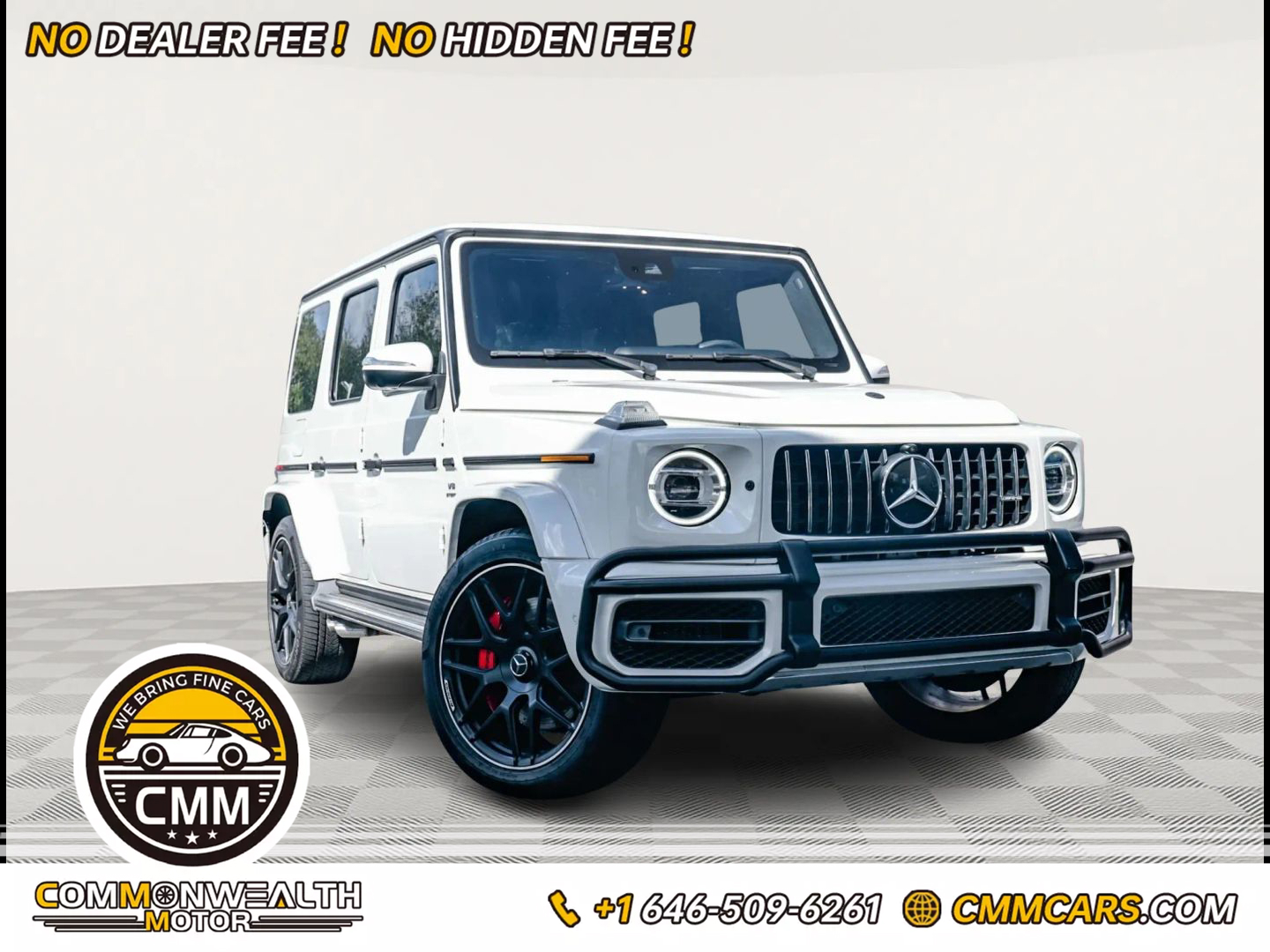
Mercedes-Benz SUV models include: Mercedes GL450, Mercedes GLK300, Mercedes GLK350, Mercedes B200, Mercedes G500, Mercedes ML550, Mercedes B200, Mercedes GLK300, Mercedes GLK350, Mercedes GL450, Mercedes G500, Mercedes ML550, etc. Mercedes-Benz is a world-renowned German automotive brand, founded in 1900 and headquartered in Stuttgart. The founders were Karl Benz and Gottlieb Daimler. An SUV is a type of vehicle specifically designed for off-road driving. Its main features include four-wheel drive, a higher chassis, tires with better traction, higher exhaust pipes, greater horsepower, and sturdy bumpers. Off-road vehicles have three main categories, each with different load-bearing capacities.

Was this review help?
113
Share
Rich
08/12/2025, 04:51:28 PM

Mercedes-Benz's off-road vehicle lineup can be divided into 6 mainstream models: the compact GLA, which is small and agile, perfect for urban driving; the uniquely designed GLB with a seven-seat version, practical and convenient for family trips; the mid-size GLC, offering great value for money with stable power output; the comfort-focused GLE, with spacious interiors capable of carrying plenty of luggage; the flagship large GLS, featuring luxurious interiors ideal for long-distance travel without fatigue; and the classic G-Class, a pure hardcore off-roader with a rugged style that effortlessly handles rough terrain. These models cover various usage scenarios, and with the addition of electric versions like the EQA and EQB, Mercedes-Benz is gradually transitioning to green mobility. As a car enthusiast, I often keep up with Mercedes-Benz's updates and believe test driving is crucial before making a purchase—feeling the throttle response and chassis support can help avoid regrets. Sharing more insights makes the conversation livelier.

Was this review help?
8
Share
Expand All
Seth
10/03/2025, 04:30:08 AM

Let's talk about Mercedes-Benz SUVs. I've counted roughly 6 main models: The GLA is compact and agile, easy to park; the GLB offers spacious rear seating, accommodating up to seven family members; the GLC is well-balanced, making daily commutes worry-free; the GLE excels in comfort, ensuring no backaches on long drives; the GLS boasts massive dimensions, easily hauling cargo or picnic gear; while the G-Class emphasizes off-road capability, standing firm in mud or snow. Electric versions like the EQA are also gaining traction, appealing for their eco-friendly and fuel-efficient concepts. When actually choosing, consider your budget and lifestyle—whether you're driving mostly in the city or suburbs. Personally, I prioritize practicality, and Mercedes' reliability with affordable maintenance is a plus. I recommend visiting auto shows to get hands-on experience—it's always more reliable than just reading specs.

Was this review help?
16
Share
Expand All
DeAmara
11/16/2025, 10:21:58 PM

The Mercedes-Benz SUV family consists of 6 core models: the compact GLA (4,320mm long, ideal for urban use), the 7-seater GLB, the mid-sized GLC with balanced proportions, the comfort-focused GLE (large midsize), the full-size GLS, and the purpose-built off-roader G-Class. Chassis designs vary, with the G-Class employing a ladder frame for enhanced rigidity. Powertrain options include gasoline, diesel, and hybrid variants, while the EQA represents the electric derivative. Technically, while the base model count remains fixed, numerous derivatives exist to cater to diverse needs like off-roading or daily commuting. For the most updated lineup, we recommend consulting official Mercedes-Benz specifications.

Was this review help?
15
Share
Expand All
Piper
01/06/2026, 11:58:22 PM

The evolution of Mercedes-Benz's SUV models is quite fascinating! There are six mainstream models: the compact and entry-level GLA; the practical multi-seat GLB; the GLC, an upgrade from the older GLK; the GLE, formerly known as the ML series; the ultra-luxurious GLS; and the classic G-Class with its military background. The history dates back to 1979, starting with the civilian adaptation of the military G-Class, with the entire SUV lineup being completed in the 2000s, reflecting market changes. Now, under the electric trend, the EQ series complements the lineup. Understanding this makes choosing a car much clearer.

Was this review help?
17
Share
Expand All
Christina
04/03/2026, 11:04:32 PM

Looking at the trends in Mercedes-Benz SUVs, the current core lineup consists of 6 models: GLA, GLB, GLC, GLE, GLS, and the G-Class. However, with the rapid adoption of electric vehicles like the EQA, future models may transition to electrification combined with smart technology. Mercedes-Benz's strategy emphasizes diverse coverage of customer segments, with the number of models likely to remain stable while incorporating innovation. When considering a purchase, pay attention to sustainability and charging convenience. Test drive multiple new models to experience the differences in value.

Was this review help?
6
Share
Expand All
More Q&A

what happens if a tree falls on my car

If a tree falls on your car, your comprehensive auto insurance coverage is the primary type of policy that will pay for the damages. This is generally considered a "no-fault" incident, meaning your rates are unlikely to increase because of it. Your immediate steps should be to ensure everyone's safety, document the damage thoroughly with photos and videos, and contact your insurance provider to file a claim. First, check for injuries and call 911 if anyone is hurt. If it's safe, move the vehicle away from any ongoing hazards like dangling branches or downed power lines. Then, document the scene extensively. Take clear pictures and videos from multiple angles, capturing the entire car, the license plate, the surrounding area, and the tree itself. This visual evidence is critical for your insurance claim. Contact your insurance company as soon as possible to start the claims process. They will guide you through the next steps, which usually involve getting a repair estimate. An insurance adjuster will assess the damage to determine the cost of repairs or, if the damage is severe enough, declare the car a total loss . The claims process timeline can vary based on the severity of the damage and your insurer's workload. The following table outlines typical coverage scenarios and potential out-of-pocket costs depending on your policy. Insurance Coverage Type Covers Tree Damage? Typical Deductible Key Considerations Comprehensive Yes, this is the correct coverage. $100 - $1,000 (You choose) Covers events like falling objects, fire, theft, and vandalism. Collision No, unless you swerved to avoid the tree and hit something else. $250 - $1,000 Covers damage from collisions with another vehicle or object. Liability-Only No. This only covers damage you cause to others. N/A You would be responsible for all repair costs. If the tree was on a neighbor's property and it was neglected (e.g., a dead tree they were warned about), their homeowner's insurance might be liable. However, if the tree was healthy and fell due to a storm (an "act of God"), your comprehensive insurance is still the primary recourse. Always review your policy details or speak with your agent to understand your specific coverage and deductible.
112
Share

what to do if i lost my car registration

If you've lost your car registration, you need to apply for a replacement immediately, as driving without the registration document (or a valid copy) in your vehicle is illegal in most states. The process is handled by your state's Department of Motor Vehicles (DMV) or equivalent agency. You can typically apply online, by mail, or in person. The fastest method is usually online if your state offers it. You'll need to provide specific information, such as your license plate number and Vehicle Identification Number (VIN), and pay a small replacement fee. The exact steps, fees, and processing times vary significantly by state. Some states may require additional documents or forms of identification. It's crucial to act quickly to avoid potential issues if you're pulled over by law enforcement. Here is a comparison of the replacement process in five different states to illustrate the variations: State Governing Agency Primary Application Method Typical Fee Average Processing Time (Online/Mail) In-Person Requirement? California DMV Online, Mail, or In-Person $23 2-3 weeks / 3-4 weeks No Texas DMV Online, Mail, or In-Person $6.65 3 weeks / 4 weeks No Florida Highway Safety and Motor Vehicles (FLHSMV) Online, Mail, or In-Person $2.50 10 business days / 3 weeks No New York DMV Online or Mail $3 2 weeks / 3 weeks Often required for first-time registration Illinois Secretary of State Online, Mail, or In-Person $5 15 business days / 20 business days No Before you apply, gather your driver's license and your vehicle's VIN, which is found on the dashboard near the windshield or on the driver's side doorjamb. While waiting for the replacement, keep a copy of your application receipt or confirmation email in your car as temporary proof. If your registration was stolen, consider filing a police report, though it's rarely mandatory for a replacement.
101
Share

how long does it take to tint a car

The time required to tint a car typically ranges from 2 to 5 hours for a standard sedan. The exact duration depends on several factors, with the vehicle's size and the type of window film being the most significant. A professional installation is a meticulous process that cannot be rushed for a quality result. Key Factors Influencing Tinting Time Vehicle Size and Complexity: A compact coupe with few windows will be on the lower end of the time spectrum. In contrast, a large SUV like a Chevrolet Suburban or a minivan with additional windows and complex curves will take significantly longer. The rear window is often the most time-consuming due to its large size and the need to carefully heat and shrink the film to fit its curvature without defects. Type of Window Film: The material matters. Basic dyed film is more pliable and easier to work with. Ceramic tint , known for its superior heat rejection, is generally thicker and less forgiving, requiring more skill and time to install flawlessly. Shop Workload and Technician Experience: A busy shop with multiple cars in the queue may have a longer turnaround time. An experienced technician works more efficiently and makes fewer mistakes, but they still adhere to a careful process that shouldn't be hurried. The Professional Tinting Process Breakdown A proper job involves more than just applying the film. The first step is a thorough cleaning and preparation of each window to remove any dirt or debris that could cause bubbles. The film is then precisely cut, shaped, and applied using a slip solution. Finally, the installer uses a squeegee to remove all the liquid and ensure a perfect bond. The car is often left to sit for a period to allow for initial curing before you drive away. The following table provides a realistic timeframe for different vehicle types: Vehicle Type Estimated Time Frame Key Considerations Standard Sedan (e.g., Toyota Camry) 2 - 3.5 hours Straightforward windows, smaller rear glass. Coupe (e.g., Ford Mustang) 2 - 3 hours Fewer windows, but often has more severe glass angles. SUV / Minivan (e.g., Honda Pilot) 3.5 - 5 hours More glass surface area, larger and more complex rear window. Truck (Crew Cab) 3 - 4.5 hours Four roll-down windows plus a relatively flat rear window. It's crucial to factor in drying or curing time . While the film is installed in hours, it can take several days to fully dry and adhere. During this time, you'll be advised not to roll down the windows to prevent peeling.
117
Share

what kind of tires does my car need

The right tires for your car depend primarily on three factors: your vehicle's specifications, your local climate, and your driving habits. The quickest way to find the exact match is to check the sidewall of your current tires for a code like "P215/65R16 95H," which tells you the correct size, load capacity (load index), and speed rating. For most drivers, a set of all-season tires is the best bet, offering a solid balance of performance in wet and dry conditions with decent tread life. However, if you experience harsh winters with consistent temperatures below 45°F (7°C), dedicated winter tires are a safety essential. Their softer rubber compound and unique tread patterns provide significantly better traction on ice and snow. Conversely, if you live in a region with hot, dry weather year-round, summer tires offer superior grip and handling. For trucks and SUVs used for off-roading, all-terrain (A/T) or mud-terrain (M/T) tires are necessary. Beyond type, consider the Uniform Tire Quality Grading (UTQGS) . This government-mandated system grades tires on: Treadwear: A higher number (e.g., 500) indicates a longer-wearing tire compared to a baseline of 100. Traction: Grades AA, A, B, or C (AA being the highest) for wet braking ability. Temperature: Grades A, B, or C (A being the highest) for a tire's heat resistance at high speeds. Here’s a quick reference table for common passenger car tire types: Tire Type Best For Key Characteristics Treadwear Grade (Typical) Traction Grade (Typical) All-Season Year-round use in moderate climates Balanced performance, good tread life 400 - 700 A Winter / Snow Snow, ice, and freezing temperatures Soft compound, deep treads with sipes 300 - 500 Not Applicable Summer / Performance Sporty driving, warm climates Sticky rubber, aggressive tread for dry roads 200 - 400 AA All-Terrain (A/T) Light off-roading, mixed surfaces Durable, aggressive tread pattern 400 - 600 B Touring Luxury sedans and minivans Quiet, comfortable ride, all-season capability 500 - 800 A Always consult your vehicle's owner's manual or the placard inside the driver's side door jamb for the manufacturer's recommended tire size and inflation pressures.
115
Share

how long is average car

The average car length in the United States is approximately 15 feet, or 4.5 meters . However, this is a general figure that varies significantly based on the vehicle type. The shift in consumer preference from sedans to larger trucks and SUVs has steadily increased the average size of vehicles on the road over the past two decades. Vehicle length is a critical factor for parking, garage fit, and overall maneuverability. It's measured from the front bumper to the rear bumper. The following table illustrates the typical length ranges for popular vehicle segments, showing why a single "average" can be misleading. Vehicle Segment Typical Length Range (feet) Typical Length Range (meters) Example Models Subcompact Car 12.5 - 14.5 ft 3.8 - 4.4 m Honda Fit, Chevrolet Spark Compact Car 14.5 - 15.5 ft 4.4 - 4.7 m Toyota Corolla, Honda Civic Midsize Sedan 15.5 - 16.5 ft 4.7 - 5.0 m Toyota Camry, Honda Accord Full-Size Sedan 16.5 - 17.5 ft 5.0 - 5.3 m Dodge Charger, Nissan Maxima Compact SUV 15.0 - 16.5 ft 4.6 - 5.0 m Honda CR-V, Toyota RAV4 Full-Size SUV 16.5 - 18.5 ft 5.0 - 5.6 m Chevrolet Tahoe, Ford Expedition Crew Cab Pickup Truck 18.5 - 22.0 ft 5.6 - 6.7 m Ford F-150, Ram 1500 When considering a new vehicle, it's wise to measure your garage space and consider your daily parking needs. A full-size truck might be 6 feet longer than a compact car, which can make a noticeable difference in tight parking spots or a small driveway.
102
Share

what is the most reliable car in the world

The most reliable car in the world isn't a single model but a title consistently held by brands like Lexus and Toyota based on long-term industry data. These brands dominate reliability rankings year after year due to their philosophy of using proven, well-tested technology and conservative engineering. While specific models can vary by year, the underpinning quality control and manufacturing processes of these manufacturers make them the safest bet for consumers seeking long-term dependability and low ownership costs. This reliability is measured by organizations like J.D. Power , which assesses problems experienced by original owners of three-year-old vehicles, and Consumer Reports , which surveys its members on hundreds of thousands of vehicles. The key metric is the number of problems reported per 100 vehicles (PP100), where a lower score indicates higher reliability. Data Source Most Reliable Brand (Recent Data Example) Key Reliability Metric (Problems per 100 Vehicles) Notable Standout Models J.D. Power 2024 VDS Lexus 135 PP100 Lexus IS, Lexus ES Consumer Reports 2024 Lexus 79 (Avg. Score) Lexus NX, Toyota 4Runner J.D. Power 2023 VDS Lexus 133 PP100 Lexus RX, Lexus UX iSeeCars Longevity Toyota 20.3% of models exceed 200k miles Land Cruiser, Sequoia Consumer Reports 2023 Toyota 76 (Avg. Score) Toyota Corolla, Toyota Prius This reliability translates directly to your wallet. Owners of these vehicles face fewer unexpected repairs, lower maintenance costs, and historically higher resale values . For example, a Toyota Camry or a Lexus ES is far less likely to need a major transmission or engine repair before 150,000 miles compared to many competitors. It's also worth noting that reliability isn't just about luxury sedans. Toyota's trucks and SUVs, like the Tacoma and 4Runner , are legendary for their ability to withstand harsh conditions and high mileage with basic maintenance. The key is choosing a model with a track record of proven mechanical components rather than one packed with the latest, unproven technology. When it comes to peace of mind and cost-effective ownership over a decade or more, the data overwhelmingly points to these brands.
114
Share
Cookie
Cookie Settings
© 2025 Servanan International Pte. Ltd.