···
Log in / Register

Does the Electronic Parking Brake Act on the Front or Rear Wheels?

6Answers
SanCali
09/06/2025, 10:09:07 PM

The electronic parking brake acts on the front wheels. It is a technology that achieves parking braking through electronic control. Its working principle is the same as that of a mechanical handbrake, both achieving control of parking braking through the friction generated between the brake disc and brake pads. However, the control method has changed from the previous mechanical handbrake lever to an electronic button. The electronic parking brake has extended from the basic parking function to the automatic parking function. The application of automatic parking technology allows drivers to avoid prolonged braking when the vehicle is stationary. When the automatic electronic parking brake is activated, it can prevent unnecessary sliding of the vehicle.

Was this review help?
105
Share
MacAdriana
09/18/2025, 04:28:52 AM

As a long-time car enthusiast, I've always been fascinated by electronic systems. The electronic parking brake indeed acts on the rear wheels. Simply put, when you press that small button, the signal is transmitted via wires to the rear wheel brakes, locking them. Why not the front wheels? Because the front wheels primarily handle daily braking and steering, bearing too much load. Using them for parking could lead to imbalance or failure risks. Rear wheels provide more stability when parked, especially preventing sliding on slopes. Some high-end models might have fine-tuning, but the vast majority of cars focus on rear wheels. The advantage is its convenience and intelligence—it automatically releases when starting the car. But remember, don't use it as an emergency brake. Regular maintenance of rear brake calipers to prevent rust is crucial.

Was this review help?
19
Share
Expand All
VonCooper
11/01/2025, 10:08:08 PM

Having driven for over twenty years, safety has always been my top priority. The electronic parking brake typically adopts a rear-wheel braking design, which ensures greater vehicle stability when parked, preventing rollback on steep slopes or side slipping. The rationale lies in the fact that the front wheels are steering wheels, and locking them could compromise handling safety; whereas the rear wheels bear even force distribution, reducing accident risks. This system employs electrical signals to control the rear wheels, offering user-friendly operation and eliminating the pulling force issues associated with traditional handbrakes. Drivers should remain vigilant to avoid accidentally pressing the button while driving, and it's equally crucial to consult the vehicle manual to understand emergency release procedures.

Was this review help?
9
Share
Expand All
LaJessica
12/15/2025, 09:12:10 PM

As a new driver who just got my license, I was curious about this question. The electronic parking brake mainly locks the rear wheels. It's simple to operate—just press the button lightly, unlike the old-fashioned handbrake which requires more effort. The rear wheels handle the parking task, not the front wheels, because the front wheels are responsible for normal braking while driving. It's quite convenient to use; it automatically tightens when parked on a slope. But remember, it's not a substitute for the foot brake—relying on the foot to control the braking system while driving is the safest.

Was this review help?
14
Share
Expand All
StLilah
02/04/2026, 10:02:27 PM

Those who frequently work on cars understand these details. The electronic parking brake mechanism acts on the rear wheels, where the rear brake receives the signal to lock, while the front wheels retain driving capability without affecting handling. This design ensures high reliability, preventing excessive burden on the front wheels that could lead to accelerated wear. In terms of maintenance, rear wheel components are prone to dust accumulation and rust, so regular cleaning and lubrication can extend their lifespan. Avoid using it for emergency braking situations—simply check if it's securely locked after parking. Developing this habit helps reduce the likelihood of malfunctions.

Was this review help?
12
Share
Expand All
PaigeLynn
02/04/2026, 10:04:07 PM

I use my car every day to pick up and drop off family members, and the electronic parking brake on the rear wheels is very practical. When parking on slopes, it reliably locks the rear wheels to prevent rolling—safety first. The front wheels are designed for steering and power braking. This system is more convenient and efficient than traditional handbrakes, automatically unlocking when starting the vehicle and reducing driving fatigue when combined with the auto-hold function. Remember not to operate the button while driving, and keep the rear wheel area clean to prevent rust issues that could affect performance.

Was this review help?
20
Share
Expand All
More Q&A

what are boots on a car

"Boots" on a car are protective rubber or thermoplastic sleeves that cover critical joint components, primarily the Constant Velocity (CV) joints on the front axles of front-wheel and all-wheel drive vehicles. Their primary job is to keep special grease inside the joint to lubricate it and to keep dirt, water, and debris out. A torn or damaged boot is a common repair issue because once it fails, the joint quickly wears out from contamination and lack of lubrication, leading to costly replacements. The most common type is the CV boot , which protects the CV joint. This joint is essential for transferring power to the wheels while allowing them to turn and move up and down with the suspension. You'll also find a similar, though often larger, steering rack boot that protects the inner tie rod ends, which are crucial for precise steering. A failing boot is easy to spot. Look for visible cracks, tears, or grease slung around the inside of your wheel or under the car. The most common symptom is a loud clicking or popping noise when turning , which indicates the CV joint is already damaged. Replacing a torn boot is a relatively inexpensive preventative repair. Ignoring it almost always leads to a full CV joint replacement, which can cost several hundred dollars. Symptom of a Failing Boot Underlying Issue Potential Consequence if Ignored Grease splattered on wheel inner rim or undercarriage Torn boot leaking lubricant CV joint contamination and rapid wear Clicking/popping sound during turns Worn-out, dry CV joint Joint failure, inability to drive the car Grease visible on garage floor Cracked or torn boot Complete joint seizure Vibration during acceleration Advanced joint wear from contamination Driveline damage, unsafe driving conditions Grinding sensation while steering Damaged steering rack boot Costly steering rack repair
114
Share

what are expensive cars

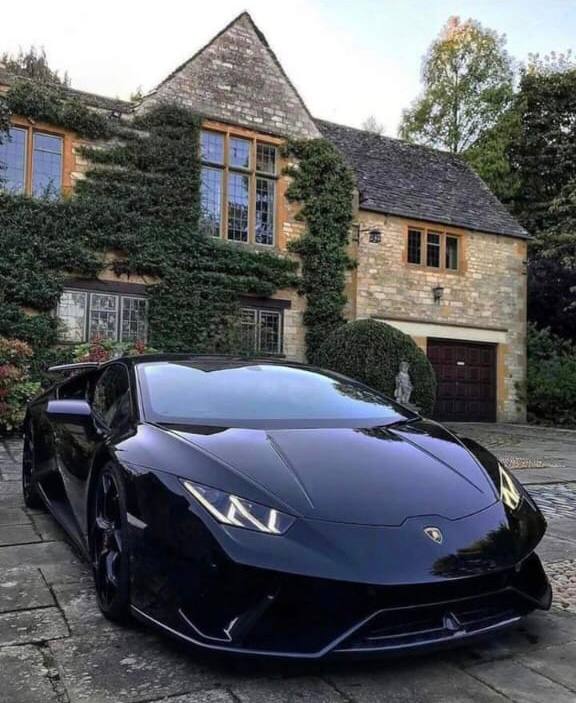
Expensive cars are generally defined as vehicles with a starting Manufacturer's Suggested Retail Price (MSRP) above $80,000. However, the true cost extends far beyond the sticker price, encompassing factors like high-end brand prestige (e.g., Rolls-Royce, Ferrari), cutting-edge technology, exclusive materials, and exceptional performance metrics. These vehicles are characterized by superior build quality, powerful engines, and bespoke customization options that justify their premium positioning in the market. The financial commitment involves more than just the initial purchase. Depreciation , while often steep in the first few years, can vary significantly by brand. Maintenance, insurance, and fuel costs are substantially higher than for average cars. For example, an oil change for a high-performance European luxury car can cost over $500, and annual insurance can run into thousands of dollars. Here is a comparison of some well-known expensive cars and their starting prices: Model Starting Price (MSRP) Notable Feature Porsche 911 $114,400 Iconic sports car with rear-engine layout Mercedes-Benz S-Class $118,450 Benchmark for luxury sedan technology & comfort Land Rover Defender $57,000 Premier off-road capability and luxury Ferrari Roma $247,310 Mid-front-engined V8 grand tourer Rolls-Royce Ghost $354,750 Epitome of bespoke luxury and silence BMW 7 Series $97,400 Advanced driver-assist systems and interior Lamborghini Huracán $218,009 Naturally aspirated V10 engine Bentley Continental GT $239,100 Handcrafted interior and grand touring prowess Ultimately, an expensive car is a purchase driven by a combination of desire for performance, luxury, status, and personalized expression. It's a significant investment that delivers an unparalleled driving and ownership experience for those who can afford the associated costs.
103
Share

is jaguar a british car

Yes, Jaguar is fundamentally a British car brand. Its identity is deeply rooted in British automotive history, craftsmanship, and design philosophy. Founded in 1922 as the Swallow Sidecar Company by Sir William Lyons, Jaguar grew to become a symbol of British luxury and performance, renowned for its elegant styling and powerful engines. While the company has been owned by the Indian multinational Tata Motors since 2008, its core design, engineering, and heritage remain quintessentially British. The brand's heart is still in the UK. Jaguar's primary manufacturing and R&D facilities are located in Castle Bromwich and Solihull, England. The classic design principles—long hoods, graceful curves, and a blend of sportiness and sophistication—are hallmarks of British automotive design. Key models like the Jaguar F-Type sports car and the Jaguar XJ luxury sedan are icons of British motoring culture. Ownership by Tata Motors has provided financial stability and investment, allowing Jaguar to develop new technologies while preserving its British character. It’s a modern global business reality: a brand can have international ownership while its soul remains firmly planted in its country of origin. For all practical purposes, when you buy a Jaguar, you are buying a car with a British heritage, built primarily in Britain, and embodying a distinctly British spirit on the road. Aspect British Connection Notes Founding & History Founded in Blackpool, England (1922) Sir William Lyons was British; brand became a national icon. Primary Manufacturing Castle Bromwich & Solihull, England Key models like the F-Type and XE are built there. Design Headquarters Gaydon, Warwickshire, UK The global creative center for Jaguar design. Current Ownership Tata Motors (India) Acquired from Ford in 2008; provides investment and stability. Brand Heritage Symbol of British luxury/performance Known for "Grace, Space, and Pace," a classic British motto. Motorsport Legacy Success at Le Mans (1950s) Racing victories cemented its British engineering reputation.
103
Share

is jeep an american car

Yes, Jeep is fundamentally an American car brand. Its identity is deeply rooted in U.S. military history, starting with the Willys MB, the workhorse of Allied forces during World War II. This heritage directly shaped the civilian models that followed, creating the blueprint for the modern SUV. While Jeep is now part of the multinational automaker Stellantis, its heart and soul remain in America. Key design, engineering, and manufacturing operations are still heavily concentrated in the U.S., particularly in states like Michigan and Ohio. The brand's most iconic models, such as the Wrangler and Grand Cherokee , are primarily built in American factories. For example, the Jeep Wrangler is assembled in Toledo, Ohio, a plant with a history tied to the brand since the 1940s. The table below shows the U.S. production locations for some of its most popular models, demonstrating its domestic manufacturing footprint. Jeep Model Primary U.S. Assembly Plant Location Wrangler Toledo, Ohio Grand Cherokee Detroit, Michigan Cherokee Belvidere, Illinois (Note: Currently idled) Compass Toluca, Mexico (included for contrast) Gladiator Toledo, Ohio Wagoneer/Grand Wagoneer Warren, Michigan Beyond manufacturing, Jeep's core brand image is built on American ideals of adventure, freedom, and rugged capability, epitomized by its dominance on trails like the Rubicon. So, while it's a global brand with some international production, its origins, flagship product development, and cultural resonance are unmistakably American.
118
Share

is car voltage ac or dc

Car electrical systems primarily use Direct Current (DC). The standard voltage for most traditional gasoline and diesel vehicles is a 12V DC system. This DC power is supplied by the battery and is used to operate almost everything in the car, from the starter motor and headlights to the infotainment system and power windows. While the battery provides DC, it is charged by the alternator, which generates Alternating Current (AC). The alternator contains a rectifier that immediately converts this AC into DC before it reaches the battery and the rest of the vehicle's electrical components. The reason for this DC-based design is rooted in energy storage. Car batteries store electrical energy chemically, which is a DC process. Using DC throughout the system simplifies the design and is safer for the low-voltage components in a vehicle. However, the story gets more interesting with modern features. If you want to use standard household AC appliances, you need a power inverter, which converts the car's 12V DC back into 110V AC. The rise of electric vehicles (EVs) adds another layer. EVs have two main electrical systems: a high-voltage DC system (often 400V or 800V) that powers the drive motor and a low-voltage 12V DC system that runs the ancillary electronics, just like a traditional car. The onboard charger in an EV performs a critical conversion, taking AC power from a public Level 2 charger or your home outlet and converting it to DC to charge the high-voltage battery pack. Component Current Type Function Battery DC Stores energy to start the car and power electronics when the engine is off. Alternator Generates AC, outputs DC Converts engine's mechanical energy into electricity; rectifier converts AC to DC to charge the battery. Starter Motor DC Uses a large amount of DC current from the battery to crank the engine. EV Powertrain DC High-voltage DC from the battery pack is used to power the electric traction motor. EV Onboard Charger AC Input / DC Output Converts AC from a charging station into DC to recharge the vehicle's main battery.
114
Share

how wide is a smart car

The width of a Smart car, specifically the most common Fortwo model, is 61.4 inches (5.12 feet or approximately 155.9 cm) . This measurement is for the body itself, not including the side mirrors. When you include the mirrors, the total width increases to about 77.3 inches (6.44 feet or 196.3 cm) . This compact width is the car's defining feature, making it exceptionally easy to park and maneuver in tight urban environments where space is at a premium. To put this into perspective, the average mid-size sedan in the U.S., like a Toyota Camry, is over 72 inches wide without mirrors. The Smart Fortwo's narrow footprint allows it to fit into parking spots that are impossible for most other vehicles. You can often park it perpendicular to the curb in a standard parallel parking space. Smart Car Model & Generation Width (Body) Width (with Mirrors) Key Contextual Comparison Fortwo (451 generation, 2008-2015) 61.4 inches / 155.9 cm 77.3 inches / 196.3 cm Narrower than a Honda Civic by over 11 inches. Fortwo (453 generation, 2016-2019) 65.5 inches / 166.3 cm 80.9 inches / 205.5 cm Newer model is wider but still significantly smaller than average. Average U.S. Mid-Size Sedan ~73 inches / 185 cm ~82 inches / 208 cm Highlights the Smart car's unique size advantage. Standard Parking Space Width ~96 inches / 244 cm (8 feet) N/A Shows how much space remains when parked. This design prioritizes city agility over highway stability or interior spaciousness. While the cabin is surprisingly tall, the narrow width means you sit very close to your passenger. The primary trade-off for its parking prowess is that it can feel buffeted by strong crosswinds on the highway and has a tighter cabin feel than a traditional car.
112
Share
Cookie
Cookie Settings
© 2025 Servanan International Pte. Ltd.