···
Log in / Register

Can Full Vehicle Repainting Be Claimed on Insurance?

1Answers
OAngela
07/24/2025, 08:19:32 AM

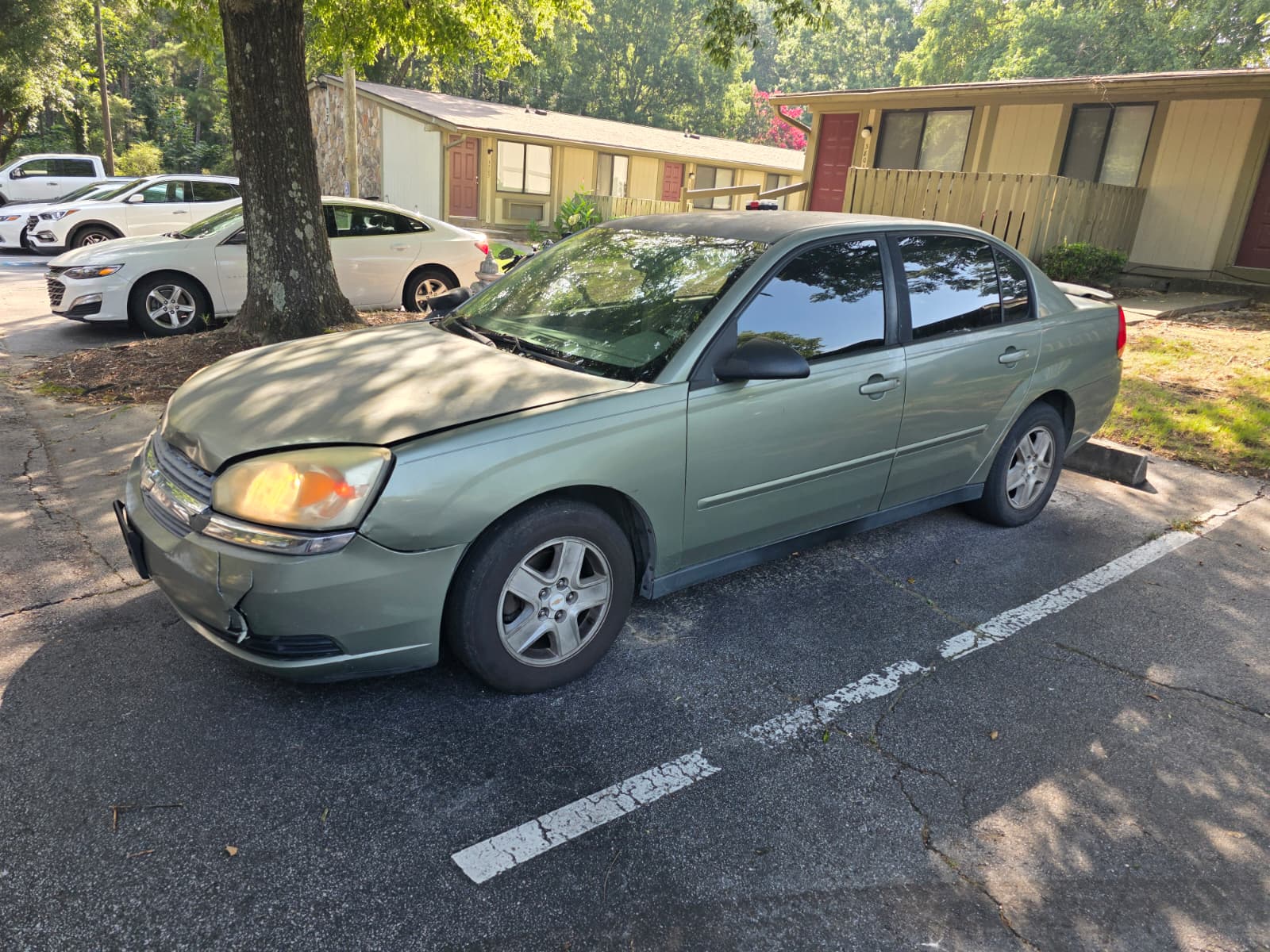
Full vehicle repainting can be claimed on insurance. There are three ways to claim full vehicle repainting through insurance as follows: 1. Purchase scratch insurance: If the car has scratches, you can directly file a claim with the insurance company. Up to six panels can be covered, excluding the roof. 2. Without scratch insurance: It is not easy to claim full vehicle repainting for an accident-damaged car because full repainting is expensive, the fixed cost is relatively high, and the assessed damage will also be higher. The car must be severely damaged to claim for repainting. Generally, insurance companies will not cover the full cost and will only compensate for the damaged paint surfaces. Additionally, car owners should note that they cannot use fraudulent means to claim full vehicle repainting. Full repainting is suitable only if the car body is severely damaged with significant dents or scratches. The original paint on the car body is usually of good quality, and replacing it with new paint may not necessarily be better—it depends on maintenance.

Was this review help?
119
Share
More Q&A

How to Use Vehicle Lights Before Entering a Two-Way Tunnel

When entering a two-way tunnel, vehicles should turn on their low-beam headlights and avoid using high beams. Below are detailed instructions on how to use vehicle lights when entering a two-way tunnel: 1. If the tunnel itself is unlit, drivers may adjust their lights accordingly, but must switch to low beams when approaching oncoming vehicles. When driving into a tunnel, the sudden transition from bright to dark conditions causes a temporary decline in human vision, requiring approximately 7 to 8 seconds for adaptation. Therefore, it is essential to reduce speed before entering the tunnel. 2. When passing through a typical single-lane tunnel, observe whether there are oncoming vehicles, and turn on both front and rear lights. Generally, honking should be avoided. The purpose of turning on the lights is to indicate the vehicle's position, maintain safe following distances, and prevent rear-end collisions. When driving in a dual-lane tunnel, adhere to traffic rules by keeping to the right lane. Lane changes within the tunnel are prohibited, and overtaking should never be attempted inside the tunnel.
103
Share

How Long Can Opened Engine Oil Be Stored?

Mineral oil can be stored for 6 months; semi-synthetic oil for 9 months; and full-synthetic oil for 12 months or even longer. The storage methods for engine oil are as follows: 1. After maintenance, the remaining oil should be sealed as soon as possible with the cap, preferably sealed with wax. If wax sealing is inconvenient, you can use a clean plastic bag, fold it several times to cover the oil can opening, and then tighten the cap for better sealing. 2. Engine oil is prone to deterioration under light and high temperatures, so the remaining oil should be stored in a cool and dry place to avoid accelerating its deterioration. 3. It is recommended to use the remaining oil within six months. When using the remaining oil next time, handle it gently and pour slowly. Since the oil will have impurities settled at the bottom after long-term storage, the upper layer of oil can be used, while the bottom layer should be discarded to avoid mixing in impurities.
112
Share

Introduction to the Driving Modes of the 7th Generation Elantra

Owners can switch between suitable driving modes using this Drive Mode button, with 3 driving modes available: ECO (Economy Mode), NORMAL (Standard Mode), and SPORT (Sport Mode). 1. Economy Mode: When this switch is activated, the vehicle operates in economy mode, where the vehicle's computer controls fuel injection volume and the transmission control module adjusts shift logic to ensure the most economical driving. During operation, the system comprehensively evaluates and analyzes factors affecting fuel consumption, such as automatic transmission gear position, engine speed, vehicle speed, braking, and transmission oil temperature. The ECU control unit calculates the optimal fuel quantity to supply the engine, effectively reducing fuel consumption compared to normal driving mode. 2. Standard Mode: Standard Mode aims to maintain consistent power output while achieving better fuel economy. In this mode, the throttle response is balanced, offering a simpler and more comfortable driving experience that is easy to adapt to. 3. Sport Mode: When Sport Mode is engaged, the electronic control unit increases engine speed, ensuring the vehicle maintains sufficient torque for quick acceleration and deceleration, fully showcasing the car's performance. Additionally, the vehicle adjusts other settings, such as stiffening the suspension for greater support, enhancing throttle sensitivity, increasing engine air intake, and consequently, fuel consumption also rises.
108
Share

Are There Any Tips for Reverse Parking?

Reverse parking tips are as follows: 1. Straight-line parking spaces often appear on both sides of the road. First, drive forward and maintain an equal position with the car in front, leaving about a one-meter gap. Then, look at the right rear wheel through the right rearview mirror. When the right rearview mirror aligns with the B-pillar of the car in front, turn the steering wheel fully to the right. Be sure to make judgments based on your own situation. At this point, shift your gaze to the left rearview mirror. When you can see the front of the car behind you, immediately straighten the steering wheel and continue reversing. 2. Observe the right rearview mirror to check the gap between the right rear wheel and the curb. If there is enough space, turn the steering wheel fully to the left to get the car as close to the curb as possible. When most of the car body is in the parking space, also assess the distance between your car and the cars in front and behind, maintaining an appropriate gap. 3. Next is the non-straight-line parking space, which is the most common type. Determine if the parking space is suitable and fits your vehicle, then approach the space slightly and keep a side gap of about 1.5 meters. When the front of the car has just passed the parking space, turn the steering wheel away from the space to create an angle between the car and the space that is less than 90 degrees. This utilizes the space of the passageway, making it easier to reverse without needing to turn the steering wheel drastically.
104
Share

What are the differences between the 12th-generation Crown 3.0 Salon version and the standard version?

Crown Salon version features dual electric seats, wood grain interior design, multifunctional steering wheel, sunroof, 8 airbags, and black interior color. These design elements can be used to distinguish the Salon version from the standard version. More details are as follows: 1. Crown is a Toyota brand, with over 13 generations of models currently available. The domestically produced Crown in China comes with three engine options: 2.5L, 3.0L, and 4.3L, all of which excel in efficiency, fuel economy, and power performance. The car's chassis adopts a four-wheel independent suspension system, ensuring comfort and off-road capability. 2. All four models of the 12th-generation Crown are equipped with a 3.0L engine paired with a 6-speed automatic transmission. The car's weight is ideally distributed, maintaining balance. Advanced braking technology and driving assistance equipment ensure optimal traction under various road conditions.
119
Share

What are the symptoms of CVT transmission slipping?

Unlike conventional transmissions that transfer power through gear engagement, CVT transmissions rely solely on a steel belt for power transmission. Consequently, when the vehicle is under excessive load, the steel belt is prone to slipping or even breaking. Solutions are as follows: 1. According to the manufacturer's maintenance manual, the optimal solution for CVT transmission slipping is to directly replace the transmission. 2. During maintenance, visit a 4S dealership to have the CVTF (transmission fluid) degradation value checked via computer. If the degradation value divided by the total vehicle mileage is less than 2, it indicates normal conditions. However, if it exceeds 2, transmission repair is recommended to reduce the degradation value.
111
Share
Cookie
Cookie Settings
© 2025 Servanan International Pte. Ltd.