···
Log in / Register

are most cars rear wheel drive

5Answers
VanLily
12/19/2025, 01:30:38 PM

No, most cars sold today are not rear-wheel drive (RWD). The dominant configuration for everyday passenger cars is front-wheel drive (FWD), while many trucks and large SUVs use all-wheel drive (AWD) or four-wheel drive (4WD). The popularity of a specific drivetrain largely depends on the vehicle's type, price point, and intended purpose.

The shift toward FWD began decades ago because it offers significant advantages for mass-market vehicles. By packaging the engine and transmission together over the front wheels, manufacturers can create a more spacious interior cabin and a larger trunk. This design is also generally more cost-effective to produce. For the average driver, FWD provides adequate traction in most conditions, including light rain and snow, making it a practical and economical choice.

RWD has traditionally been associated with performance, luxury, and heavy-duty vehicles. In a RWD system, the rear wheels propel the car while the front wheels handle steering. This separation of duties often allows for better weight distribution and more responsive handling, which is why it's preferred for sports cars like the Ford Mustang or luxury sedans like many BMW models. For trucks that need to haul heavy loads, RWD provides better traction when the vehicle is weighted down.

The following table illustrates the prevalence of different drivetrains across common vehicle segments in the U.S. market:

Vehicle SegmentCommon Drivetrain(s)Examples
Compact/Mid-size SedansFront-Wheel Drive (FWD)Honda Civic, Toyota Camry, Hyundai Elantra
Subcompact/Compact SUVsFront-Wheel Drive (FWD) / All-Wheel Drive (AWD)Honda CR-V, Toyota RAV4, Ford Escape
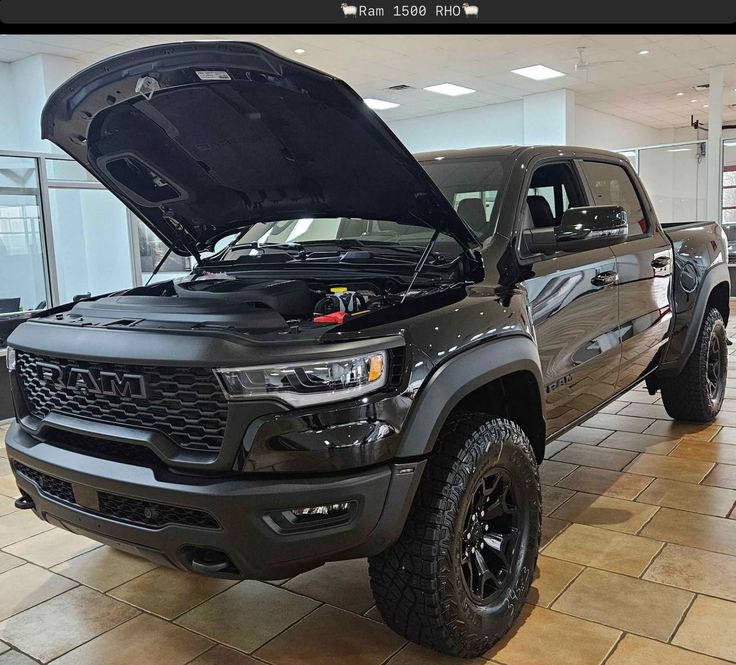
Full-size TrucksRear-Wheel Drive (RWD) / Four-Wheel Drive (4WD)Ford F-150, Chevrolet Silverado, Ram 1500
Performance/Sports CarsRear-Wheel Drive (RWD) / All-Wheel Drive (AWD)Ford Mustang, Chevrolet Corvette, Porsche 911
Large Body-on-Frame SUVsRear-Wheel Drive (RWD) / Four-Wheel Drive (4WD)Chevrolet Tahoe, Ford Expedition, Toyota 4Runner

Ultimately, the market is diverse. While RWD is not the standard for the average commuter car, it remains a vital and popular configuration for specific applications where performance, towing, or payload capacity is a priority.

Was this review help?
107
Share
LydiaFitz
12/27/2025, 06:04:35 AM

You’re probably thinking of muscle cars or big trucks, right? For your average sedan or small SUV that most people drive, it’s the opposite. They’re almost always front-wheel drive. It’s cheaper to make and gives you more room inside. My Honda Accord is FWD, and it’s fine for getting to work and the grocery store. The only time I wish it was different is in a bad snowstorm, but that’s what snow tires are for.

Was this review help?
16
Share
Expand All
McReed
01/03/2026, 06:19:05 PM

From an engineering and cost perspective, front-wheel drive is far more common. It’s an efficient packaging solution that reduces weight and manufacturing complexity for high-volume models. Rear-wheel drive is typically reserved for vehicles where performance dynamics or heavy-duty capability are primary design goals. This specialization makes RWD more expensive to produce, which is why it's not the default for economy-focused vehicles. The market share clearly reflects this cost-benefit analysis.

Was this review help?
16
Share
Expand All
LeCaden
01/11/2026, 02:57:58 AM

It really depends on what you're looking at. If you're talking about family sedans, crossovers, and most affordable cars, then no—front-wheel drive is the standard. But if you step onto a dealer lot and look at full-size pickup trucks, many luxury brands, or sports cars, you'll find rear-wheel drive is very much alive. It offers a different feel when driving, especially when accelerating. So, "most" cars aren't RWD, but a significant and important segment of the market still relies on it.

Was this review help?
2
Share
Expand All
SanSophie
01/18/2026, 05:25:00 AM

I’ve always been a car guy, so I notice this stuff. For driving enthusiasts, rear-wheel drive is often the preferred setup because it provides a more balanced and engaging experience. The steering feels sharper, and you can feel the power pushing the car from behind. However, I acknowledge that for daily practicality, especially in places with harsh winters, front-wheel or all-wheel drive makes more sense for most folks. So, while RWD isn't the most common, it's definitely the most fun for those who seek a pure driving connection.

Was this review help?
16
Share
Expand All
More Q&A

Why does the Wuling Zhiguang fail to start but works fine after a while?

The reason for this situation is insufficient fuel pressure. Here is the relevant introduction about fuel pressure: 1. Detection method: Turn on the ignition switch (without starting the engine) to make the electric fuel pump operate. The fuel pressure at this time should meet the technical requirements, generally fluctuating around 0.3MPa. 2. Fuel pressure regulator: The fuel pressure is coordinated by the spring and the vacuum degree of the air chamber. When the fuel pressure exceeds the standard value, the high-pressure fuel will push the diaphragm upward, the ball valve opens, and the excess fuel will flow back to the fuel tank through the return pipe. When the pressure is lower than the standard value, the spring presses the diaphragm downward to close the ball valve and stop the return flow. The function of the pressure regulator is to keep the pressure in the fuel circuit constant.
102
Share

What is the Honda 220?

Honda 220 refers to the Honda Civic. This vehicle is a compact sedan introduced by Dongfeng Honda. Honda was founded in 1946 by Soichiro Honda. Known as the 'Ferrari of the East,' and its founder Soichiro Honda referred to as the 'Henry Ford of Japan,' these titles are acknowledgments of Honda's achievements. Honda initially started with motorcycles and expanded into the automobile business in 1962. In 1972, Honda launched the Honda Civic, marking a milestone and the beginning of Honda's global recognition. The dimensions of the car are 4649 1800 1416mm in length, width, and height, with a wheelbase of 2700mm, which is 30mm longer than the previous generation model. The new Civic is powered by 1.0T and 1.5T engines. The 1.0T engine delivers a maximum power of 92kw and a maximum torque of 173 Nm, while the 1.5T engine offers a maximum power of 130kw and a maximum torque of 220 Nm. Both engines are paired with a CVT continuously variable transmission.
118
Share

What is the Citroën C-Elysée?

The C-Elysée is a family sedan launched by French automaker Citroën in 2002. The advantages of Dongfeng Citroën models are as follows: 1. Emphasis on handling: Dongfeng Citroën models focus on handling performance, and even with the previous non-independent suspension, the handling is comparable to independent suspension. 2. Rear-wheel steering technology: When the car is turning, the rear wheels automatically turn at a certain angle, a phenomenon known as rear-wheel steering. The adoption of rear-wheel steering technology enhances the car's handling performance, allowing drivers to maneuver the vehicle more flexibly and improving driving safety and reliability.
106
Share

What transmission does the Buick GL6 use?

The transmission brand of the Buick GL6 is SAIC-GM. SAIC General Motors Co., Ltd., established on June 12, 1997, is a joint venture between SAIC Motor Corporation Limited and General Motors Company. It has four major production bases in Pudong Jinqiao, Yantai Dongyue, Shenyang Beisheng, and Wuhan, comprising four vehicle assembly plants and two powertrain plants, making it one of the key enterprises in China's automotive industry. The Buick GL6 is equipped with the General Motors third-generation GF6 transmission. Compared to the second-generation GF6, the third-generation GF6 primarily features improvements such as support for start-stop functionality, the addition of an accumulator for start-stop systems, and the adoption of a new offset dual-action vane pump design, aluminum alloy one-way clutch, as well as optimizations to the transmission housing and hydraulic pressure control system, further enhancing fuel economy. When using the Buick GL6's transmission in daily driving, the following points should be noted: Do not delay changing the transmission oil for extended periods. Although many modern vehicles come with maintenance-free transmission oil, 'maintenance-free' does not mean it never needs to be changed. Prolonged failure to change the transmission oil can lead to damage to internal components such as bearings and the housing. Avoid coasting in neutral for long durations. While driving manual transmission vehicles, many experienced drivers may coast in neutral, but for automatic transmission vehicles, this can cause the transmission to overheat and may result in a noticeable jolt when shifting back into Drive (D). Never shift into Drive (D) or Reverse (R) before the vehicle has come to a complete stop. Some drivers, aiming for smoother operation, may shift into reverse gears before the vehicle has fully stopped, which can cause significant damage to the transmission gears and, over time, lead to gear grinding and other malfunctions. Avoid frequently climbing steep slopes in Drive (D). When facing steep inclines, automatic transmission vehicles may overheat due to high load or experience premature upshifting, resulting in insufficient power for climbing. In such cases, using manual mode to lock in lower gears or switching to sport mode can help protect the transmission. Do not tow the vehicle over long distances. If an automatic transmission vehicle breaks down, it should be transported using a flatbed tow truck with the vehicle in Neutral (N) and placed onto the tow platform. Using a tow rope or directly towing the vehicle is not recommended.
103
Share

What is the difference between soft and hard shock absorbers?

Comfort and acceleration performance differ. Below are the specific details: 1. Comfort differences: Softer shock absorbers provide better comfort, but at higher speeds or during turns, stability may be compromised, giving a floating sensation. On rough roads, they might feel less stable, and with large potholes or improper operation, the shocks may bottom out. Harder shock absorbers are the opposite, offering less comfort but better stability during turns or at high speeds. 2. Acceleration differences: Harder shocks allow for quicker acceleration, while softer ones are slightly slower. 3. Suspension stiffness: Stiffness is the most noticeable characteristic of suspension for the average person, but its impact on comfort is minimal. Beyond stiffness, factors like response speed, vibration absorption efficiency, after-shock control, and adaptability range are equally important and interconnected. Adjusting one without changing others may only worsen performance.
120
Share

Under what circumstances is 10 points deducted for gear shifting?

Failing to smoothly shift gears as instructed results in disqualification; a mismatch between vehicle speed and gear position incurs a 10-point deduction. Here are the specific details: 1. Gear shifting: Before the voice prompt, the gear should be in first gear. Upon hearing the prompt, shift up by pressing the accelerator, and when the RPM reaches 1500, press the clutch, release the accelerator, shift to second gear, release the clutch, and press the accelerator. When the RPM reaches 1500 again, press the clutch, release the accelerator, shift to third gear, quickly release the clutch (without pressing the accelerator), press the clutch (no need to accelerate), and shift to fourth gear. For downshifting, press the clutch and shift to third gear, release third gear, reduce speed to 20 mph, press the clutch and shift to second gear, then slowly release the clutch. 2. Skipping gears is strictly prohibited: Whenever the vehicle moves from a standstill, the gear must remain in first gear. When shifting gears, pause briefly in neutral (do not keep your hand on the gear lever; lift it slightly as there is a sensor). Within 150 meters, upshifting should progress from 1st to 4th gear, and downshifting from 4th to 2nd gear, shifting sequentially without skipping gears. During the test, the RPM must not exceed 2000, and the vehicle should remain as stable as possible. When releasing the clutch, your foot should completely leave the pedal; when pressing the clutch, do so quickly and fully before shifting.
106
Share
Cookie
Cookie Settings
© 2025 Servanan International Pte. Ltd.