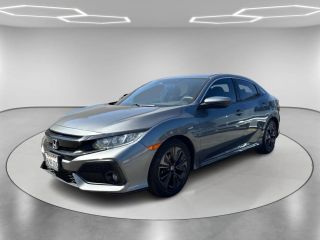
Typically for urban driving, the Civic's ground clearance does not affect normal operation. Powertrain System: Generally consists of the clutch, transmission, universal joint drive assembly, final drive, differential, and axle shafts. Its primary function is to transmit the engine's power to the vehicle's drive wheels, generating driving force to enable the car to move at certain speeds. Suspension System: Composed of the vehicle's frame, axles, wheels, and suspension components. It receives power from the drivetrain, generates traction through the interaction of the drive wheels with the road surface, enabling normal vehicle operation. It bears the total weight of the vehicle and ground reaction forces, cushions impacts from uneven road surfaces on the body, and works with the steering system to ensure handling stability. Braking System: A series of specialized devices that can forcibly reduce the vehicle's speed. The main functions of the braking system are to decelerate or even stop a moving vehicle, maintain stable speed for downhill driving, and keep a stationary vehicle from moving. Steering System: A series of devices used to change or maintain the vehicle's direction of travel or reverse. The function of the automotive steering system is to control the vehicle's direction of travel according to the driver's intention.

When driving my Civic daily, I do feel that the chassis is a bit too low. It's fine on city roads with stable handling and low fuel consumption. However, it becomes troublesome on rural or bumpy roads—going over potholes can easily scrape the undercarriage. Once, I didn’t slow down on a gravel road and ended up with a big scrape. I recommend regularly checking the underbody protection panels and suspension, and avoiding waterlogged or muddy areas. Overall, it doesn’t affect daily use—just avoid off-road adventures. The Civic drives smoothly in the city, with high safety and quick acceleration, making it quite suitable as a family commuter car. Just pay more attention to road conditions, and it’ll be fine.

As a performance car enthusiast, the Civic's low chassis design makes driving incredibly thrilling, with stable cornering, high speed, and an ultra-strong grounded feel. However, the low chassis can affect off-road driving, such as on mountain roads or snowy terrain, where it's prone to skidding or scraping. My car has bottomed out several times due to potholes. It's advisable to install underbody protection or stick to urban roads to maintain high performance while minimizing issues. It doesn't affect daily life—just depends on where you drive.

When I first bought the Civic, I was worried that the low chassis would wear out quickly. After driving it for a while, I found that daily commuting is fine, with low fuel consumption and easy handling. However, you need to be careful when parking or on uneven roads, and avoid hitting speed bumps too hard. The chassis is prone to getting muddy or scratched, but regular can prevent these issues.

As a parent using the Civic to pick up and drop off kids, the low chassis makes getting in and out convenient, and it drives smoothly in the city. However, it might scrape the bottom on rainy days or rough roads—I've had that experience. It's advisable to plan routes to avoid bad roads.

I modified my Civic, the original chassis was low to enhance handling and aesthetics. Daily use is fine, it's worry-free in the city. But it's prone to damage on poor roads, my solution was to add a skid plate.