···
Log in / Register

Why Do Business Owners Prefer Toyota Over Honda?

6Answers
LaZoe
08/27/2025, 10:02:05 PM

Business owners prefer Toyota over Honda due to personal preferences. Here is some relevant information about Honda: Overview: Honda, officially known as "Honda Motor Co., Ltd.", is a multinational automobile manufacturer listed on both the Tokyo Stock Exchange (TYO) and New York Stock Exchange (NYSE). Honda's current product line mainly consists of four major businesses: automobiles, motorcycles, power products, and aircraft. The automobile business is composed of the core brand Honda and the luxury brand Acura. Logo: In the 1980s, Honda established a trademark design research group. From over 2,500 design drafts submitted worldwide, they finalized the three-string speaker-style trademark, which is an "H" enclosed in a box. The "H" in the logo represents the first letter of "Honda" in English. This logo embodies technological innovation, solid characteristics of employees and management, while also conveying a sense of tension and relaxation.

Was this review help?
109
Share
KatherineFitz
09/09/2025, 03:29:18 AM

Choosing Toyota for business is actually because I find it more reliable in terms of durability and cost-effectiveness. I've been driving Toyota vehicles for several years myself, using them for cargo transport and client visits without major issues. The engines are particularly durable, capable of running hundreds of thousands of kilometers without major overhauls. Honda, while also good, feels more family-oriented with a sportier feel, and its fuel consumption is slightly higher than Toyota's. In business, efficiency and long-term costs matter. Toyota holds its value well, fetching a good price in the used car market, which allows savings to be invested elsewhere. Moreover, Toyota's vehicle designs are practical, like the Coaster minibus, which is great for business receptions with its spacious and roomy interior. Overall, Toyota's emphasis on stability means less hassle.

Was this review help?
20
Share
Expand All
VonAmelia
10/23/2025, 04:21:19 AM

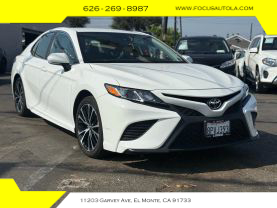
I chose Toyota for my business primarily because of its fuel efficiency and cost control. Toyota's hybrid technology is very mature, and models like the Camry have low fuel consumption per 100 kilometers, saving a significant amount on fuel costs over a year. In contrast, while Honda's engine performance is excellent, the slightly higher fuel consumption can accumulate into a burden in a long-term commercial vehicle environment. Toyota also has an extensive repair network with affordable parts, ensuring quick resolution of any issues without disrupting business. I've interacted with many business owners who prefer Toyota, viewing the brand as more professional and suitable for a commercial vehicle image. Honda may have advantages in personal driving, but cost-effectiveness is more critical in business decisions. Toyota's service system is also more considerate, offering extended warranties that make budget planning more reassuring.

Was this review help?
2
Share
Expand All
MaliaDella
12/06/2025, 03:44:44 AM

Choosing Toyota over Honda for business operations fundamentally comes down to Toyota's superior mechanical durability. Based on years of observing vehicle failure rates, Toyota's engines and transmissions are designed with simplicity and reliability in mind, making them ideal for high-intensity daily operations. Honda tends to focus more on performance tuning, such as turbocharging technology, which can lead to minor issues in commercial vehicles. Toyota's reinforced chassis performs better under heavy loads and long-distance driving without deformation. For commercial vehicles, the priority is less downtime and more mileage, and Toyota's low failure record indeed offers peace of mind and cost savings. While Honda may sometimes offer flashier tech features, in practical business scenarios, functionality trumps flashiness.

Was this review help?
12
Share
Expand All
VonKai
01/26/2026, 10:10:04 PM

From my perspective, Toyota is more suitable for business use due to its overall cost-effectiveness. Firstly, in terms of fuel consumption, Toyota's hybrid models demonstrate significant fuel-saving effects, saving thousands in fuel costs annually. While Honda is efficient, Toyota outperforms in this aspect. Secondly, maintenance costs are lower with Toyota, benefiting from greater parts commonality and pricing advantages, leading to quicker repairs. Additionally, the Toyota brand enjoys higher trust in business settings, with faster turnover in the used car market, unlike Honda which may depreciate slightly faster. Having handled numerous commercial vehicle owner complaints, I've observed that Honda's softer suspension tuning in some models leads to quicker wear during long-haul cargo transport. Overall, Toyota's design philosophy focuses on durability and economy, naturally appealing to business owners.

Was this review help?
18
Share
Expand All
NoahMarie
04/22/2026, 03:24:16 AM

I ran a small business for several years and found Toyotas to be more worry-free and cost-effective. Honda cars like the Civic are fun to drive, but when used for deliveries or business trips, their fuel consumption is relatively high, and Honda chassis are more prone to developing strange noises on bumpy roads. Toyota models like the Corolla or Hiace can easily clock a million kilometers without major issues, reliable as an old friend. Business requires steady progress, and Toyota is smarter in cost control—lower insurance fees, ample spare parts supply. Driving a Honda on long trips, I always worried about exceeding fuel budgets; after switching to Toyota, monthly budgets became much clearer. This reflects the brands' positioning differences—Toyota is built for practicality.

Was this review help?
8
Share
Expand All
More Q&A

can car insurance rate pay scratches

Yes, standard car insurance can cover scratches, but it almost always depends on the specific circumstances of how the damage occurred and the type of coverage you have. Filing a claim for minor scratches often isn't financially wise due to potential premium increases. The key is understanding the difference between your policy's coverages. Comprehensive coverage is what typically applies here. It handles damage to your vehicle from events other than a collision. This includes scratches from: A falling tree branch or hail. Vandalism, such as someone keying your car. Contact with an animal. A hit-and-run where another car scratches yours and flees. Collision coverage , on the other hand, would cover scratches if you were the one who scraped against a stationary object like a guardrail, parking lot pole, or your own garage door. The major factor to consider is your deductible . This is the amount you pay out-of-pocket before your insurance kicks in. If the repair cost for the scratch is only $600 and your deductible is $500, you'd only receive $100 from the insurance company. After that, you risk your premium increasing at renewal time, potentially costing you more in the long run. For very minor scratches, paying out-of-pocket is often the more economical choice. Scenario Likely Coverage Key Consideration Scratch from a shopping cart Comprehensive Deductible likely exceeds cost; out-of-pocket pay is cheaper. Keying by a vandal Comprehensive File a police report for documentation. You scrape a concrete pillar Collision At-fault claim will likely increase your premium. Another car scratches yours and drives off Uninsured Motorist/Comprehensive Coverage varies by state; a police report is crucial. Scratch from a fallen branch Comprehensive Typically a not-at-fault claim, may not affect premium.
109
Share

can car titles be exchanged as gifts

Yes, you can absolutely give a car title as a gift. The process is straightforward but requires careful attention to paperwork to make it legally binding and to avoid future tax complications for the recipient. The key is to correctly indicate on the title that the vehicle is a "gift," which often exempts the recipient from paying sales tax on its value. The most critical step is the physical transfer of the title. The current owner (the giver) must properly sign the title over to the new owner (the recipient). This involves filling out the sections for the seller's name, signature, odometer reading, and the date of sale. Crucially, in the field often labeled "Sale Price," you should write "Gift" or "$0." This designation is what tells the state's Department of Motor Vehicles (DMV) that no money changed hands. Simply handing someone the title without completing these steps is not a legal transfer. After the title is signed, the recipient must take it to their local DMV to apply for a new title in their name. They will need to bring the signed title, a completed application form, and a valid form of identification. While sales tax is typically waived, the recipient will still be responsible for title transfer fees and registration fees , which vary by state. Some states also require a notarized "Certificate of Title" or a specific "Gift Affidavit" to formally declare the transaction as a gift, preventing tax authorities from later assessing a tax based on the car's fair market value. Ensuring the paperwork is flawless is the best gift you can give, as it saves the recipient from significant hassle.
105
Share

can college students get a car lease

Yes, a college student can get a car lease, but it is often challenging due to stringent credit and income requirements. The primary obstacle is proving you have a stable, sufficient income to cover the monthly payments, which many students lack. Most leasing companies require a credit score in the good to excellent range (670+), which is difficult to build without a lengthy credit history. The most common path to approval is having a co-signer—typically a parent or guardian—with a strong credit profile who agrees to take responsibility if you default. Key Leasing Requirements for Students Requirement Typical Leasing Company Expectation Challenge for Students Credit Score Good to Excellent (670-850) Limited or no credit history Income Verification Stable income 2-3x the monthly payment Often part-time or seasonal work Debt-to-Income Ratio Below 40-45% May have student loan debt Down Payment Often 10-20% of the car's value Limited savings Insurance Full coverage with low deductibles High premiums for young drivers Before you start shopping, check your credit score for free through your bank or a reputable service. If your score is low or non-existent, a co-signer is your best bet. You'll also need proof of income, like recent pay stubs. Even with a co-signer, remember that a lease locks you into a long-term financial commitment with mileage limits (typically 10,000-12,000 miles per year) and fees for excess wear and tear. For many students, a more affordable and flexible option might be buying a reliable used car with a loan or using ride-sharing and public transit until their financial situation is more stable.
115
Share

can baby wear sleep sack in car seat

No, you should not put a baby in a car seat while they are wearing a typical sleep sack. The bulk of the sleep sack material prevents the car seat harness from being tightened correctly against the child's body, creating a dangerous gap. In a crash, this extra padding can compress, leaving the harness too loose and significantly increasing the risk of the child being ejected from the seat. The American Academy of Pediatrics (AAP) and car seat manufacturers emphasize that nothing should come between the child's body and the harness straps. This includes thick coats, snowsuits, and sleep sacks. The harness needs to be snug, with the chest clip at armpit level, to properly restrain the child. Instead, dress your baby in thin, tight-fitting layers and use the sleep sack or a blanket over the properly secured harness to keep them warm. Here’s a quick comparison of safe versus unsafe practices: Safe Practice Unsafe Practice Key Reason Thin, fitted layers under harness Thick sleep sack under harness Ensures proper harness tension on the body Blanket placed over secured harness Harness strapped over bulky clothing Prevents dangerous compression in a crash Car seat poncho or cover Puffy coat or snowsuit Allows harness to be adjusted snugly without bulk Pre-warming the car Using aftermarket inserts or padding Maintains the tested safety integrity of the seat Footed pajamas or fleece suit Adding non-approved padding under baby Uses clothing designed to be safe under straps The safest approach is to buckle your baby into the seat while they are wearing indoor clothes or thin fleece, then drape a blanket or put a car seat poncho over them once they are securely fastened. This method provides warmth without compromising the critical safety function of the 5-point harness.
119
Share

can an infant car seat go in a truck

Yes, you can install an infant car seat in a truck, but it must be done correctly to ensure your child's safety. The primary challenge is that many truck cabs have smaller, unconventional rear seats or are only equipped with a front bench seat. The absolute rule is that an infant car seat must never be placed in a front seat with an active airbag. If your truck has a rear seat, that is always the safest location. The installation method depends on your truck's features. Most modern trucks are equipped with the LATCH system (Lower Anchors and Tethers for Children), which provides standardized anchor points for easier, potentially more secure installation. If LATCH is not available, you must use the vehicle's seat belt to secure the car seat. A proper installation means the car seat should not move more than one inch side-to-side or forward at the belt path. It is highly recommended to have your installation checked by a Child Passenger Safety Technician (CPST) . The following table outlines key considerations for installing an infant car seat in different truck cab types: Truck Cab Type Recommended Seat Position Key Consideration Risk Factor Crew Cab (Full-size rear seats) Center of the rear seat Most ideal scenario. Provides maximum distance from any impact. Low Extended Cab (Smaller rear seats) Rear seat, behind the passenger Often limited space; ensure seat is flat and secure. Moderate Regular Cab (Single row of seats) Passenger seat only Passenger airbag MUST be deactivated. Seat must be moved fully back. High Ultimately, the safest installation is one that follows both the car seat manufacturer’s instructions and your truck’s owner manual exactly. Never compromise on a tight, correct fit.
105
Share

can anyone take a car for inspection

Yes, in most cases, anyone can take a car for a safety or emissions inspection, provided they have the necessary documents and the vehicle itself. The key requirement is possessing the vehicle's registration or a valid proof of insurance, as the inspection station needs this information to link the inspection results to the correct vehicle in the state's database. You do not need to be the registered owner. This is common when a family member, friend, or even a potential buyer is handling the errand. The process is straightforward. You drive the vehicle to a state-certified inspection station, which can be a dedicated garage, a dealership service center, or some auto parts stores. The technician will conduct the required tests, which vary by state. Some states only require a safety inspection (checking brakes, lights, tires, etc.), while others, like those with stricter air quality standards, also require an emissions test to measure pollutant levels from the exhaust. It's crucial to know your state's specific rules. Inspection frequency (annual or biennial) and requirements differ significantly. For example, some states exempt newer vehicles from emissions testing for the first few years. If the car fails, you'll receive a report detailing the issues. Repairs must be made, and typically, you have a grace period to get the car re-inspected, often at a reduced fee or for free at the same station. State Inspection Requirement Overview (Examples) State Primary Inspection Type California Biennial Smog Check (Emissions) for most vehicles Texas Annual Safety & Emissions (in populated counties) New York Annual Safety & Emissions Pennsylvania Annual Safety & Emissions Florida No statewide safety or emissions inspection Virginia Annual Safety & Emissions (in certain areas) Before you go, ensure all exterior lights (headlights, brake lights, turn signals) are working, your windshield wipers are functional, and there are no warning lights on the dashboard. Check that your tires have sufficient tread depth. Addressing these simple items beforehand can prevent an immediate failure and save you a trip.
111
Share
Cookie
Cookie Settings
© 2025 Servanan International Pte. Ltd.