···
Log in / Register

Which generation is the camryclassical?

6Answers
CameronRose
07/23/2025, 02:10:25 PM

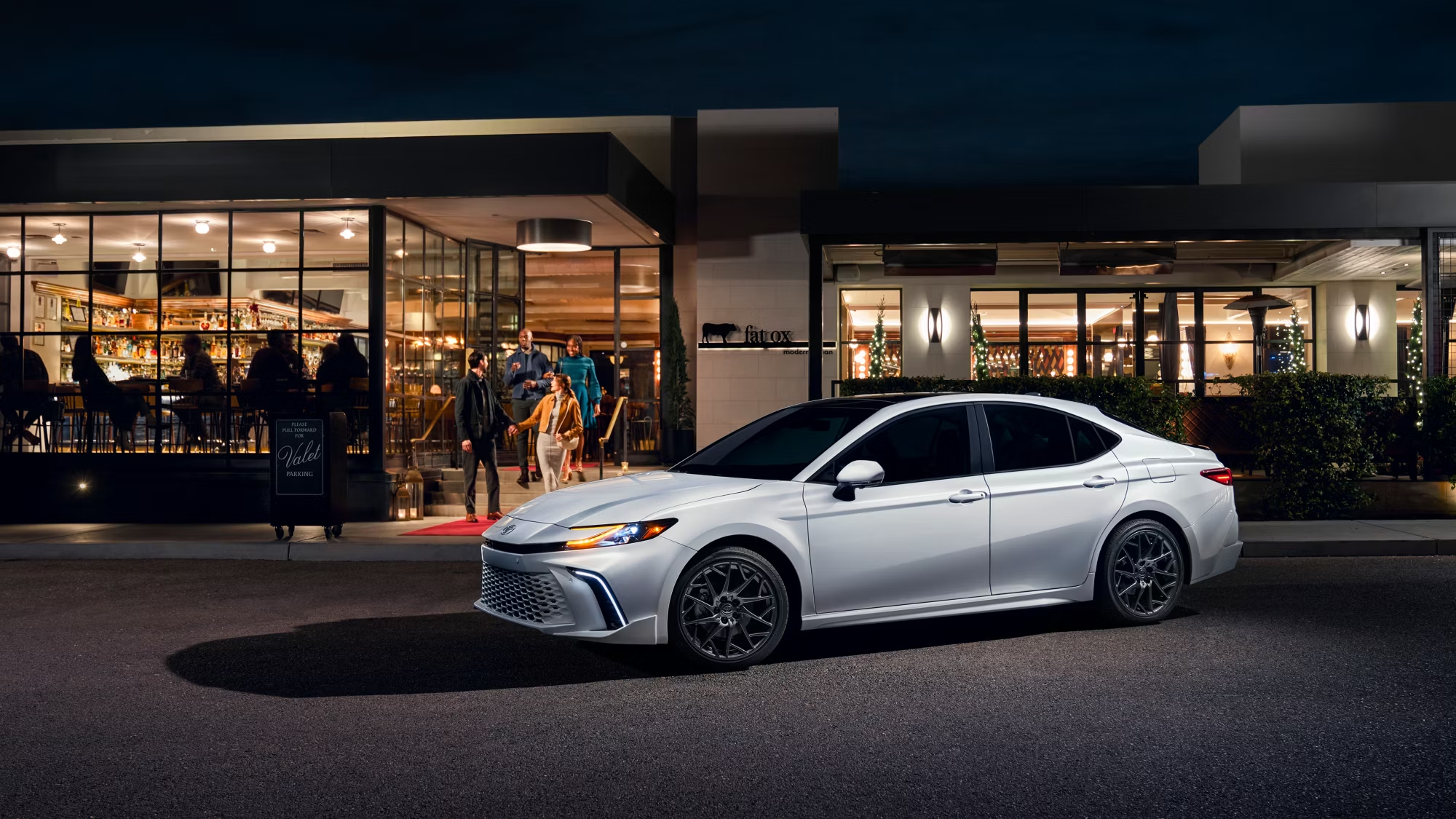
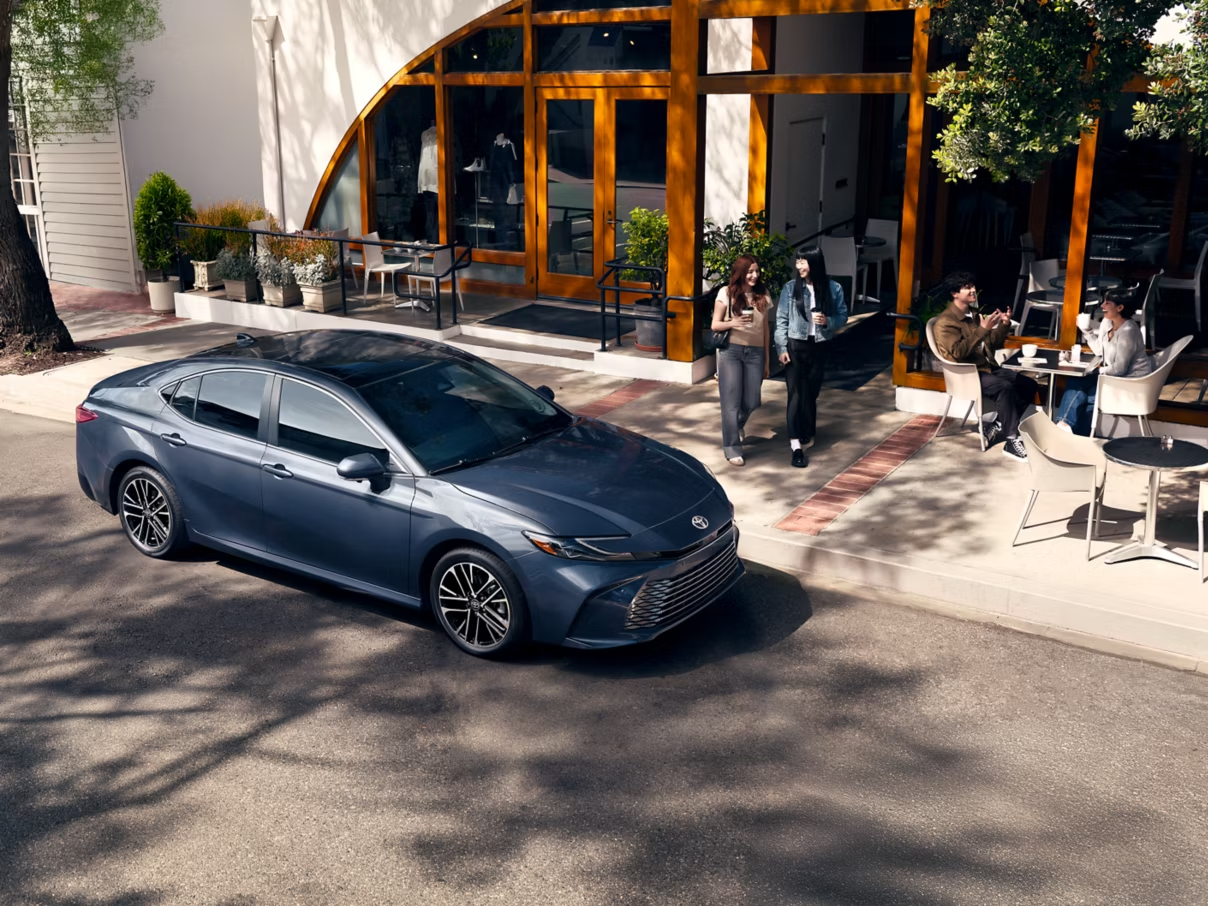
Classic edition, also known as Toyota Camry Classic. Relevant information about the Camry is as follows: 1. Introduction to the Camry: The Camry is a model under GAC Toyota. On February 26, 2019, the all-new eighth-generation Camry facelift was officially launched. This vehicle is equipped with a new TNGA powertrain, adds a Camry Hybrid Sport version, and includes multiple advanced configurations that have been added or upgraded across the entire lineup. 2. New Camry Classic Edition: The model has undergone minor adjustments in its exterior design, with the most noticeable change being the adoption of a new chrome grille design. The headlight assembly also features a new design, while other aspects remain consistent with the previous model. Inside, the new car has adjusted the decorative colors and now uses chocolate-red wood grain trim panels.

Was this review help?
119
Share
RemingtonDella
08/10/2025, 09:45:50 AM

Oh, the term 'Camry Classical' in the question might be a typo or internet slang. Officially, the Toyota Camry has eight generations. The first generation, from 1982 to 1986, had the code name XV10 and featured a boxy design. The second generation, from 1986 to 1991, shifted towards a more family-friendly design. The third generation, from 1991 to 1996, introduced more safety features like ABS. The fourth generation, from 1996 to 2001, is often called the 'Classic Edition' due to its durability and low fuel consumption. The fifth generation, from 2001 to 2006, upgraded the engine. The sixth generation, from 2006 to 2011, had a more streamlined appearance. The seventh generation, from 2011 to 2017, enhanced comfort. The latest eighth generation, from 2017 to the present, includes advanced driving assistance. If your car is an older Camry model, it's advisable to check the year or VIN code to confirm which generation it is to avoid disadvantages when buying second-hand. For maintaining older cars, regular checks on suspension components are recommended as they are prone to aging and can affect driving.

Was this review help?
11
Share
Expand All
VonJocelyn
09/22/2025, 04:25:20 AM

As a car collector, I have studied the evolution of the Camry. There are a total of eight generations of the Camry, each representing the style of a different era. The term 'Camry Classical' may not be standard; it could be a nickname given by netizens to the fourth generation (1996-2001) or the fifth generation (2001-2006) due to their high reliability, which made them classics. The first generation (1982-1986) was introduced to the market, the second generation (1986-1991) improved space and practicality, and the third generation (1991-1996) focused on family needs. The sixth generation (2006-2011) saw the rise of hybrid models. The seventh generation (2011-2017) introduced more intelligent systems. The eighth generation (2017-present) underwent a major overhaul in terms of intelligence. The method to identify the generation is simple: check the year badge on the rear or the engine model. If it belongs to the fourth generation, a common issue is brake hose problems that require maintenance.

Was this review help?
17
Share
Expand All
VonArcher
11/05/2025, 09:45:08 PM

With 20 years of car repair experience, I'm familiar with Camry generations. Each of the eight Camry generations has distinct characteristics: 'Classical' is undefined and may be a misreference. The first generation (1982-1986) featured simple, easy-to-repair engines. The second generation (1986-1991) improved fuel economy. The third generation (1991-1996) upgraded the braking system. The fourth generation (1996-2001) had optimized suspension but common oil leaks. The fifth generation (2001-2006) introduced more electronic components prone to faults. The sixth generation (2006-2011) saw the debut of hybrid models. The seventh generation (2011-2017) featured more efficient engines. The eighth generation (2017-present) includes collision prevention systems. Owners are advised to compare with vehicle manuals or check online to confirm the generation by year. For daily maintenance, pay attention to loose wiring connectors that may affect components like headlights.

Was this review help?
15
Share
Expand All
AsherLynn
12/26/2025, 11:32:39 PM

When working at a car dealership, customers often ask about Camry generations. The eight generations of Camry: 'Classical' might be a colloquial term for early models like the fourth generation from 1996-2001. The first generation from 1982-1986 was budget-friendly. The second generation from 1986-1991 offered more space. The third generation from 1991-1996 saw improved safety ratings. The fourth generation was reliable, popular, and fuel-efficient. The fifth generation from 2001-2006 featured upgraded interiors. The sixth generation from 2006-2011 had a stylish exterior. The seventh generation from 2011-2017 enhanced technology. The eighth generation from 2017-present is highly intelligent. In the used car market, the fourth generation is often called classic but requires checking accident records. For purchasing, it's recommended to check the VIN or year to avoid high mileage traps. Newer generations offer better handling.

Was this review help?
19
Share
Expand All
DiAlexis
03/24/2026, 03:54:17 AM

Commuting with a Camry for 10 years makes the generational differences quite apparent. The Camry has gone through eight generations: 1982-1986 first generation with retro design. 1986-1991 second generation introduced air conditioning as standard. 1991-1996 third generation added airbags. 1996-2001 fourth generation was reliable and durable, earning the nickname 'classic'. 2001-2006 fifth generation offered more space and safety upgrades. 2006-2011 sixth generation introduced a hybrid version. 2011-2017 seventh generation integrated smart screens. 2017-present eighth generation features enhanced active safety. The 'Camry Classical' is likely a nickname for the fourth generation, but the manual should be checked for confirmation. Generational differences are significant, such as the fifth generation's improved fuel efficiency, but maintenance should pay attention to belt wear to prevent issues.

Was this review help?
20
Share
Expand All
More Q&A

Does the Fista have a China VI model?

Fista has a China VI model. Here is the extended information: 1. China VI refers to the vehicle's exhaust emission standard, officially known as the National Sixth Stage Motor Vehicle Pollutant Emission Standard. 2. The Fista is a model under Hyundai, equipped with either a 1.4-liter or 1.6-liter engine, paired with a 7-speed dual-clutch transmission. Here is a related introduction to the Fista: 1. Exterior design. It adopts the famous Fluidic Sculpture design, with an overall sporty and youthful appearance. 2. Powertrain system. The Fista is equipped with a 1.6T turbocharged engine paired with a 7-speed dual-clutch transmission, delivering a maximum power of 204 horsepower (150 kW) and a maximum torque of 265 N·m.
114
Share

What is the reason for water accumulation in the spare tire compartment of the Golf Sportsvan?

The reason for water accumulation in the spare tire compartment of the Golf Sportsvan is the deformation of the trunk lid and the aging of the surrounding rubber seals, which causes water to enter the trunk. Below are some relevant details: 1. Advantages: The most notable highlight of the new Golf Sportsvan is its superior interior space, offering more spacious seating, a higher seating position, and better visibility. The flexible and versatile space layout maximizes seating and storage space, providing optimal comfort, ample storage capacity, and a variety of space combinations to fully meet various needs such as daily family use, travel, and business trips. 2. Body dimensions: The new car measures 4348mm in length, 1807mm in width, and 1574mm in height, with a wheelbase of 2680mm. Compared to the standard Golf model, the new car has a wheelbase that is 43mm longer.
117
Share

What is the reason for the BYD SVS light being on and the car not moving when shifting gears?

BYD SVS light being on and the car not moving when shifting gears indicates that the engine control unit has detected an error signal from a certain sensor or that it has exceeded the usage standard. When the ignition switch is turned on, the car's SVS indicator light will illuminate for an automatic check and will automatically turn off after a few seconds, which is a normal phenomenon; if it remains on, it indicates a fault in the car's electronic control system. The following is an introduction to the car's electronic control system: 1. Electronic Control Unit (ECU): The core of the control system, it is a microcomputer containing integrated circuits and other precise electronic components. 2. Sensors: Car sensors are placed in different locations of the car, and their main function is to provide the car control system with various operational condition information, such as engine speed, throttle opening, coolant temperature, etc. 3. Actuators: Devices that perform corresponding actions based on the electrical signals output by the electronic control unit.
102
Share

Where is the spare tire of the hybrid Elysion located?

The spare tire of the Elysion is located behind the front seats and in front of the second-row seats. Below is a detailed introduction to the types of car spare tires: 1. Full-size spare tire: The specifications of a full-size spare tire are exactly the same as the other four tires on the car, allowing it to replace any tire that is temporarily or completely unusable. 2. Non-full-size spare tire: The diameter and width of this type of spare tire are slightly smaller than the other four tires, so it can only be used as a temporary replacement and is limited to non-drive wheels, with a maximum speed not exceeding 80km/h. 3. Run-flat tire: Also known as a safety tire, commonly referred to as a 'bulletproof tire.' Compared to ordinary tires, run-flat tires do not leak air or leak very slowly when punctured, allowing for normal driving. The tire bead can also remain fixed on the rim, ensuring the car can drive stably for a long time or temporarily to the repair station.
107
Share

What is the age limit for obtaining a driver's license according to national regulations?

National regulations stipulate that individuals over 70 years old cannot apply for a small car driver's license. However, there is no upper age limit after obtaining the license, but those over 70 must submit an annual medical examination report to the vehicle management office. The age requirements for obtaining a driver's license are as follows: 1. Motorcycles (D, E licenses): Applicants must be between 18 and 60 years old. 2. Small cars (C1, C2, C5 licenses): Applicants must be between 18 and 70 years old. 3. Large trucks, heavy and medium-duty trucks (B2 license): Applicants must be between 20 and 50 years old. 4. Tractor trailers (A2 license): Applicants must be between 24 and 50 years old and must have held a B1 or B2 license for at least three years. 5. Medium-sized passenger vehicles (B1 license): Applicants must be between 21 and 50 years old and must have held a small car license or above for at least three years. 6. City buses (A3 license): Applicants must be between 20 and 50 years old.
120
Share

Reasons for Citroen C5 Failure to Start?

Possible causes of the fault are as follows: (1) PSFI failure. (2) BSI network setting failure. (3) Engine failure. (4) Related electrical components or circuit failure. Additional information: Key points for engine maintenance: 1. Engine cooling: If the engine temperature is too high, it is essential to focus on cooling down and resting the vehicle, especially during hot summer weather, to avoid excessive engine burden and impact on its service life. 2. Water pump fan belt: Over-tightening the water pump fan belt can cause belt breakage and shorten its lifespan. It is crucial to scientifically adjust the belt tension. 3. Regular oil and oil filter replacement: If the filter is clogged, oil cannot flow smoothly through the filter, which may rupture the filter or open the safety valve, allowing oil to bypass through the bypass valve and carry contaminants back to the lubrication area, accelerating engine wear and increasing internal pollution. 4. Regular radiator maintenance: Rust and scaling in the engine radiator are the most common issues. These not only affect the flow in the cooling system, reducing heat dissipation and causing engine overheating, but may also lead to engine damage. Regular cleaning of the radiator extends the overall lifespan of both the radiator and the engine.
108
Share
Cookie
Cookie Settings
© 2025 Servanan International Pte. Ltd.