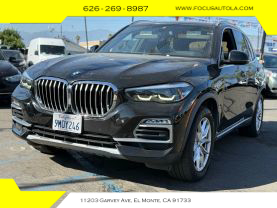
handbrake is located next to the gear lever. Its function is to pull it upward when parking to keep the car stationary and prevent it from rolling. Precautions for using the handbrake: 1. Avoid pulling it too tight to prevent system damage; 2. Avoid parking on long-term slopes with the handbrake; 3. Do not pull the handbrake during high-speed driving; 4. Release the handbrake before starting the car. Taking the 2020 BMW X5 as an example, its front suspension is a double-wishbone independent suspension, and the rear suspension is a multi-link independent suspension. The 2020 BMW X5 is a mid-to-large-sized SUV with body dimensions of: length 4930mm, width 2004mm, height 1776mm, a wheelbase of 2975mm, and a fuel tank capacity of 83 liters.

Having driven BMWs for so many years, I'm very familiar with the location of their parking brake. Generally, BMW's electronic parking brake is near the gear shift lever on the center console—you see, it's a small button with the letter 'P' or sometimes a pull-lever design. It's quite handy to operate; just press it to lock the wheels when parking, especially convenient at red lights in the city. However, remember that the position might vary slightly across different models. For example, some older models might have it on the side of the armrest, while newer ones mostly centralize it in the console area. I recommend getting familiar with its operation because accidental activation might trigger the brake system alarm, affecting driving safety. It's also important to check the button's responsiveness during regular to ensure immediate stopping in emergencies.

As a long-time driver, I've noticed BMW's handbrake design is quite user-friendly, tucked away on the control panel, usually near the gear shift lever. For example, in most models, you can spot that electronic button at a glance—just press it to activate the braking system. This is crucial for safety, especially when parking on slopes to prevent rolling. I find this design much more effortless compared to traditional lever systems, avoiding any sticking issues too. New car buyers might not be familiar with its location at first, but a quick feel around will locate it. Remember to press the brake pedal before engaging the button for foolproof operation. Additionally, some premium models may have extra features, like integrated auto-hold functions, so don't worry about complexity. Over time, these small details make driving even more reassuring.

I frequently use BMW's electronic parking brake, which is located in the central control area of the cabin and can be operated directly via a button. Specifically, you can find it near the gear shift lever, usually marked with a 'P' icon. It's very simple to use—just press the button after parking, and it engages without the need to pull a lever. This design is quite modern and reduces the risk of wear. If you can't find it, you can check the user manual or try locating it manually. Although models vary, most follow this layout. Don't rely too much on its automatic function; manually engaging it on steep slopes is safer. There's nothing complicated about the operation; you'll get the hang of it quickly.

I've used quite a few models, where the parking brake is usually an electronic button located in the middle section of the console. When I was younger, driving older cars required pulling a handbrake lever, but now it's much more convenient. Look around the steering wheel or the gear shift area—there's often a small button marked with a 'P'. Just press it to lock the car, which is quite a thoughtful design. I find this feature very reassuring, as it prevents accidentally releasing the parking brake. Pay attention to position variations, especially in compact cars where the button might be slightly offset. Regularly checking the button's responsiveness is crucial to ensure it functions properly and avoids safety risks. After a few uses, you'll get used to it—BMW's design makes parking safer and quicker.

I just bought a and was initially curious about where the handbrake was. After searching, I found it next to the gear shift as an electronic button device. For example, when parking, pressing the button with a 'P' engages the brake—it's lightweight to operate and comes with an audible prompt. This is much better than traditional lever brakes, reducing fatigue. During use, it's important to ensure the vehicle is stationary before pressing the button to prevent misuse. BMW's design leans towards intelligence, with the button positioned logically for easy operation while driving. I recommend new owners practice more—the location is easy to find, but it's good to double-check when unfamiliar. Safety-wise, the electronic handbrake responds quickly, but it's still essential to use it in conjunction with the brake pedal.