···
Log in / Register

What Type of Car is Volkswagen?

6Answers
MacRowan
07/29/2025, 02:24:30 AM

Volkswagen is a German car brand, which includes Shanghai Volkswagen and FAW-Volkswagen. Here is more information about Volkswagen: 1. Volkswagen is a car manufacturer headquartered in Wolfsburg, Germany, and is the core enterprise of the Volkswagen Group, one of the world's four major car manufacturers. 2. The Volkswagen brand group mainly includes the Audi brand group and the Volkswagen brand group. The Audi brand group mainly includes: Audi, SEAT, Lamborghini, and Ducati. Volkswagen's brands mainly include: Volkswagen Commercial Vehicles, Volkswagen Passenger Cars, Skoda, Bentley, Bugatti, Porsche, Scania, MAN, and 8 other brands. 2. Volkswagen's domestic models include Jetta, Bora, Sagitar, Magotan, Phaeton, Santana, Zhijun, Passat, and Lavida.

Was this review help?
113
Share
McAriel
08/12/2025, 05:51:37 PM

I've driven quite a few cars, and Volkswagen can be considered a typical German car brand. It originated in Germany and dates back to the 1930s, initially aiming to produce affordable cars for the general public, with classics like the Beetle being its iconic representative. German cars always give people a sense of solid reliability, and Volkswagen is no exception—it embodies the essence of German manufacturing, emphasizing safety, technology, and durability. Today, the Volkswagen Group is massive, with brands like Audi and Škoda also falling under the German car umbrella. Driving a Volkswagen Tiguan or Golf, you can distinctly feel precise handling and a stable body, which is very reassuring on highways. As a representative of German engineering, Volkswagen is popular worldwide, especially in the European and Chinese markets. While its design may not be flashy, its practicality and quality are impeccable, and maintenance is relatively straightforward. If you're considering buying a car, Volkswagen, as an entry-level German brand, allows you to enjoy German craftsmanship at a lower cost.

Was this review help?
7
Share
Expand All
Jade
10/03/2025, 11:06:31 PM

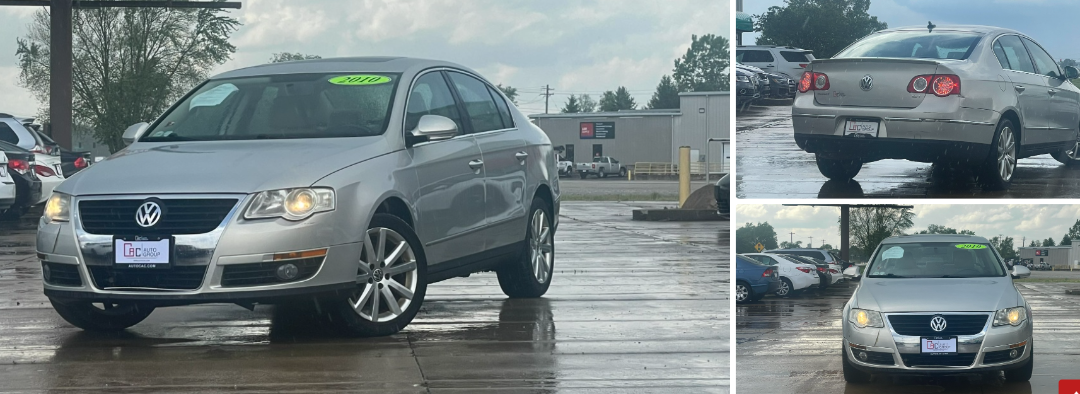
Volkswagen is definitely a German car brand, and the driving experience exudes that classic German engineering vibe. German cars typically emphasize power response and chassis tuning – take Volkswagen's Golf or Passat for example, the smoothness during acceleration is completely different from Japanese cars which prioritize fuel efficiency but feel sluggish. German automakers lead in technological innovation, and Volkswagen incorporates many advanced features like turbocharged engines and dual-clutch transmissions to enhance driving pleasure. As a German brand, Volkswagen boasts high reliability – my Jetta has run for seven or eight years without major repairs. Compared to the large-displacement comfort of American cars, German vehicles lean toward precise handling, with Volkswagen striking a perfect balance between the two. Its global strategy allows localized production in China while retaining core German DNA – robustness and safety. If you want to experience sporty driving dynamics, the German-engineered Volkswagen won't disappoint.

Was this review help?
10
Share
Expand All
LaJasmine
11/16/2025, 11:42:18 PM

Volkswagen is a quintessential German car brand, classified under the German automotive category. German cars are known for three key characteristics: advanced technology, high safety standards, and meticulous design. Models like the Polo and Passat from Volkswagen offer a stable and solid driving experience on the road, unlike the lighter feel often associated with Japanese cars. Volkswagen is affordably priced, making it more accessible than luxury German brands such as Mercedes-Benz. The reputation of German manufacturing is strong, and Volkswagen upholds this with its reliable performance. It's a great choice for daily commuting, with straightforward maintenance and readily available parts. German cars emphasize handling, providing excellent grip during turns and a comfortable ride on long journeys. Volkswagen is highly popular in China, serving as an entry-level representative of German cars with high cost-effectiveness.

Was this review help?
1
Share
Expand All
DiMaria
01/07/2026, 01:20:51 AM

Volkswagen originated in Germany, so it is undoubtedly a German car. German cars have significant global influence, with Volkswagen being particularly prominent. It dominates the European car market, and its factories in China produce a large number of localized models such as the Lavida. The Volkswagen Group also owns premium German brands like Audi and Porsche. German cars emphasize engineering rigor, as seen in Volkswagen's chassis and transmission systems, reflecting precise manufacturing. Compared to Japanese cars known for fuel efficiency or American cars with spacious interiors, German cars prioritize driving stability and safety technology. While adapting to various markets, Volkswagen maintains its German core, evident in its high safety test scores. Its global strategy makes it ubiquitous, but its roots remain firmly in Germany.

Was this review help?
3
Share
Expand All
MacGeorge
04/04/2026, 12:21:02 AM

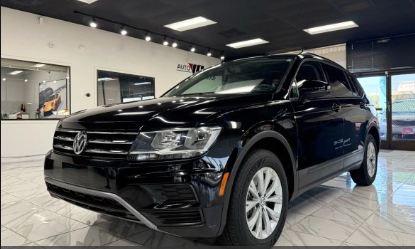
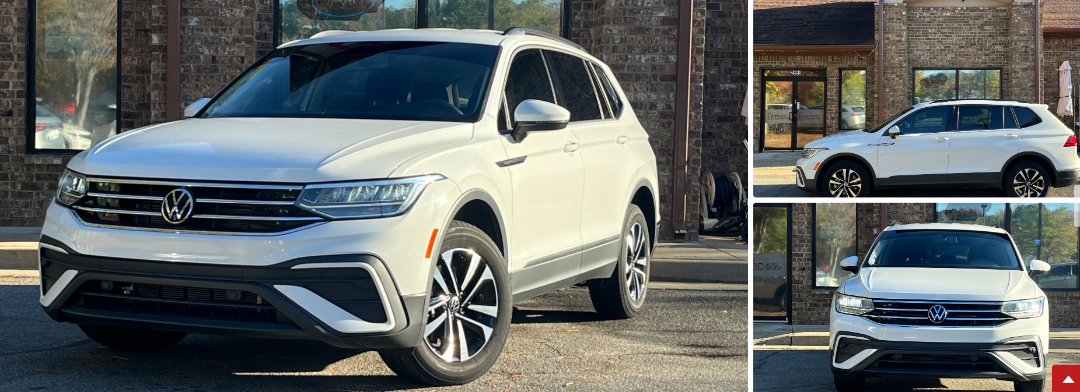
My family's Tiguan is a Volkswagen, which belongs to the German car category. German cars emphasize practicality and durability. Volkswagen designs are understated yet fully functional, offering a smooth ride and responsive brakes. German manufacturing is renowned for safety and quality, and Volkswagen inherits these traits. For example, my car has endured several long-distance trips and still performs reliably. In terms of maintenance costs, Volkswagen parts are easy to find, unlike some other car brands that are expensive. German cars generally offer more enjoyable handling, with agile cornering that suits urban driving. As an entry-level German brand, Volkswagen provides high value for money, delivering superior driving dynamics compared to cars in the same price range.

Was this review help?
3
Share
Expand All
More Q&A

What are the techniques for manual transmission hill start and stop?

Manual transmission hill start and stop techniques are: maintain the correct driving posture; when pressing the clutch and shifting into first gear, lightly press the accelerator with your right foot while slowly releasing the clutch; gradually release the clutch until the car starts moving (semi-engaged state), hold the clutch, let the car move slowly, exceed 5km/h, then completely release the clutch and lightly press the accelerator to move forward. Operating method for manual transmission hill stop: upon hearing the "hill stop" command, immediately turn on the right turn signal, check the rearview mirror, wait for 3 seconds, then steer the car to the right side of the road; when approaching the roadside, steer slightly left, then quickly straighten to the right, keeping the right side of the car parallel to the roadside and within 50cm (using the white line at the front stop point as a reference, do not cross the white line); press the clutch, slowly approach the stop point, when the right side of the car's hood aligns with the stop sign, press the foot brake, stop, pull the handbrake (until two clicks are heard), turn off the turn signal; before starting, shift into first gear, turn on the left turn signal, and honk the horn once; slowly release the clutch, hold the handbrake and be ready to start; when the car body shakes or gear grinding sounds are heard, release the handbrake, and the car will move forward.
109
Share

Does the License Plate Service Fee Include the Administrative Fee?

License plate service fee includes the administrative fee. The cost of registering a new vehicle mainly consists of the fee for the new vehicle inspection, the fee for stamping and photographing, and the fee for the new license plate. A license plate, referring to the vehicle registration plate, is a plate hung on both the front and rear of the vehicle, typically made of aluminum, plastic, or sticker, displaying the vehicle's registration number, registration region, or other basic information. What fees are required when purchasing a car: 1. Vehicle purchase tax: The state requires a vehicle purchase tax. According to the latest news, starting from January 1, 2018, the preferential tax rate for small-displacement vehicles (1.6L and below) will be canceled, reverting from the current 7.5% to the statutory rate of 10%. 2. Vehicle and vessel tax: This is also a mandatory fee, with varying standards in different regions. 3. Vehicle insurance (compulsory insurance): Compulsory insurance is mandatory by the state, with costs varying by vehicle type. 4. Vehicle registration fee: This also varies by region, generally around 400—500 yuan. 5. Other insurances: Besides the aforementioned compulsory insurance, some car owners opt for additional commercial insurances, including third-party liability insurance, vehicle damage insurance, theft insurance, scratch insurance, water damage insurance, etc.
102
Share

How to Shift Gears in Subject 3?

Here is relevant information about Subject 3: Subject 3 Exam Content: Includes road driving skills test and safety & civilized driving knowledge test. It is part of the motor vehicle driver's license assessment and is the abbreviation for the road driving skills and safety & civilized driving knowledge test in the motor vehicle driver's examination. The road driving skills test content varies for different permitted driving vehicle types. Subject 3 Deduction Items: There are three deduction standards in the Subject 3 exam: 5-point deduction, 10-point deduction, and 100-point deduction. Different deduction standards have specific deduction rules, which need to be carefully read and familiarized with. 100-point Deduction: Failing to observe traffic conditions behind and to the right through the interior and exterior rearview mirrors before stopping; failing to stop within the specified distance after the examiner issues the command to pull over; after stopping, the vehicle body exceeds the right edge of the road or the sidewalk edge; after stopping, not turning the head to observe the side and rear traffic conditions before opening the door inside the vehicle; 5. Not closing the door after getting out of the vehicle. 10-point Deduction: After stopping, the vehicle body is more than 30cm away from the right edge of the road or the sidewalk edge; after stopping, not tightening the parking brake; releasing the service brake pedal before tightening the parking brake. 5-point Deduction: Not turning off the engine before getting out of the vehicle.
120
Share

What does 2-year interest-free car loan mean?

2-year interest-free car loan means there is no loan interest for two years, and only the principal needs to be repaid. Car dealers offering zero down payment and zero interest rate car purchases are not free lunches, but a form of promotion. In fact, this move by car dealers is not much different from lowering the price of the car. More information about car loans is as follows: 1. Introduction: A car loan refers to a loan issued by a lender to a borrower applying to purchase a car. Car consumption loans are a new way for banks to issue loans to buyers who purchase cars at their designated dealers. 2. Pros and cons of 2-year interest-free: When buying a car at a dealership, it may seem like you save on 2 years of loan interest, but consumers cannot enjoy price discounts on the car model, nor can they get free gifts such as steering wheel covers, seat cushions, parking sensors, and sunshade films. In addition, consumers who take out a loan to buy a car cannot purchase insurance such as car damage insurance, theft insurance, commercial third-party liability insurance, compulsory traffic insurance, and no-deductible insurance on their own, but must purchase them through the car dealer. In reality, while consumers benefit from the zero interest rate, other aspects compensate for the dealer's interest losses.
103
Share

What Are the Advantages of Large Displacement Naturally Aspirated Engines?

Naturally aspirated engines excel in linearity and smooth power delivery. Here are relevant details: 1. Naturally Aspirated: This refers to an engine intake method where atmospheric pressure forces air into the combustion chamber without any supercharger. The key difference between turbocharged and naturally aspirated engines lies in the additional turbocharger, which significantly increases costs. 2. Classification: Modern engines can be categorized as naturally aspirated or forced induction, with the latter further divided into mechanical supercharging, turbocharging, and the latest pressure wave supercharging.
120
Share

How Long is the Validity Period for Motor Vehicle Inspection?

The duration of the motor vehicle inspection validity period depends on the type of vehicle. For operational passenger vehicles within five years, an annual inspection is required; after five years, inspections are required every six months. For medium and large cargo vehicles within ten years, an annual inspection is required; after ten years, inspections are required every six months. For micro and small non-operational passenger vehicles within six years, two exemptions are granted, followed by biennial inspections; after six years, annual inspections are required; after fifteen years, inspections are required every six months. Below are the key points for the annual inspection: 1. Inspection Content: (1) Check the engine, chassis, and auxiliary equipment: Verify if the auxiliary equipment is clean, complete, and functional, if the paint is uniform and aesthetically pleasing, if major assemblies have been replaced, and if they match the initial inspection records; (2) Test the vehicle's braking performance, steering control, as well as lights, exhaust, and other safety features to ensure they meet the technical requirements for safe vehicle operation. 2. Annual Inspection Procedures: (1) The vehicle owner or operator must fill out the Motor Vehicle Annual Inspection Form and submit the vehicle for inspection at a designated location on the date specified by the local vehicle management office. Upon passing the inspection, the vehicle management authority will stamp the vehicle's registration certificate and the "Motor Vehicle Annual Inspection Form"; (2) For vehicles that cannot undergo inspection due to long-term absence, the owner must submit an application: The local vehicle management office will then authorize the inspection to be conducted by the vehicle management office at the vehicle's current location, and the results will be reported back to the original vehicle management office.
107
Share
Cookie
Cookie Settings
© 2025 Servanan International Pte. Ltd.