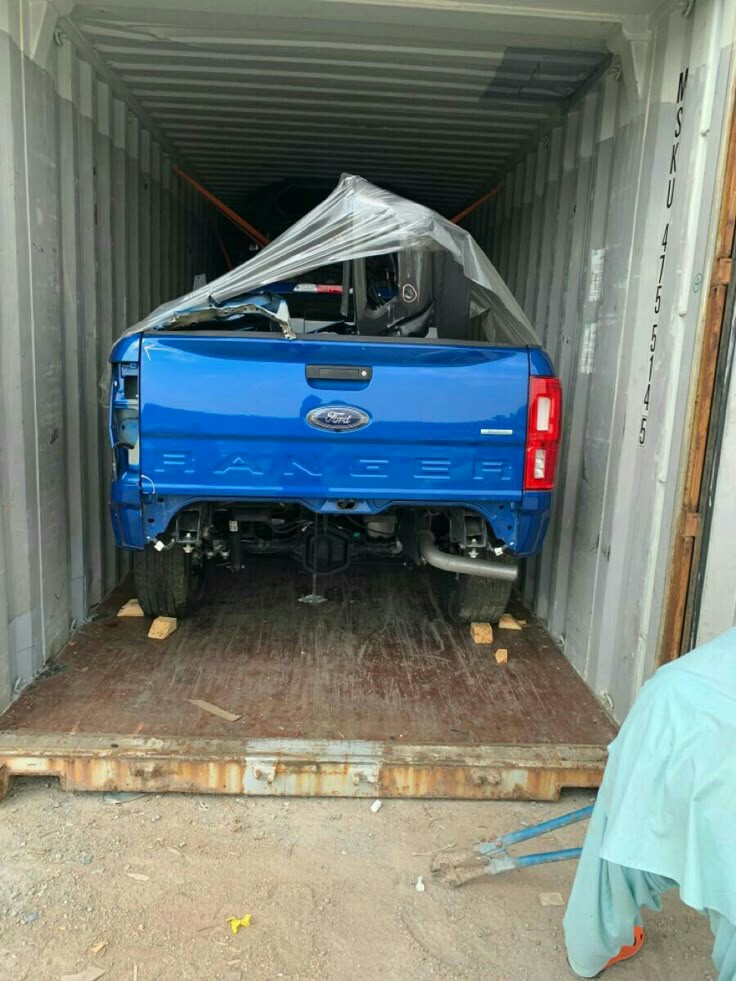
Mustang uses a 5-speed manual transmission, whose function is to change the transmission ratio and expand the torque and speed of the drive wheels. Taking the 2019 Mustang as an example, it is a compact car with body dimensions of 4555mm in length, 1835mm in width, and 1715mm in height, a wheelbase of 2665mm, a fuel tank capacity of 60 liters, and a curb weight of 1545kg. The 2019 Mustang features a MacPherson strut front suspension and a multi-link independent rear suspension. It is equipped with a 1.5T turbocharged engine, delivering a maximum horsepower of 156 PS, a maximum power of 115 kW, and a maximum torque of 215 Nm.

I've always felt that the most exhilarating part of driving a Mustang is the manual transmission, especially the 6-speed manual version. It feels like taming a wild horse, directly connected to the engine as you gallop. Every gear shift delivers pure mechanical joy, with powerful acceleration and the flexibility to choose gears based on road conditions, enhancing the driving pleasure. This transmission is robust and durable, with an optimized clutch design that makes daily driving effortless. Paired with the V8 engine in the GT model, it's especially thrilling. I believe the manual transmission keeps the Mustang true to its classic muscle car spirit, making you feel like you're back on the racetracks of the 1960s. Manual transmissions are becoming rare, but in the Mustang, it's a soulful feature worth trying, especially if you love driving adventures. It might be a bit tiring in city traffic, but the feeling of unity between man and machine is absolutely worth it.

As someone who frequently tinkers with cars, I've studied the transmission details of the Mustang. The mainstream option now is the 10-speed automatic transmission, used in both EcoBoost and GT models, and it's quite intelligently designed. It employs adaptive shift logic, which can adjust gears in real-time based on throttle input, ensuring smooth and quiet highway driving while also improving fuel efficiency. Compared to older automatic transmissions, the new design features closer gear ratios, reduced power loss, and quicker acceleration. Maintenance is also hassle-free, requiring only periodic oil changes. I believe the automatic transmission offers high practicality, especially for commuting or long-distance travel, as the system handles everything automatically without the need for manual operation. Ford has done well in this area, and this transmission, co-developed with General Motors, boasts strong reliability and low failure rates. For most people, this is the most balanced choice, offering both comfort and the ability to enjoy the Mustang's powerful performance.

Talking about the Mustang's transmission, I have to say the historical evolution has been significant. Starting from the old three-speed manual or automatic, to the current standard six-speed manual or ten-speed automatic, the progress is more than just incremental. Technological upgrades have made shifting more precise and efficient, with the manual version offering strong control feel and the automatic version being intelligent and smooth. Having driven both old and new models, I feel the new transmission delivers power more fluidly, especially with the manual preserving the original mechanical joy. The changes lie in material and design optimizations, such as dual-clutch improvements that enhance performance.

As an average user, my experience driving a Mustang is that transmission choice comes down to personal preference. The 6-speed manual version offers thrilling driving sensations with more direct acceleration, but requires frequent gear changes in city traffic. The 10-speed automatic version is more convenient for daily use, saving effort with automatic shifting during traffic jams. Performance-wise, the automatic is no slouch either, especially with the new model's improved efficiency and fuel economy. I believe the choice depends on usage: manual is better for recreational driving, while automatic is more practical for commuting. The price difference isn't huge - automatics cost slightly more but are more hassle-free in the long run. Maintenance is straightforward for both, with regular servicing preventing issues. The Mustang's diverse transmission options cater to different driving styles.

I've driven the Mustang's transmission for many years, and its durability is not an issue. For the manual 6-speed version, it's necessary to check for clutch wear, and simply replace it when worn out; the automatic 10-speed version is basically maintenance-free, but it's recommended to change the oil every few tens of thousands of kilometers to ensure smooth operation. The overall design is reliable, with Ford's quality assurance for long-term use. Driving habits affect lifespan—aggressive driving accelerates wear, while smooth driving generally avoids issues. I find it more robust than many competitors, with optimized cooling and materials extending its service life. Whether manual or automatic, both are reliable; the key is matching your driving style and performing regular maintenance to prevent problems.