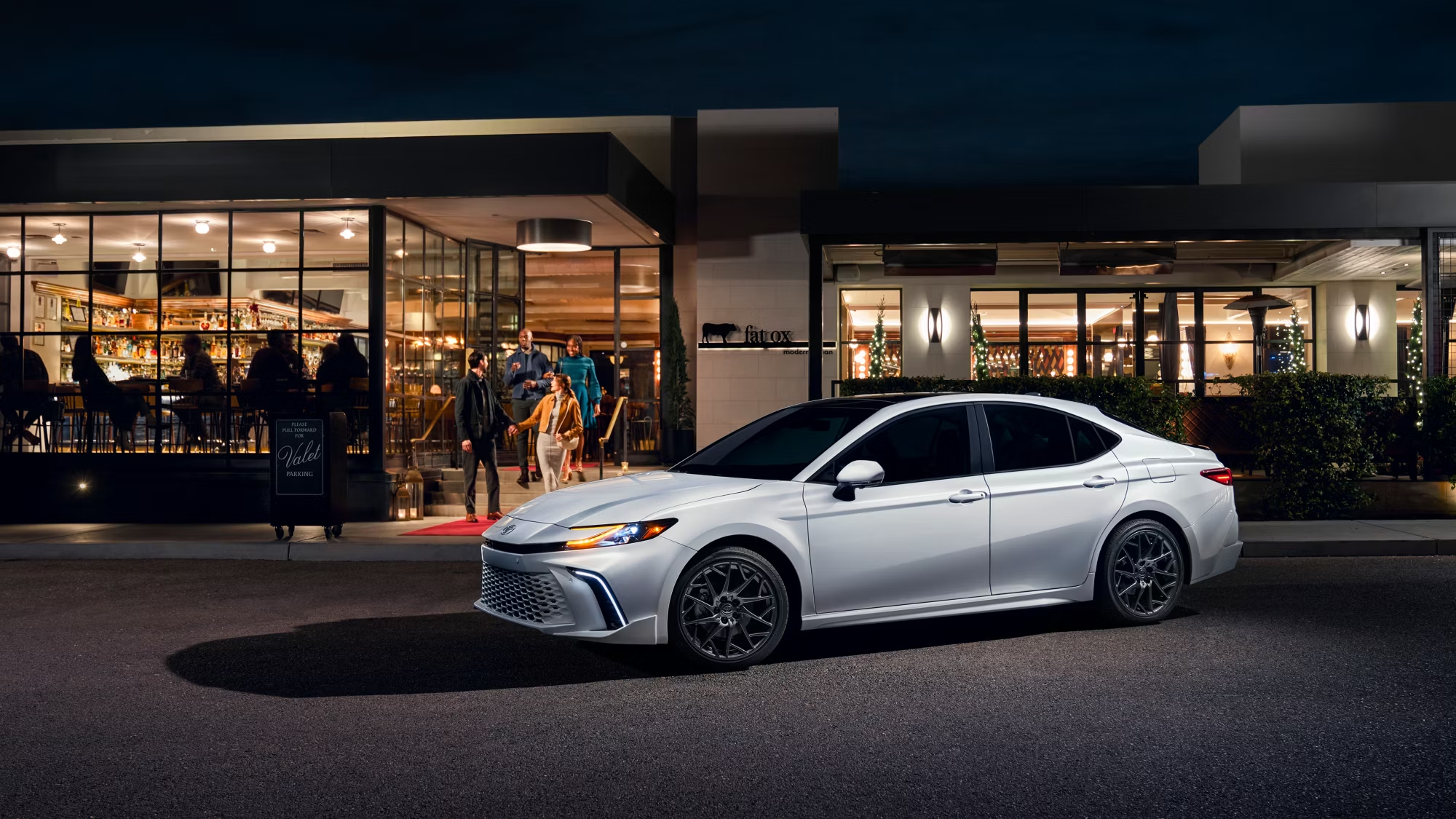
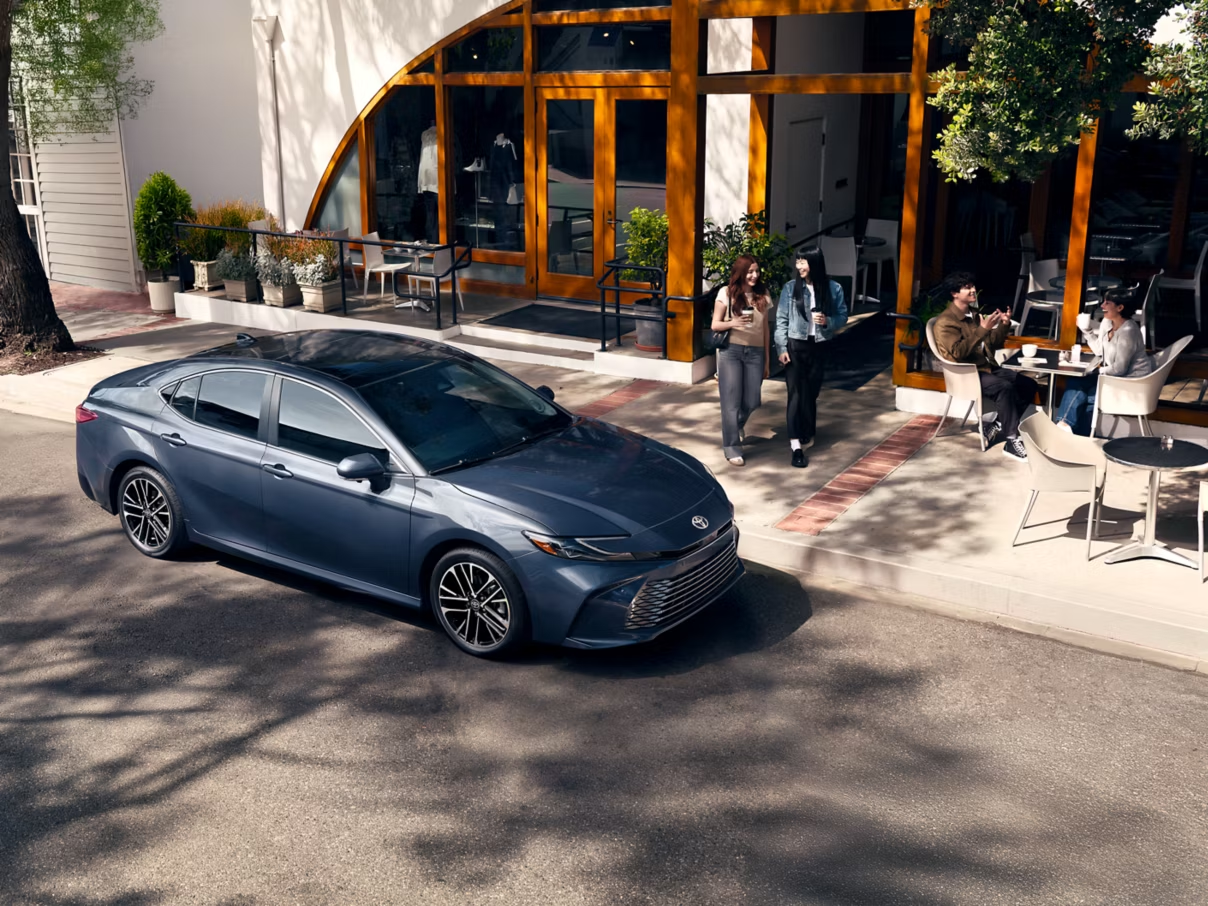
The weight of the Camry is approximately 1.5 to 1.6 tons. The Camry is a model under Toyota, with body dimensions of 4900mm in length, 1840mm in width, and 1455mm in height, and a wheelbase of 2825mm. The Camry is equipped with three powertrains: TNGA 2.5L HEV, TNGA 2.5L, and TNGA 2.0L, offering a total of ten models across three series: the Luxury Edition, Sport Edition, and Hybrid Edition. In terms of appearance, the Luxury Edition features a trapezoidal horizontal grille design, a streamlined body shape, a lower waistline, and an extended roofline that increases rear headroom. The Sport Edition adopts a three-layer grille design, a two-tone body color scheme, and a dual-sided quad-exhaust pipe design at the rear.

I've been driving the Camry Hybrid for over two years, with a curb weight of around 1.5 tons, depending on the year and configuration. Mine is the 2022 top trim version, weighing approximately 1,550 kg, equivalent to 1.55 tons. It feels quite stable in actual driving, especially when cornering at high speeds without feeling floaty, and the braking inspires confidence. However, this weight also affects fuel consumption; my average in the city is 5.5L/100km, slightly higher than some lighter cars, but the safety is worth it. When I bought the new car, the 4S store told me that the entry-level version would be lighter, around 1.45 tons, but the hybrid version is heavier due to the . Overall, this weight is just right for daily family use—too light feels unsettling, and too heavy consumes more fuel.

As a car enthusiast, I've researched the curb weight of the Camry. It generally ranges between 1.4 to 1.6 tons, with the standard version weighing approximately 1.47 tons (1470 kg). The hybrid version, due to the additional , weighs about 80 kg more, reaching 1.58 tons. This directly impacts performance: lighter weight means quicker acceleration, with 0-100 km/h in around 8 seconds, while heavier weight offers more stability and shorter emergency braking distances. Toyota employs lightweight design techniques, such as aluminum components to reduce the frame's weight, ensuring safety without compromising responsiveness. From a driving perspective, the 1.5-ton balance is excellent, reducing body roll during turns, making it reliable for both outings and long-distance travel.

I work in the car industry, and the curb weight of the Camry varies depending on the version. The base model weighs around 1.45 tons, while the top hybrid version can reach 1.58 tons, averaging about 1.5 tons. This weight provides balanced handling, and buyers rarely complain about wobbling, while fuel consumption is well controlled, averaging around 7L in the city. When choosing, I recommend test driving first—lighter versions feel more agile, but heavier ones offer a stronger sense of security. New car prices also reflect this, as entry-level models are cheaper but may be lighter. Overall, it's quite practical.

From an perspective, the Camry's curb weight of approximately 1.5 tons stems from optimized design. The body utilizes high-strength steel for weight reduction while ensuring crash safety. The standard version starts at 1,470 kg, while the hybrid version reaches nearly 1,580 kg due to additional battery load. This reasonable weight control contributes to fuel efficiency, with the high-efficiency engine achieving an average of 6L/100km while maintaining structural stability. The design considers material distribution, such as reinforced rear axle to disperse pressure and reduce wear risks. Long-term weight impacts maintenance - heavier vehicles may demonstrate better durability, but require regular component balance checks.

I focus on car economy. The Camry weighs about 1.5 tons, which has a significant impact on usage costs. The weight varies from 1.45 tons to 1.58 tons. The standard version is lighter, accelerates more efficiently, and saves fuel, with urban fuel consumption around 6L. However, the hybrid version, at 1.58 tons, reduces fuel consumption to below 5L thanks to hybrid technology. Heavier cars have slightly lower costs due to higher safety; lighter cars have shorter maintenance intervals. Environmentally, 1.5 tons is not considered heavy, with good emission control, and Euro 6 models produce less pollution. The weight provides stability while driving, reducing the need for sudden braking, which saves money in the long run.