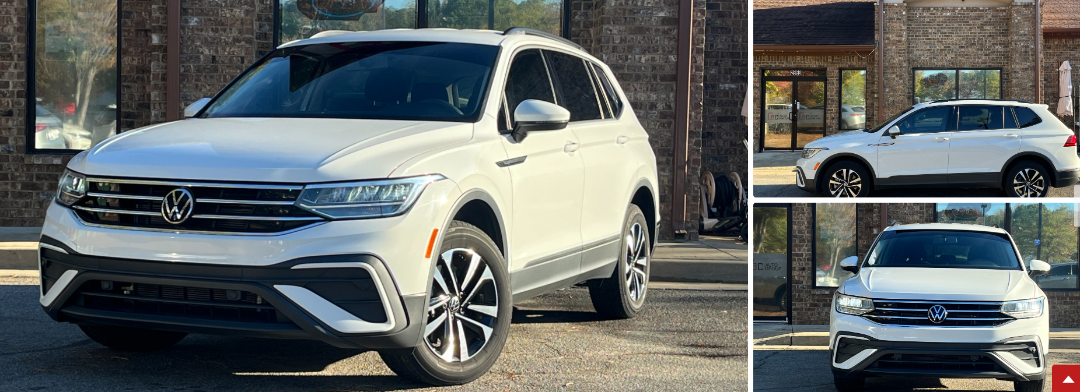
Ladvia is one of the exclusive models for the Chinese market by Volkswagen, known as Lamando in Chinese. Here are the details: 1. Introduction to Volkswagen Lamando: The Lamando is a compact new car launched by SAIC Volkswagen at the Chengdu Auto Show in August 2014. SAIC Volkswagen defines the Lamando as the "first wide-body coupe," built on the MQB platform, equipped with EA888-TSI and EA211-TSI engines, and featuring a 7-speed dry dual-clutch transmission. It is positioned as a high-end, sporty compact car, sitting between the Lavida and the Passat. 2. Positioning of Volkswagen Lamando: The majority of its consumers are young demographics.

I just checked the information, and there really isn't a model called 'ladvia'—the name sounds like a misspelling. Actually, you might be referring to the Lavida? This car is super popular in the Chinese market; my neighbor bought one last year. It's positioned as a compact family sedan, using Volkswagen's classic design language, with slightly less space than the Sagitar but much better fuel efficiency. The 1.5L naturally aspirated engine paired with a 6AT transmission delivers a very smooth ride, making it perfect for city commuting. The trunk can fit three suitcases, so it's practical for school runs or weekend family trips. There's even a pure-electric version of the Lavida now, which could be an option if you're interested in new energy vehicles.

When working at the 4S dealership, I often encounter customers inquiring about obscure models like 'ladvia' which indeed isn't on the mass-production vehicle list. But if we're talking about popular cars with similar pronunciations, the Lavida is definitely one. This car's chassis tuning is exceptionally solid, making speed bumps far less jarring. The entry-level version can be had for just over 100,000 yuan, and it has considerable modification potential - I've seen young people adding sport kits to it. Compared to Japanese cars, the Lavida's body panels are thicker, making minor scratches less likely to leave marks. The recent facelift also upgraded the intelligent infotainment system with wireless CarPlay support, making navigation and music playback much more convenient.

As a seasoned owner who has driven the Lavida for five years, I suspect you might have misspelled it as 'ladvia'. What satisfies me most about this car is its affordable —an oil change costs just over 200 yuan, and replacing the air filter is a DIY job that takes only ten minutes. The 1.4T version engages the turbo early, making highway overtaking effortless, though I recommend using 95-octane fuel for better mileage. As for drawbacks, the rear middle hump is a bit high, forcing the center passenger to sit with legs apart when carrying three people. In the current used car market, a five-year-old Lavida still retains about 60% of its value, significantly outperforming domestic cars in the same price range in terms of resale value.

When researching models, I noticed that 'ladvia' is likely a typo. The correct name is Lavida, which can be considered Volkswagen's sales leader in China. Last month, I accompanied a friend for a test drive and found that the new model features a full LCD instrument cluster, looking much more premium than the old version. With a ground clearance of 150mm, it won't scrape the bottom even on rural dirt roads. Personally, I recommend the 280TSI version, which delivers 150 horsepower paired with a 7-speed dual-clutch transmission, offering significantly stronger performance than the naturally aspirated version. If you frequently take long trips, it's advisable to opt for the adaptive cruise control, which makes highway driving much more effortless.

Yesterday, while helping my Gen-Z cousin pick a car, we talked about . He mentioned seeing the name 'ladvia' in short videos, which turned out to be a mispronunciation of the Lavida. The car's space design is quite clever—the rear seats can be folded down in a 60/40 split. Last time, I easily fit eight flower pots when helping my dad transport them. The maintenance interval is 10,000 kilometers, which is more convenient than some Japanese cars that require service every 5,000 km. The active safety features are sufficient, with ESP and tire pressure monitoring standard across all trims, and the top variant even includes autonomous emergency braking. As for things to note, the Hankook tires produce noticeable road noise, so it's recommended to switch to a set of quiet tires after purchase for a more comfortable ride.