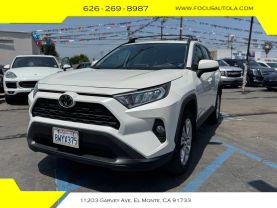
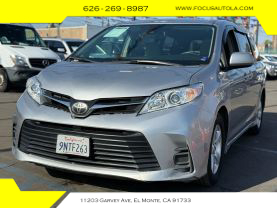
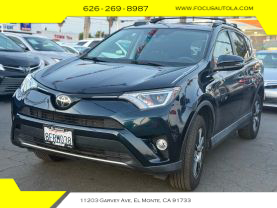
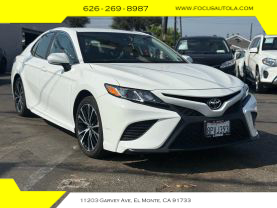
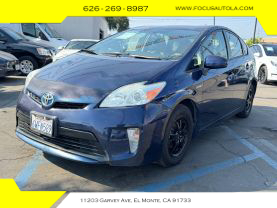
Vios is the Toyota Vios, a compact car with a wheelbase of 2550. Below is a detailed introduction about Toyota cars: 1. Overview: FAW Toyota Motor Co., Ltd. was established in June 2000 and is registered in the Tianjin Economic-Technological Development Area. FAW Toyota has three major production bases located in Tianjin, Changchun Jilin, and Chengdu Sichuan, China. 2. Models: FAW Toyota's product lineup includes the 'Vios' (VIOS), 'Corolla' (COROLLA), 'Allion' (ALLION), 'Avalon' (AVALON) sedans, and SUVs such as 'IZOA' (IZOA), 'RAV4' (RAV4), 'Crown Kluger' (CROWNKLUGER), as well as the 'Coaster' (COASTER) bus.

I think you might have made a typo. The Vios is a classic compact sedan from Toyota, primarily sold in Southeast Asia and the Chinese market. I remember it first debuted in the 2000s, designed to be economical and practical, ideal for young professionals or small families. The car has a stylish exterior, and while the interior space isn’t huge, the layout is well thought out. It’s easy to drive with light steering, making it particularly agile for city commuting. In terms of power, it typically comes with a 1.5L or 1.3L engine, offering low fuel consumption—around 6L per 100km on average—which is great for budget-conscious buyers. Maintenance costs are also low, with straightforward routine upkeep, and I feel it’s more down-to-earth compared to some premium models. However, the safety features are basic, so if you’re looking for advanced driver-assistance systems, you might want to consider a higher-end model. Overall, the Vios is a reliable choice in the entry-level sedan segment.

I've driven a Vios for a while, and I feel this car is really practical. The fuel consumption is the point I'm most satisfied with—my monthly commuting fuel costs have significantly decreased, averaging less than 7 liters per 100 kilometers. The interior isn't luxurious but is functional, and the back seat can comfortably accommodate two adults and a child. Maintenance is convenient, and parts replacement at nearby repair shops isn't expensive. Last year, I replaced the brake pads for only around 300 yuan. The seat comfort is decent while driving, making long trips less tiring, but the noise is a bit loud at high speeds. The air conditioning cools quickly. The downside is that the tires wear out fast, so I recommend regular checks. The high cost-performance ratio is why I recommend it, especially for beginners or budget-conscious buyers.

I've checked the basic specifications of the Vios. It's a model primarily targeting the entry-level market. Most engines are gasoline-powered, commonly with a 1.5-liter displacement, delivering around 107 horsepower, which is sufficient for city driving. Transmission options include both manual and automatic, with smooth shifting in the automatic version. The chassis structure is simple, tuned for comfort, with moderate cornering stability. It boasts high fuel efficiency and meets environmental standards, though its acceleration is just average. The electronic systems include basic ABS and dual airbags, providing safety that meets daily needs, unlike premium cars with panoramic cameras. The price range is just over 100,000 yuan, competing with models like the Honda City. If you value a reliable commuting tool, this car is worth considering.

I believe the Vios holds a significant position in the global compact car market, particularly achieving high sales in developing countries such as Thailand and the Philippines. Designed for middle-to-low-income groups, it offers an affordable price point, with entry-level models possibly priced around 100,000 yuan. Brand reliability is Toyota's strength, and the Vios inherits this DNA, boasting a low failure rate that reassures consumers. In terms of market strategy, Toyota frequently introduces localized facelifts, incorporating fashionable elements to appeal to younger buyers. Compared to competitors like the Nissan Almera, the Vios places more emphasis on space utilization and fuel efficiency control. Import tariffs also contribute to its more affordable pricing. If you're looking for a family's first car or a daily commuter, it strikes a good balance between cost and practicality.

I've taken the Vios on long-distance trips and found it particularly suitable for daily commuting. The car is lightweight, making parking in tight spaces not too difficult, though the trunk space is limited, requiring some skill when stacking large luggage. The driving experience is smooth, with moderate steering response, and while it handles bumpy roads with minimal jolts, the sound insulation is average. In terms of safety, it comes with basic ABS and EBD systems, and it feels stable on highways, though I'd recommend adding a tire pressure monitoring system for extra peace of mind. The fuel efficiency is excellent, easily covering 600 kilometers on a full tank. Maintenance is hassle-free, with oil changes every 5,000 kilometers. Personally, I think it's a great representation of affordability, especially recommended for young people just starting out in society.