···
Log in / Register

What is the replacement interval for the RAV4's air filter?

6Answers
AddysonRose
07/29/2025, 05:47:46 PM

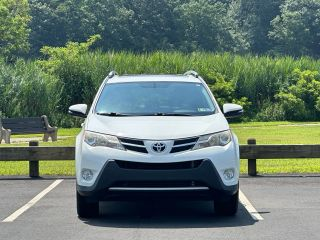
The replacement interval for the RAV4's air filter is approximately 40,000 kilometers. The air filter is a type of filter primarily used for air filtration in vehicles. Taking the 2020 RAV4 Rongfang two-wheel-drive urban edition as an example, its body dimensions are: length 4600mm, width 1855mm, height 1680mm, wheelbase 2690mm, front track 1607mm, rear track 1621mm, and fuel tank capacity 55 liters. The 2020 RAV4 Rongfang two-wheel-drive urban edition is equipped with a 2.0L naturally aspirated engine, with a maximum power of 126 kilowatts and a maximum torque of 209 Newton-meters.

Was this review help?
116
Share
DeNadia
08/15/2025, 05:16:47 PM

I think the air filter replacement interval is quite crucial for the RAV4. Having driven this car for three years, I've developed the habit of checking the air filter every 15,000 to 25,000 kilometers. If driving frequently on dusty rural roads, replacement might need to be shortened to every 10,000 km; urban commuting allows for more flexibility. Once I neglected it, and after half a year, the engine started shaking with fuel consumption soaring by 10% – costing more in fuel and affecting performance. A dirty air filter restricts engine airflow, potentially causing long-term damage to the 'heart' of the car. Regular replacement is simple – a DIY job taking just 10 minutes, with filters costing only a few dozen yuan. It's both convenient and protects the car's long-term health. Extra attention is needed during significant weather changes, like checking after sandstorms.

Was this review help?
10
Share
Expand All
McNevaeh
10/17/2025, 01:50:10 AM

As someone who lives and breathes cars, I'm quite knowledgeable about air filter replacements. For the RAV4, the air filter replacement interval typically falls between every 12,000 to 30,000 kilometers, with the manual generally recommending inspection and replacement around every 18,000 kilometers. If you frequently drive off-road or in areas with severe air pollution, it's advisable to replace it every 10,000 kilometers to prevent dust from clogging the intake. An old air filter not only wastes fuel but also worsens exhaust emissions, which is bad for the environment. I often replace it during routine maintenance—just a screwdriver is needed, making it easy and cost-effective. If your usual parking spot is dirty, more frequent checks are necessary. The filter is inexpensive but crucial, so don't skimp on this task.

Was this review help?
13
Share
Expand All
VonArianna
11/30/2025, 01:33:49 AM

I drive a RAV4 to take my kids to school, and air filter maintenance is a routine task. I usually consider replacing it every 15,000 kilometers. If I drive more in the city, I might extend the interval a bit, but on rural roads with lots of potholes and dust, changing it every six months is safer. A dirty air filter can make the engine struggle, leading to higher fuel consumption and reduced power, making long trips nerve-wracking. I always remind the mechanic to check it during maintenance—it doesn’t cost much. Pay extra attention in high humidity environments, as damp air tends to accumulate debris. Following simple rules like this keeps the car running smoothly and gives peace of mind.

Was this review help?
15
Share
Expand All
SanRhett
01/20/2026, 02:57:34 AM

When using the RAV4 for daily commuting, I pay attention to air filter replacement, which is generally reasonable every 15,000 kilometers. The replacement cycle can be more flexible for city commuting, but should be advanced in dusty areas. I learned from online videos to DIY replace the filter, a simple process that takes about 20 minutes, saving labor costs and honing my skills. A worn-out air filter affects fuel efficiency, directly increasing vehicle operating costs. Smooth engine intake reduces emissions, adding environmental benefits. Parking in a garage daily is better than outdoors to prevent dirt buildup. Consistently checking every six months and making it a habit makes the car perform better.

Was this review help?
6
Share
Expand All
AlexisDella
04/16/2026, 03:37:37 AM

As an eco-conscious driver, I make it a must to change the air filter on my RAV4 every 12 months, especially in high-traffic areas where dust accumulates rapidly. The standard interval is every 18,000 km, but I prefer doing it earlier to ensure efficient engine combustion and reduce polluting exhaust emissions. A fresh air filter protects engine longevity and saves fuel costs in the long run—a worthwhile investment. If you frequently use air conditioning or experience seasonal changes, inspect it more often to prevent sudden issues. Combining manual recommendations with personal driving habits optimizes both vehicle performance and air quality—a win-win.

Was this review help?
17
Share
Expand All
More Q&A

Which rental car company has the best reputation?

Based on industry recognition and consistent award wins, SIXT is the rental car company with the best reputation globally . It has dominated the World Travel Awards for over a decade, specifically winning "World's Leading Business Car Rental Company" for 12 consecutive years and "World's Leading Luxury Car Rental Company" for 9 consecutive years as of 2024. This unprecedented streak, decided by votes from travel professionals and consumers, serves as the most direct measure of peer and customer esteem in the travel industry. Reputation in car rental is built on reliability, vehicle quality, customer service, and value. Award bodies like the World Travel Awards audit these factors comprehensively. SIXT’s long-term dominance indicates it isn't a one-off success but a sustained standard. While other companies excel in specific regions or segments, no other global brand matches this consistent level of top-tier acclaim . For context, broader industry studies like J.D. Power’s North America Rental Car Satisfaction Study provide regional performance snapshots. In the 2023 edition, Enterprise Holdings brands (Enterprise, National, Alamo) performed strongly in North America. However, these studies are geographically specific and measure satisfaction metrics over a single year, whereas the World Travel Awards recognize global leadership across multiple years, offering a different scale of reputational evidence. The following table summarizes SIXT's core award achievements that cement its top-reputation status: Award Title Awarding Body Key Achievement & Year World's Leading Business Car Rental Company World Travel Awards Won 12 years consecutively (2013-2024) World's Leading Luxury Car Rental Company World Travel Awards Won 9 years consecutively (2016-2024) This reputation translates to practical benefits for renters. A company consistently voted "leading" is likely to invest in a newer, well-maintained fleet—SIXT is known for premium and luxury models. Its global presence in over 100 countries means service standards are harmonized, reducing uncertainty for international travelers. The focus on both business and luxury segments shows it caters effectively to two core rental demographics that have high expectations. Ultimately, reputation is about trust and meeting expectations repeatedly. The collective verdict from the travel industry, repeated year after year, provides a robust, data-backed answer to which company holds the strongest reputational standing worldwide.
278
Share

Which 360 car seat is recalled?

The recalled 360 car seats are specific Evenflo Gold Revolve360 Slim and Revolve360 Slim models manufactured between December 1, 2022, and December 8, 2024. The recall involves approximately 32,000 seats in the U.S. and 2,100 in Canada. The headrest energy-absorbing foam is not adequately secured, allowing a child to pick off and potentially ingest small pieces, creating a choking hazard. This safety recall was announced by Evenflo Company, Inc. and is officially registered with the National Highway Traffic Safety Administration (NHTSA). It is not a blanket recall of all Revolve360 seats. Only the “Slim” variants of the Gold Revolve360 and Revolve360 rotatable car seats produced within the specified 25-month window are affected. The core defect stems from a manufacturing issue where the foam pad may not be properly adhered. Consumers should immediately stop using the recalled car seat for travel and contact Evenflo for a free repair kit. The kit includes a redesigned foam cover that securely encapsulates the foam, eliminating the ingestion risk. Until the repair is completed, Evenflo advises against using the seat, as removing the foam piece yourself could compromise the seat's safety performance in a crash. To identify if your seat is included, locate the model name and manufacturing date. The model name “Gold Revolve360 Slim” or “Revolve360 Slim” is printed on a label on the side of the child seat shell. The manufacturing date is on a separate label, also on the seat shell, formatted as Month-Day-Year. Any seat with a manufacture date between 12/01/2022 and 12/08/2024 is subject to this recall. You can verify your seat's status through multiple channels. Visit the official Evenflo recall website and enter your seat's model number and date code. You can also call Evenflo's dedicated recall hotline at 1-800-233-5921. For authoritative confirmation, check the NHTSA recall database using your car seat’s model number. Evenflo is directly notifying all registered owners.
283
Share

Which car dealership makes the most money?

The Sam Pack Automotive Group generates the highest average revenue per dealership, at approximately $222.6 million per location. This figure, derived from analyzing recent industry performance metrics, highlights that sheer scale doesn't guarantee the highest per-store profitability. Revenue is just one part of the profit equation; operational efficiency, brand mix, and location are critical for actual earnings. Key Metric: Average Revenue Per Dealership This metric is crucial for comparing profitability potential across groups of different sizes. A smaller group with high per-store revenue often indicates premium brand focus and superior operational execution. Based on available data, the top performers are: Ranking Dealership Group Total Number of Dealerships Average Revenue Per Dealership 1 Sam Pack Automotive Group 6 $222,600,114 2 World Class Automotive Group 6 $219,848,751 3 FRL Automotive 3 $217,997,674 4 Bommarito Automotive Group 17 $202,354,952 Interpreting the Financial Landscape Revenue alone doesn't equal net profit. A dealership's real earnings are determined after subtracting massive costs: vehicle inventory, facility overhead, and employee commissions. Groups like Sam Pack and World Class, with fewer stores but higher average revenue, typically operate in affluent markets with luxury brands (e.g., Mercedes-Benz, Porsche) where per-vehicle profit margins are significantly higher. Conversely, a group like Bommarito, with 17 locations, achieves a strong average by leveraging volume across more mainstream brands and a broader geographic footprint. Their profit is driven by high sales volume and efficient parts/service operations, which consistently contribute to overall profitability. Core Drivers of Dealership Profitability New car sales often act as a customer acquisition tool, with thin margins. The real profit centers are the finance & insurance (F&I) department, where products like extended warranties are sold, and the fixed operations department (service and parts). Industry data shows that for many dealerships, the service bay can contribute over 50% of a store's gross profit. Location is non-negotiable. Dealerships in high-growth, high-income metropolitan areas have a fundamental advantage in both sales volume and customer spending capacity. Furthermore, securing franchises for high-demand, low-supply brands (e.g., Toyota, Lexus) or electric vehicle leaders provides a steady stream of customers with less need for discounting. Ultimately, the dealership that "makes the most money" is likely a privately-held group excelling in these areas: a premium brand portfolio, exceptional F&I penetration, a loyal service clientele, and prime real estate. While public groups report total revenue, the most profitable private operators often keep their detailed earnings confidential, making the Sam Pack Group's published average revenue a leading indicator of top-tier performance.
129
Share

What SUV is better than Equinox?

The Chevrolet Equinox is a competent compact SUV, but several rivals surpass it in key areas like powertrain refinement, interior quality, and resale value. The Toyota RAV4 and Honda CR-V are consistently better overall , offering superior reliability, fuel efficiency, and long-term ownership value. For a more engaging drive, the Mazda CX-50 stands out, while the Hyundai Tucson and Kia Sportage provide better warranty coverage and feature content for the price. When evaluating "better," it depends on your priorities. The Equinox's main strength is its low starting price and competent turbocharged 1.5L engine, which delivers reasonable power with EPA estimates of up to 31 MPG combined. However, its cabin materials and road noise insulation often trail the segment leaders. For unwavering reliability and resale value, the Toyota RAV4 is the benchmark. It offers a standard hybrid option that achieves up to 40 MPG combined, a figure the Equinox cannot match. The Honda CR-V follows closely, with a more powerful and efficient hybrid system, a more spacious and higher-quality interior, and a reputation for longevity that retains about 5-7% more of its original value after three years according to industry valuation guides. Driving enthusiasts should consider the Mazda CX-50. It features a standard 227-horsepower inline-six engine and a sophisticated, driver-oriented suspension that provides a noticeably more responsive and connected driving experience than the Equinox's softer, more utilitarian feel. If technology and value are paramount, the Hyundai Tucson and Kia Sportage offer superior standard warranties (10-year/100,000-mile powertrain versus Chevy's 5-year/60,000-mile) and often include more advanced driver-assistance and infotainment features at equivalent price points. Key Comparative Data (Base FWD Models): Model Engine/Horsepower Combined MPG (EPA) Key Advantage vs. Equinox Chevy Equinox 1.5L Turbo / 175 hp 31 MPG Low starting MSRP Toyota RAV4 2.5L / 203 hp (Hybrid: 219 hp) 32 MPG (40 MPG Hybrid) Best Resale Value, Hybrid Efficiency Honda CR-V 1.5L Turbo / 190 hp (Hybrid: 204 hp) 31 MPG (40 MPG Hybrid) Interior Space & Quality Mazda CX-50 2.5L / 187 hp 28 MPG Driving Dynamics & Design Hyundai Tucson 2.5L / 187 hp (Hybrid: 226 hp) 29 MPG (38 MPG Hybrid) Warranty & Feature Content Ultimately, while the Equinox is a viable option, most competitors deliver stronger all-around packages. Your choice should hinge on whether you prioritize cost, driving experience, fuel savings, or long-term investment.
169
Share

What Acura lasts the longest?

Based on long-term reliability data and owner community reports, the Acura RDX often demonstrates the strongest longevity among current models, though the MDX and new Integra are also excellent choices. Vehicles like the RDX can reliably surpass 200,000 miles with consistent, proper maintenance. The longevity leaderboard is nuanced, depending on model year, drivetrain, and upkeep history. A key factor is engine design. The RDX and MDX share versions of Honda's famous J-series and more recent turbocharged V6 engines. The 3.5L V6 (J35), particularly in models from the mid-2010s, is renowned for its durability . These engines avoid complex turbocharging in many variants, simplifying long-term maintenance. The newer 2.0L turbocharged four-cylinder in recent RDX and Integra models has a solid record, but its long-term durability beyond 150,000 miles is still being fully proven in the Acura application. Transmission choice significantly impacts longevity. Earlier MDX and TL models with 5-speed and 6-speed automatic transmissions are generally robust. The 9-speed automatic used in some newer Acuras has received criticism for less refined shifting, though major longevity issues are not widespread. Models with the refined 10-speed automatic or, crucially, the efficient and reliable continuously variable transmission (CVT) in the Integra benefit from Honda's extensive CVT expertise, which prioritizes smooth operation and fuel efficiency over performance stress. Common high-mileage failure points across models include the battery and alternator, power tailgate actuators in SUVs, and infotainment system glitches. These are typically less costly than major powertrain failures. Acura's luxury positioning means parts and labor can cost 20-30% more than for a mainstream Honda counterpart, a vital factor in total cost of ownership over 15+ years. Proactive maintenance is non-negotiable for maximizing lifespan. Adhering strictly to the factory schedule for fluid changes (engine oil, transmission, differential, brake) is critical. Using premium fuel in turbocharged models and recommended 0W-20 full synthetic oil in newer engines protects against carbon buildup and premature wear. Ignoring timing belt intervals on older V6 models (typically every 90,000-105,000 miles) risks catastrophic engine failure. The used market reflects these reliability patterns. According to industry valuation guides, well-maintained RDX and MDX models from reliable production years retain 45-55% of their original value after five years , a strong indicator of perceived durability. High-mileage examples that have complete service histories consistently command premiums over those without records. Model Key Strengths for Longevity Common Considerations for High Mileage Noteworthy Production Years Acura RDX Proven V6 engine options; balanced size/weight; less complex than MDX. Watch for electronic issues in Advancеd packages; AWD system maintenance. 2013-2018 (V6), 2019-Present (Turbo 4) Acura MDX Robust J35 V6 powertrain; spacious for family use. Higher wear on brakes, tires due to weight; more expensive consumables. 2014-2020 (pre-refresh) Acura Integra Efficient, reliable powertrain (shared with Civic); lower running costs. Limited long-term data as a new model; sportier use may increase wear. 2023-Present Acura TLX Available reliable V6; engaging driving dynamics. Sportier tuning may lead to tighter maintenance intervals for peak performance. 2015-2020 (V6 models) Ultimately, the "longest-lasting" Acura is the one with a verifiable, meticulous maintenance history. A single-owner 2016 RDX with full dealer records is often a safer bet for reaching 250,000 miles than a neglected 2020 model. For most buyers seeking the best balance of luxury, space, and proven longevity, the RDX represents the consensus choice, with the MDX as a close contender for those needing three rows.
113
Share

What SUV gets 20 MPG?

The 2024 Lexus TX 350 with all-wheel drive achieves an EPA-estimated 20 MPG in city driving, making it a key model for shoppers prioritizing this specific fuel efficiency. Particularly the TX 350 Premium AWD trim, starting at $62,290 , reliably hits this benchmark. This three-row luxury SUV balances performance from its 275-horsepower 2.4L turbocharged engine with practical fuel economy, offering a compelling option in its segment. For buyers targeting exactly 20 MPG, the drivetrain configuration is crucial. The AWD model is certified at 20 MPG city/26 MPG highway . Opting for front-wheel drive changes the figures to 22 MPG city/28 MPG highway. The consistent 20 MPG city rating for the AWD variant is a result of meticulous engineering to manage the power delivery and weight distribution of a substantial vehicle. The Lexus TX lineup, with seven distinct trims, provides several paths to a vehicle with this fuel economy. The TX 350, powered by the turbo four-cylinder, is the volume core of the series. Its EPA estimates are a reliable baseline. The following table outlines the key trims and their relevant specifications: Trim Level Drivetrain Starting MSRP (Approx.) EPA Est. MPG (City/Highway) TX 350 Premium AWD $62,290 20 / 26 TX 350 Premium FWD $60,590 22 / 28 TX 550h+ F Sport AWD (PHEV) $80,000+ 28 MPG combined + electric range Market data indicates that models with predictable, real-world fuel efficiency like the TX 350 maintain stronger residual values. Its 20 MPG rating is not an outlier but aligns with competitive offerings from brands like Acura and Genesis, where similar powertrains in three-row SUVs yield 19-21 MPG in city driving. This parity shows the figure is a realistic industry standard for the class, not a marketing estimate. Practical ownership experience confirms that while the 20 MPG city rating is attainable, driving style significantly impacts results. Aggressive acceleration in urban traffic can lower efficiency, while using the standard drive mode selectors can help optimize it. For highway commuting, the 26 MPG rating is frequently achievable, making the combined average reasonable for a vehicle of its size and capability. The appeal of the Lexus TX extends beyond the mileage number. It delivers this efficiency without sacrificing the premium interior quality, advanced safety suite (Lexus Safety System+ 3.0), and spacious seating for six or seven passengers that define the segment. The 20 MPG city rating, therefore, represents a balanced equation of luxury, utility, and responsible performance.
194
Share
Cookie
Cookie Settings
© 2025 Servanan International Pte. Ltd.