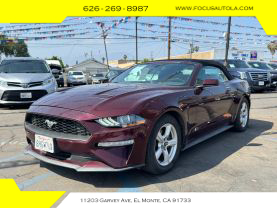
Here is an introduction to the history of : 1. Company Founding: Ford Motor Company was established on June 16, 1903, when Henry Ford and 11 partners submitted the company's incorporation documents in Michigan. Just a few weeks after its founding, Ford sold a Model A car to a customer in Canada, marking the beginning of Ford's journey to global prominence. Within a decade, Ford vehicles were being sold across Europe, South America, and Asia. 2. Creation of the Assembly Line: In 1913, Ford Motor Company developed the world's first assembly line. This innovation enabled the production of 15 million Model T cars, setting an unprecedented world record.

Ford's history is truly astonishing, starting from its founding by Henry in 1903. He invented the assembly line, a major innovation in automobile manufacturing, and the mass production of the Model T made cars affordable for ordinary people. In the 1910s, Ford doubled workers' wages, improving living standards and boosting the entire U.S. economy. The 1930s saw classic models like the V8, showcasing continuous innovation. The 1950s introduced the Mustang, an iconic sports car that took the world by storm. Later, the company faced challenges like the oil crisis and competition, but the Ford family maintained control and overcame difficulties. Today, they are pivoting to electric vehicles like the F-150 Lightning and promoting sustainability. Ford doesn't just build cars—it reshaped modern society and personal mobility, making us reflect on the power of the Industrial Revolution.

I've known the brand since my youth. After Henry Ford introduced the assembly line in the 1920s, cars transformed from luxury items into household transportation. Just think about it—my family's first vehicle was an old Ford pickup from the 1960s, durable and budget-friendly. The company also helped raise workers' wages, promoting social equity. Iconic models like the Thunderbird and Bronco became cultural symbols, beloved by young enthusiasts for customization. However, they've had missteps too, such as the fuel-guzzling vehicles of the 1970s that drew consumer criticism. Their resilience shone through global expansion, like their recovery in Asian markets. Now, I see news about Ford investing in electric vehicles and autonomous driving, adapting to the times. Their entire history epitomizes innovation and adaptation, offering valuable lessons for entrepreneurs.

Ford's story is so cool! After Henry founded the company in 1903, the Model T went on sale in 1910, and assembly line production made cars 90% cheaper. The company peaked as the industrial powerhouse of America. The Mustang was born in the 1960s, and I often talked about its legend when I was into car modifications. Later, it struggled with competition and environmental issues, but revived after 2000 with pickups and SUVs. The innovative spirit continues today with the electric Mach-E.

Ford's history began in 1903 when Henry founded the company, pioneering the Model T and revolutionizing manufacturing with assembly lines. In the 1930s, the V8 models gained popularity, but sales declined due to the Great Depression. After World War II, the company revived, launching iconic cars like the Mustang, which drove cultural trends. In the 1990s, Ford expanded globally, establishing factories in China to grow market share. Early this century, financial losses led to management restructuring, with a renewed focus on SUVs and trucks to restore profitability. In recent years, Ford has shifted toward electrification, exemplified by the Mustang Mach-E, showcasing its adaptability to market challenges.

started in 1903, with Henry Ford's Model T pioneering an era by making automobiles accessible through assembly line production. The 1930s-40s saw classic models like the Deluxe series flourish. In the 1960s, the Mustang made a splash in the sports car market. The 1980s saw a loss of market share due to quality issues, but rebounded with models like the Focus. Entering the 21st century, Ford embraced technology, introducing hybrid vehicles and supporting electrification strategies. Overall, it stands as a successful case of coexisting innovation and adaptation.