···
Log in / Register

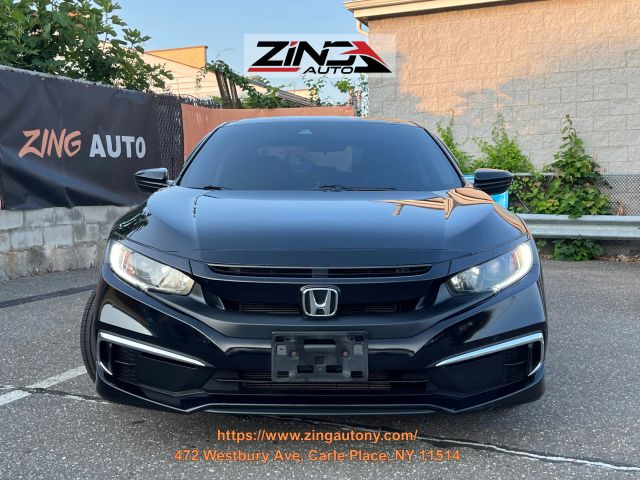
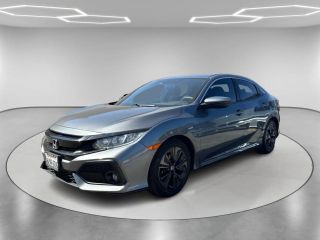
What is the difference between Civic National V and National VI?

6Answers
JamesonFitz
07/23/2025, 02:44:00 PM

The difference between Civic National V and National VI lies in the emission standards and emission levels. The main differences are as follows: In terms of emission standards: The Civic National V follows the National V emission standard, and new vehicle registrations have been halted in most regions of China; National VI follows the National VI emission standard. In terms of emission levels: Under the National V standard, the carbon monoxide emission for gasoline vehicles is 1000 mg/km, while under the National VI standard, it is 700 mg/km. The National VI standard is more stringent than National V, reducing nitrogen oxides by 77%, particulate matter by 67%, introducing limits on particulate number, and tightening requirements on the durability of emission control devices and on-board diagnostic systems.

Was this review help?
120
Share
SanCole
08/10/2025, 10:21:42 AM

The core difference between Civic's China V and China VI lies in the emission standards. China VI is the sixth-generation standard, which is significantly stricter than the fifth-generation China V, reducing pollutants like nitrogen oxides by half and emitting fewer particulates, making it much more environmentally friendly. The implementation timelines also differ: China V was rolled out around 2017, while China VI began phased implementation from 2020, with major cities now mandating China VI for vehicle registration. China VI vehicles offer slightly better fuel efficiency and smoother acceleration response, but purchasing a new car may cost 5,000 to 10,000 RMB more. For used cars, China VI models retain higher resale value, while China V models depreciate faster, especially in policy-restricted areas like Beijing and Shanghai. Maintenance-wise, China VI systems are more complex, with pricier parts but lower failure rates. Overall, China VI promotes greener transportation, aligning with the broader trend.

Was this review help?
17
Share
Expand All
CourtneyMarie
09/22/2025, 05:13:24 AM

Our family switched to a Civic that meets China VI emission standards, and the difference in experience compared to the previous China V car is quite noticeable. The China VI model has lower emissions, making driving more reassuring due to reduced pollution, and the government also encourages environmental protection. Fuel savings are about 5%, which means long-term savings on fuel costs, although the down payment was slightly higher. The biggest headache is the policy: back in my hometown, only China VI-compliant new cars are allowed to be registered, and China V cars lose a lot of value when sold second-hand. Maintenance is similar, with China VI parts being slightly more expensive but more durable. My advice is to go for China VI if buying new—don’t try to save money by opting for a China V model, as it’s not worth it. Cities impose more restrictions on China V cars, so it’s better to avoid the hassle.

Was this review help?
11
Share
Expand All
SanSebastian
11/05/2025, 10:33:15 PM

Dude, the Civic National VI is super trendy now! The emission standards have been upgraded, making it cleaner than National V. The performance hasn't changed much, with the same exhilarating acceleration, but National VI saves a bit more on fuel and costs. The key point is that policies are stricter now—getting a license plate for National V in big cities is a nightmare, and resale prices plummet. National VI holds its value better and will be easier to sell later. It's a bit more expensive, but totally worth it for staying trendy and hassle-free. Don't hesitate and end up with an outdated National V car.

Was this review help?
4
Share
Expand All
SanAlexa
12/27/2025, 12:20:57 AM

I believe the Civic's China VI version has significant environmental advantages over China V. The China VI emission standards are stricter, reducing air pollution. The government plans to phase out China V vehicles, while China VI aligns with sustainable development. Some regions restrict China V vehicles from being driven, whereas China VI models face no such limitations. The fuel economy is slightly better, saving fuel and reducing waste. Maintenance costs might be a bit higher, but the contribution to environmental protection and society is well worth it. In the long run, it offers peace of mind for individuals and benefits society.

Was this review help?
7
Share
Expand All
OLyla
03/24/2026, 04:41:07 AM

From an economic perspective, the initial price of the Civic National VI is higher than the National V by several thousand. However, it is significantly more fuel-efficient, saving hundreds in fuel costs annually, with a payback period of 5 years. The National VI model has better resale value, fetching 10% more than the National V when resold, as the National V depreciates faster, especially under policy changes. While National VI parts are slightly more expensive for repairs, the failure rate is lower. Investing in a National VI is wise, but if the budget is tight, considering a used National V as a transitional option is feasible.

Was this review help?
1
Share
Expand All
More Q&A

Are Fuel Savers Useful for Cars?

Fuel savers are useful. The fuel-saving effect of fuel savers can easily achieve an average range of 5-10%. Installed in vehicles, fuel savers are devices designed to save or reduce fuel consumption through certain methods or approaches. Related introductions are as follows: 1. Hydrodynamic Fuel Saver: The hydrodynamic fuel saver breaks through the traditional fuel-saving concept by focusing on improving combustion efficiency while also introducing a new clean, environmentally friendly, and high-performance fuel—hydrogen—to the engine. This innovation overcomes the limitations of traditional fuel savers, achieving a fuel-saving rate of 10%-30%. This not only surpasses the upper limit of traditional fuel savers but also challenges conventional thinking and perceptions to some extent. 2. Principle of Fuel Savers: The principle of automotive fuel savers involves utilizing the vehicle's own generator power to automatically generate the required current for the hydrodynamic fuel saver host through a power controller. The water in the hydrodynamic fuel saver host is electrolyzed into hydrogen and oxygen, which are then transported to the engine's cylinders via a safe isolation water supply device and pipelines. The hydrogen-oxygen mixture burns alongside other fuels to achieve the goal of fuel saving.
108
Share

What are the types of diesel-powered sedans?

Diesel-powered sedans include models such as the Audi Q7, Touareg, Land Rover, Jetta Diesel Edition, Bora Diesel Edition, and Audi A6L. Taking the Audi Q7 as an example, here are the specific details about the Audi Q7: 1. Vehicle Positioning: The Audi Q7 is a mid-to-large-sized SUV. 2. Four-Wheel Steering System: The Audi Q7 is equipped with a four-wheel steering system. At low speeds, the rear wheels turn in the opposite direction during steering, reducing the turning radius and the width of the driving trajectory. At high speeds, the rear wheels turn in the same direction, improving wheel response speed, dynamic performance, and stability. Additionally, the four-wheel steering system effectively assists the intelligent parking system and trailer assist system. 3. Powertrain: The Audi Q7 is powered by a 3.0TFSI engine, with a maximum power output of 245 kilowatts and a top speed of 247 kilometers per hour.
114
Share

How to Quickly Solve Car Oil Leakage?

Here are the methods to quickly solve car oil leakage: 1. Generally, if there is oil leakage from the car fuel tank, simply wiping it clean will suffice. 2. In case of minor cracks in the fuel tank, wipe the dripping oil port and apply a thin layer of chewed gum (once it becomes elastic). 3. After drying, it can tightly seal the crack. Here are the reasons for car oil leakage: 1. Oil leakage caused by insufficient tightness during the running-in period or excessive lubrication oil. 2. Overfilling the fuel tank; excessive refueling can lead to oil seepage from the fuel cap during driving. 3. With the increase in car age, loosening and falling off of various nuts on the car can also cause oil leakage. 4. Oil leakage caused by unqualified replacement parts during car part replacement.
117
Share

Does Higher Engine Oil Viscosity Lead to Higher Fuel Consumption?

Higher engine oil viscosity does lead to higher fuel consumption. Below is a detailed introduction to the types of engine oil grades: 1. High-Temperature Type: For example, SAE20 to SAE50. The numbers indicate the viscosity at 100°C, with higher numbers representing higher viscosity. 2. Low-Temperature Type: For example, SAE0W to SAE25W. The "W" stands for "Winter," and the smaller the number, the lower the viscosity and the better the low-temperature fluidity. 3. All-Season Type: For example, SAE15W/40, 10W/40, 5W/50. These indicate that the viscosity grades at low temperatures meet the requirements of SAE15W, 10W, and 5W, respectively, while the viscosity grades at high temperatures meet the requirements of SAE40 and 50, making them suitable for both winter and summer use.
101
Share

Should I Go for Maintenance When the First Service Time Is Due but the Mileage Hasn't Been Reached?

You should go for maintenance when the first service time is due even if the mileage hasn't been reached. Below are the details of the first service items: 1. Engine System: Replace the engine oil and oil filter. Check if all lubricating fluids in the engine compartment are sufficient and if any related components are loose. 2. Lighting System: Check if the lighting system is functioning properly. 3. Vehicle Tires: Check if the vehicle tires show excessive wear. 4. Shock Absorbers: Check if the shock absorbers are leaking oil. 5. Vehicle Chassis: Check if the vehicle chassis has any scratches, damages, looseness, or rust issues.
101
Share

What is the method to eliminate the F1 warning light on Suzuki DL250?

Suzuki DL250 if the F1 warning light appears, it means that the motorcycle has a fault, but the specific fault needs to be read with a dedicated diagnostic computer to know the fault code. Therefore, after the F1 warning light comes on, it is recommended to go to a professional institution to read the fault code, find the cause and location of the fault before repairing. More details are as follows: 1. Before repairing the motorcycle, the first step is always to read the fault code. The fault code can help the technician quickly determine the cause and location of the fault. If the fault code is not read before repairing, it can only be guessed. 2. Some motorcycles require a dedicated diagnostic computer to read the fault code, while some motorcycles can use a universal diagnostic computer to read the fault code. In the process of repairing the motorcycle, it is essential to use genuine parts. 3. When using the motorcycle, if a warning light appears on the dashboard, it should be repaired immediately. If it is not repaired in time, it may eventually develop into a more serious fault, which will increase the repair cost and also damage the motorcycle. 4. When using the motorcycle, it is necessary to perform regular maintenance, and during maintenance, genuine oils and parts must be used, otherwise it will also damage the motorcycle. Regular maintenance can extend the life of the motorcycle.
113
Share
Cookie
Cookie Settings
© 2025 Servanan International Pte. Ltd.