···
Log in / Register

What is the Civic Sport Package?

6Answers
AlyssaRose
08/29/2025, 11:00:55 PM

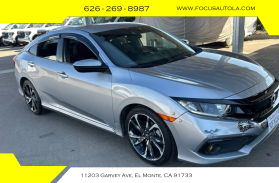
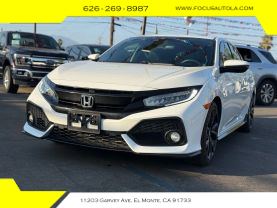
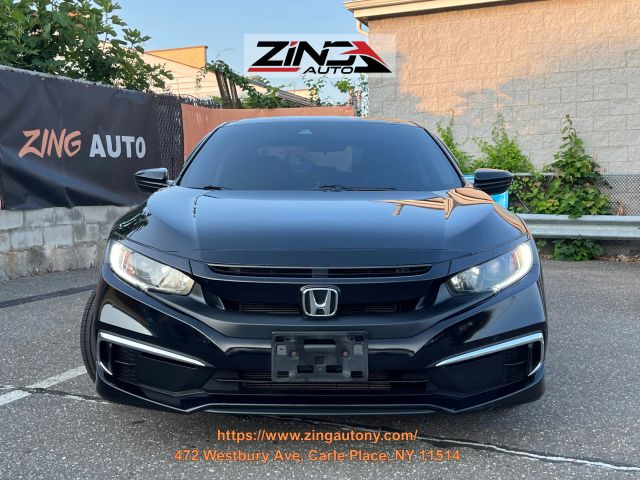
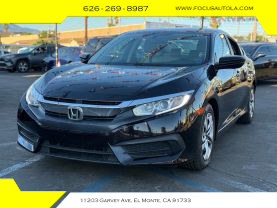
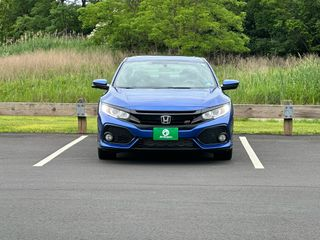
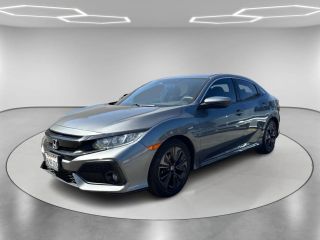
The Civic sport appearance package includes: 17-inch blackened alloy wheels, center-mounted exhaust, red instrument panel, metal pedals, and black exterior trim. Since the official launch of the tenth-generation Civic in 2016, its sharp sporty styling and powerful acceleration performance quickly won the favor of a large number of young people, earning it the nickname "Ferrari Civic". More details about the Civic are as follows: 1. Overall, the Civic still adopts the family-style design language, with the grille decorated with black panels to further highlight its sporty character. It is also paired with large multi-spoke alloy wheels, giving it a more fashionable and dynamic look. 2. The continuous waistline on the side of the body not only elongates the visual effect of the car but also adds a stylish touch. The fastback design is the biggest highlight of the car. Additionally, the previous hidden exhaust has been replaced with a single center-mounted chrome exhaust, and the car is equipped with a large number of RS sport package elements, making the overall exterior design full of sporty appeal. 3. In terms of configuration, the new Civic comes standard with features such as an electronic parking brake, tire pressure monitoring, ESP, hill start assist, engine start-stop, variable steering ratio, 4-way adjustable steering wheel, and a multifunction steering wheel. Depending on the model, it may also include features like rear parking sensors/camera, cruise control, sunroof, LED headlights, automatic air conditioning, and paddle shifters. 4. In terms of powertrain, it is equipped with a 1.0T three-cylinder engine and a 1.5T four-cylinder engine, paired with either a 6-speed manual or CVT transmission. The 1.0T model is only available with a CVT. Compared to competitors in the same segment, the 1.5T with CVT powertrain offers advantages for both daily commuting and spirited driving, and it has significant tuning potential.

Was this review help?
107
Share
McMelanie
09/11/2025, 03:05:58 AM

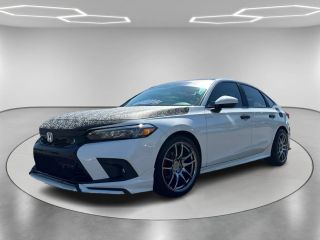
As a die-hard fan of the Honda Civic, I have a lot to say about the sports kit. It's essentially an upgrade component provided by the manufacturer or the aftermarket, installed on the Civic to enhance handling and appearance. Specific parts include a front splitter to reduce air resistance at high speeds, a rear spoiler to increase downforce for more stable cornering, and side skirts to optimize the body lines, making it look sleeker and sportier. Swapping to larger, lightweight alloy wheels paired with a short suspension tune makes the car respond faster, especially on winding roads. I've tried the factory Si version kit on my own car—installation is straightforward but pricier, while aftermarket options like Maxton Design's kits offer better value and more choices. Just be mindful of installation quality to avoid air leaks or rattles. Regular cleaning is a must to keep it looking sharp. Not only does it make the car look cooler, but it also enhances the overall driving experience. Highly recommended for car enthusiasts—it truly ignites your passion for driving.

Was this review help?
1
Share
Expand All
Ron
10/25/2025, 03:57:25 AM

As an ordinary Civic owner, I've recently been researching body kits—essentially adding trendy accessories to your car for a sportier look and minor functional upgrades. These include front bumpers to improve airflow efficiency, rear spoilers for added stability, and side skirts to cover wheel arch gaps. For beginners, opting for OEM parts ensures safety and easy installation at an affordable price starting around a thousand bucks. After installation, the car looks lowered and stylish, earning compliments from neighbors. Be cautious not to cheap out on low-quality products, as they may cause dangerous vibrations at high speeds. I plan to start with a rear spoiler when I have time—forum discussions suggest it can slightly improve fuel efficiency. Maintenance is simple: just rinse off dust with water, no need for much fuss. Overall, it's practical for daily life, especially for young people looking to stand out on the streets, making it a worthwhile small investment.

Was this review help?
1
Share
Expand All
LaReese
12/08/2025, 03:21:27 AM

Having worked in the car modification scene for a long time, I deeply understand the essence of Civic sports kits. They are a combination of aerodynamically optimized accessories: front splitters reduce turbulence, rear diffusers manage wake flow to enhance grip, and side skirts minimize drag. Materials are mostly ABS or carbon fiber, with lightweight being crucial. Installation requires adjusting the toe angle to prevent suspension imbalance, which affects cornering performance. Performance gains are limited, but the visual impact is significant, with the community often sharing track-inspired looks. Professional installation ensures safety.

Was this review help?
18
Share
Expand All
LaGabriella
01/28/2026, 09:40:39 PM

As a budget-conscious car owner, I'm discussing the cost-value of Civic sport kits. Original kits start at thousands, while aftermarket ones can be found for a few hundred bucks, with parts like front bumpers and rear diffusers mainly for aesthetic enhancement. Practically, they might slightly improve fuel efficiency, but don't expect major performance upgrades. They add resale value, especially appealing to younger buyers. Consider whether insurance covers them, as improper installation poses high accident risks. I recommend purchasing cost-effective parts in batches and maintaining them with simple wet cloth cleaning. Overall, it's a moderate personalization investment that adds vitality to an ordinary car, suitable for friends with limited budgets.

Was this review help?
14
Share
Expand All
MacAbigail
04/24/2026, 02:16:17 AM

I'm a trend follower, and the Civic sports kit is super cool! With the front lip and rear spoiler design, the car instantly gets a lowered and eye-catching look. Popular elements like carbon fiber gloss or colored wraps make it stand out on the streets. After installation, it's super photogenic at car meets, showcasing personal taste. The cost is moderate but worth it for boosting confidence. Remember to choose a kit that matches your car's color and wash it regularly to keep it fresh. It's not just decoration—it's part of a fashionable lifestyle.

Was this review help?
1
Share
Expand All
More Q&A

What is the purpose of the three-line rule for the hill start in Subject 2?

It is to confirm whether the front of the car is parked in the correct position. The following is a related introduction to Subject 2: 1. Overview: Subject 2, also known as the small road test, is part of the motor vehicle driver's license assessment and is the abbreviation for the field driving skills test. The test items for cars C1 and C2 include five mandatory items: reversing into a garage, parallel parking, stopping and starting on a slope, turning at a right angle, and driving on a curve (commonly known as the S-curve). Some regions also include a sixth item: collecting a card on a highway. 2. Teaching aids: Teaching software: Students can learn traffic regulations through driver simulation test software on mobile or computer terminals. Teaching books: "Safe Driving Starts Here," compiled by the Ministry of Transport of the People's Republic of China. Driving learning materials can be uniformly purchased and distributed by the driving school or purchased by students at their own expense.
111
Share

Does the ten-day retake period for Subject 2 include weekends?

Subject 2 retake ten days does not include Sundays. Below is relevant information about Subject 2: 1. Overview: Subject 2, also known as the small road test, is part of the motor vehicle driver's license examination. It refers to the field driving skills test. The C1/C2 test items include five compulsory items: reverse parking, parallel parking, stopping and starting on a slope, right-angle turns, and curve driving (commonly known as S-curves) (some regions have a sixth item, high-speed card collection). 2. Teaching aids: Teaching software: Students can learn traffic regulations through driver simulation test software on mobile or computer; Teaching materials: "Safe Driving Starts Here" compiled by the Ministry of Transport of the People's Republic of China. Driving study materials can be uniformly purchased and distributed by the driving school, or students can purchase them at their own expense.
113
Share

Is there a venue fee for the make-up test of Subject 2?

Some places require it, depending on the local regulations. Below is relevant information about Subject 2: 1. Overview: Subject 2, also known as the small road test, is part of the motor vehicle driver's license examination. It refers to the field driving skills test. For small vehicles (C1 and C2), the test items include five mandatory components: reverse parking, parallel parking, stopping and starting on a slope, right-angle turns, and curve driving (commonly known as the S-curve). Some regions also include a sixth item: high-speed toll card collection. 2. Teaching aids: Teaching software: Students can use driver simulation test software on mobile or computer devices to study traffic regulations. Teaching materials: "Safe Driving Starts Here," compiled by the Ministry of Transport of the People's Republic of China. Driving schools may provide learning materials uniformly, or students may purchase them at their own expense.
110
Share

What are the requirements for the slope section in Subject 2?

After the vehicle comes to a stop, the front bumper of the car or the front axle of the motorcycle must not be positioned beyond the marker pole line, with a tolerance of no more than 50 centimeters in either direction. Below is a relevant introduction about Subject 2: 1. Overview: Subject 2, also known as the small road test, is part of the motor vehicle driver's license examination and refers to the field driving skills test. For small vehicles (C1 and C2), the test items include five mandatory sections: reversing into a garage, parallel parking, stopping and starting on a slope, turning at a right angle, and driving through curves (commonly known as S-turns). Some regions may include a sixth item: high-speed card collection. 2. Teaching aids: Teaching software: Students can use driver simulation test software on mobile or computer devices to study traffic regulations. Teaching materials: "Safe Driving Starts Here," compiled by the Ministry of Transport of the People's Republic of China. Driving schools may provide learning materials uniformly, or students may purchase them at their own expense.
113
Share

Which way to turn the steering wheel for right reverse parking?

When performing right reverse parking, turn the steering wheel to the right. Below is relevant information about reverse parking: Reverse parking assessment: Reverse parking is a mandatory test item for obtaining a small car driver's license, assessing the driver's ability to maneuver the vehicle in a confined space. It serves as an evaluation point in driving tests, requiring candidates to correctly reverse the vehicle into a parking space from both sides while in motion. Common types of reverse parking: The first is "non"-shaped reverse parking, commonly seen in shopping malls. The second is roadside "one"-shaped reverse parking, also known as parallel parking. The third is the less common diagonal reverse parking.
119
Share

Should I Pay the Retake Fee or Schedule the Exam First for Subject 2?

For the Subject 2 retake, you must pay the retake fee online in advance before you can schedule the exam. Below is relevant information about Subject 2: 1. Overview: Subject 2, also known as the small road test, is part of the motor vehicle driver's license assessment. It refers to the field driving skills test. For small vehicles C1 and C2, the test items include five mandatory components: reversing into a garage, parallel parking, stopping and starting on a slope, right-angle turns, and curve driving (commonly known as S-turns). Some regions also include a sixth item: high-speed toll card collection. 2. Teaching Aids: Teaching Software: Students can use driver simulation test software on mobile or computer devices to study traffic regulations; Teaching Materials: "Safe Driving Starts Here" compiled by the Ministry of Transport of the People's Republic of China. Driving schools may provide learning materials uniformly, or students may purchase them at their own expense.
111
Share
Cookie
Cookie Settings
© 2025 Servanan International Pte. Ltd.