···
Log in / Register

What is the Camry?

6Answers
McAdeline
07/24/2025, 09:31:19 AM

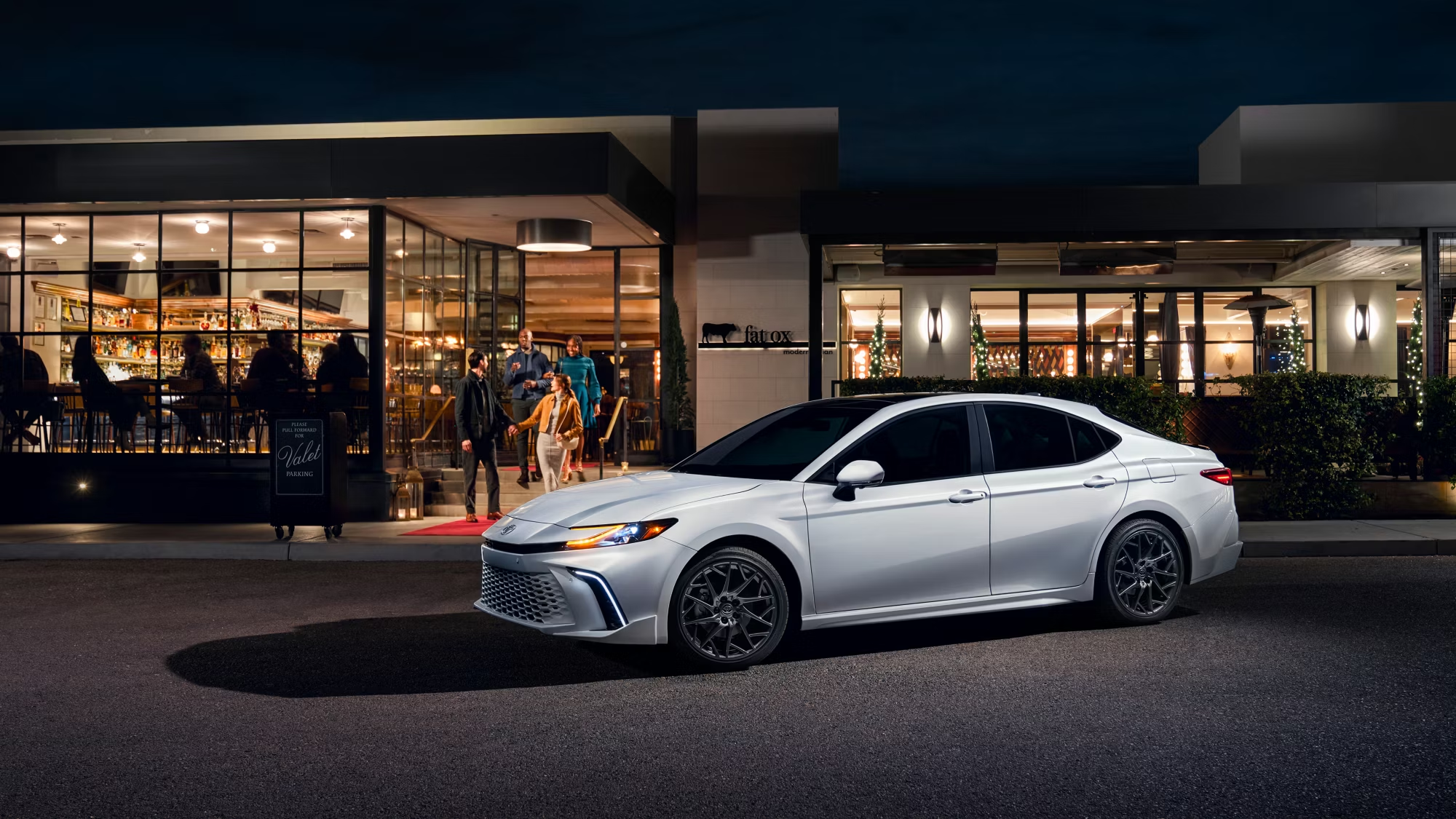
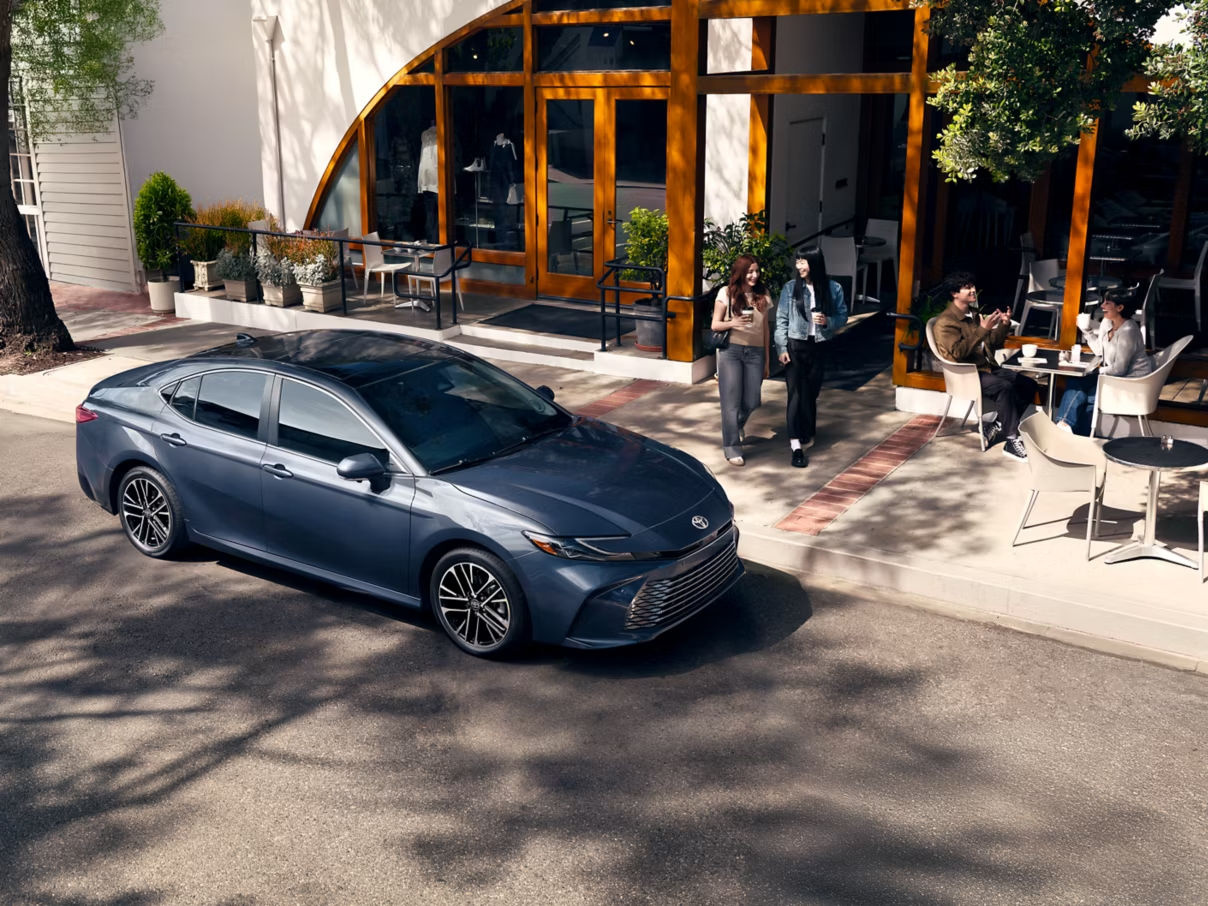
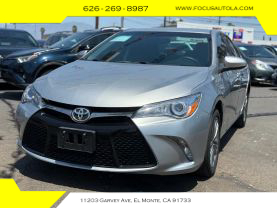
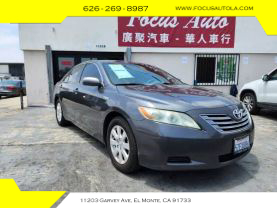
Toyota Camry is produced by GAC Toyota and positioned as a B-segment sedan. Where there's a road, there's a Toyota that can't stop. The Camry is a global model under the Toyota brand, commonly known as 'Camry' in China. Its market positioning is as a mid-to-high-end sedan. Introduced by GAC Toyota in 2006, it forms the 'Japanese Big Three' of mid-to-high-end sedans alongside the Honda Accord and Nissan Teana, with fierce competition among them. The latest Camry model was launched in November 2017, with a price range of 180,000 to 280,000 RMB.

Was this review help?
105
Share
McCaroline
08/10/2025, 02:39:24 AM

The Toyota Camry is an incredibly popular mid-size sedan. I've personally been driving it to commute for several years and simply can't get enough of it. The body size is just right—parking in the city isn't too difficult, yet it's rock-solid on the highway. The seats are soft and won't leave your back aching. In terms of fuel efficiency, it's genuinely economical. My gasoline version averages 6-7 liters per 100 km, and a friend with the hybrid version says it's even more impressive at around 5 liters. As Toyota's flagship model, it sells like hotcakes globally, with off-the-charts reliability—I've never encountered any major issues. On long trips, the spacious interior comfortably seats three in the back, and the trunk has more than enough room for luggage. Maintenance costs are low, just a few hundred bucks a year, making it hassle-free. I'd recommend it to beginners or office workers—it's absolutely worth every penny, and once you get used to that silky-smooth driving feel, you'll be hooked.

Was this review help?
13
Share
Expand All
VanRhett
09/25/2025, 02:02:37 AM

As a car enthusiast, I know the history of the Camry like the back of my hand! The first generation was launched in 1983, and now it has evolved to the eighth generation, with its design transitioning from conservative to sporty—those side character lines are seriously cool. Engine options include 2.5L and 3.5L, offering smooth acceleration, though don’t expect racing performance; the hybrid version delivers even more linear power output, with real-world fuel consumption surprisingly low. Inside, the interior materials are premium, the dashboard is minimalist and modern, and the sound insulation is top-notch, with no wind noise at high speeds. The space layout is well thought out, with generous rear legroom. I often discuss competitors with my buddies, like the Honda Accord, which is slightly sportier, but the Camry wins hands down in comfort. Starting at a budget of over 100,000 yuan, it boasts a high resale value of up to 65%, making it a hot commodity in the used car market. Add some accessories, and it’s full of personality!

Was this review help?
12
Share
Expand All
DelaneyAnn
11/08/2025, 03:09:45 AM

Our family has been driving the Camry for almost ten years, and it perfectly fits our family life. The body design prioritizes safety, with a five-star crash test rating, giving us peace of mind when picking up and dropping off the kids. The spacious interior is highly practical—three backpacks in the back seat are no problem, and the trunk easily fits all our camping gear. Fuel consumption is modest, averaging 7-8 liters, saving us money on long trips. Maintenance is simple, with just one annual routine check-up, and the failure rate is almost zero, saving both time and money. The powerful air conditioning keeps us warm in winter and cool in summer, allowing the kids to sleep comfortably in the back seat. Toyota’s reliability is unmatched—after all these years, we’ve never needed major repairs. When it’s time for a new car, we’ll choose it again.

Was this review help?
8
Share
Expand All
DiElle
12/29/2025, 10:08:44 PM

From an economic perspective, the Camry is absolutely cost-effective. With a price range between 100,000 to over 200,000 yuan, the entry-level version offers high value for money, and its fuel consumption is controlled at 6-7 liters per 100 kilometers, reducing fuel expenses. The hybrid version, though slightly more expensive, saves half on fuel, recouping the extra cost in three years. Maintenance costs are extremely low, with easily replaceable universal parts, and a single service only costs 300-500 yuan. It boasts leading resale value, retaining up to 70% of its value after five years. Compared to competitors like the Volkswagen Passat, the Camry offers higher reliability and lower total cost of ownership, making it ideal for budget-conscious commuters. Insurance costs are reasonable with no additional expenses, allowing you to save money as you drive.

Was this review help?
16
Share
Expand All
VanNorah
03/27/2026, 12:26:20 AM

Right after graduating from college, I chose the Camry as my first car because it's reliable and easy to handle. The operation is simple, with a light steering wheel that makes learning to drive less stressful for beginners. Its low fuel consumption saves on living expenses, and the insurance premiums aren't high. The interior design is user-friendly, with straightforward screen operations, and it drives smoothly without any bumpiness. The rear seats have enough space for a gym bag or laptop bag, and it's quiet and comfortable for night drives. Toyota's build quality is solid, with no minor issues affecting work commutes. The hybrid version is so quiet you can't even hear the engine noise. It's often said that this car is very practical, making it a great starting point for young friends!

Was this review help?
1
Share
Expand All
More Q&A

What does the automotive ACM module mean?

Automotive ACM module, the full English name is Auxiliary-Control-Module, which means auxiliary control module in Chinese. Definition of ACM module: The ACM (Active Control Mount) system needs to be connected to the engine's intake manifold through an electromagnetic control valve (ECM), which controls it. Function of ACM module: Under different conditions, the ACM (Active Control Mount) system provides corresponding forces to counteract the engine's impact inertia, effectively absorbing engine vibrations and the engine shake during idle start-stop functions, achieving more stable driving control and ride comfort.
108
Share

What tires are best for the Changan CS75?

Yokohama tires are the tires used for the Changan CS75, with the specification being 225/65R17. Yokohama has developed tire design technology that reduces air resistance during vehicle operation. This technology, as a new eco-friendly method to decrease tire rolling resistance, improves the airflow around the tires during driving, thereby achieving fuel-saving and environmental benefits. Yokohama Tires, founded in 1917 and formerly known as Yokohama Rubber, officially changed its name in China to Yokohama in 2008. It has developed tire design technology that reduces air resistance during vehicle operation. When using Yokohama tires in daily life, the following points should be noted: Regularly inspect the tire surface for cracks, deformations, or other defects. Due to wear from driving, the tread grooves gradually become shallow. If the tread wears out completely, the tire will lose its drainage and anti-skid functions, significantly reducing the vehicle's performance. Small cracks may also pose a risk of tire blowouts at high speeds. Additionally, promptly remove pebbles lodged in the grooves. Try to park on level ground. Avoid parking on roads with thick, sharp, or pointed stones. Do not park near or in contact with petroleum products, acids, or other materials that may deteriorate rubber. After parking, the driver should not turn the steering wheel, as this action accelerates tire wear. Do not splash water to cool the tires. In hot weather or during high-speed driving, tires are prone to overheating, and the air pressure may increase. In such cases, park to allow the tires to cool naturally. Avoid releasing air to reduce pressure or splashing water to cool the tires, as this can lead to abnormal aging of the tread rubber. Avoid sudden braking. Try to minimize frequent or hard braking to prevent accelerated tread wear caused by dragging between the tires and the ground.
115
Share

What is the assist button in a car?

The assist button in a car refers to the auxiliary brake. When 'assist-plus' appears on the car dashboard, it indicates a system assisting during parking. Definition of auxiliary brake: An auxiliary brake is a safety assist device used when parking or reversing a car. Currently, the mainstream system consists of a reversing camera and an in-car display forming the parking assist system. Function of auxiliary brake: When reversing, the front display can show real-time video from the rear reversing camera, making reversing safer. The system is composed of ultrasonic sensors (commonly known as probes), a controller, and a display (or buzzer).
111
Share

What does a 7-speed wet dual-clutch transmission mean in cars?

Automotive 7-speed wet dual-clutch refers to a dual-clutch transmission with 7 forward gears, utilizing wet-type clutches. Definition of Dual-Clutch: Dual-clutch, namely Dual-Clutch Transmission (DCT), differs from conventional automatic transmission systems. It belongs to both manual and automatic transmissions, combining the flexibility of manual transmissions with the comfort of automatic transmissions while providing uninterrupted power output. Working Principle of Dual-Clutch: The dual-clutch automatic transmission is based on the manual transmission. Simply put, this transmission type has two clutches: one controls gears 1, 3, 5, and 7, while the other controls gears 2, 4, and 6. When using first gear, second gear is already prepared, similarly reducing shift time significantly with no delay.
103
Share

What are the hazards of running a car engine at 4000 RPM?

The hazard of running a car engine at 4000 RPM is significantly shortening the engine's lifespan. Pros and cons of running at 4000 RPM: When accelerating to overtake, temporarily increasing the RPM to 4000 to obtain maximum torque won't damage the engine. In fact, it can help remove carbon deposits from the engine to some extent, which benefits the engine. However, if the engine is frequently kept at around 4000 RPM, its lifespan will be substantially reduced. Conditions for 4000 RPM not harming the engine: Since 4000 RPM is generally around the peak torque or maximum power RPM range, there's a prerequisite for high RPM operation not damaging the engine - the coolant temperature gauge must reach about 90°C. Immediately revving the engine to 4000 RPM after startup is most harmful to the engine.
119
Share

What does CNG mean in cars?

CNG printed on a car indicates that the vehicle uses compressed natural gas as its fuel. Definition of CNG: CNG, or Compressed Natural Gas (abbreviated as CNG), is natural gas that has been pressurized and stored in a gaseous state within containers. The composition of CNG is the same as pipeline natural gas, with methane being the primary component. Advantages of CNG: CNG is an ideal alternative energy source for vehicles, with application technology that has become increasingly mature over decades of development. It features low cost, high efficiency, no pollution, and safe and convenient usage.
120
Share
Cookie
Cookie Settings
© 2025 Servanan International Pte. Ltd.