···
Log in / Register

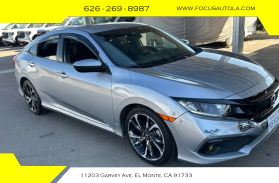
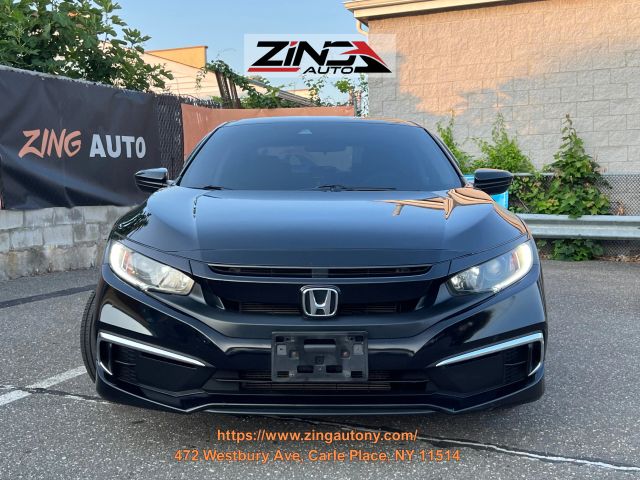
What brand are the tires on the Civic?

5Answers
LeCharlotte
07/29/2025, 10:13:51 PM

The Civic uses Yokohama tires. The 2019 Dongfeng Honda Civic comes with two tire specifications: 215/55-R16 and 215/50-R17, which may vary slightly depending on the model configuration. Below is an introduction to the functions of tires: 1. Support the entire weight of the vehicle, bear the load of the car, and transmit forces and moments in other directions. 2. Transmit traction and braking torque, ensuring good adhesion between the wheels and the road surface to improve the car's power performance, braking performance, and passability; work together with the car's suspension to cushion impacts during driving and dampen the resulting vibrations. 3. Prevent severe vibrations and early damage to car components, adapt to the vehicle's high-speed performance, reduce driving noise, and ensure driving safety, handling stability, comfort, and energy efficiency.

Was this review help?
116
Share
AlanFitz
08/15/2025, 04:15:53 AM

I've been driving a Civic for several years and noticed that the original tire brands aren't fixed at all—it depends on the model and year. My mid-range Civic came with Bridgestone tires, while my buddy's high-end version had Michelin, which performs better but costs more. Generally, Civic factory tires include brands like Goodyear, Yokohama, or Bridgestone, offering good value for money. To confirm your car's specific brand, it's easy: just step out and crouch to read the text on the tire sidewall—for example, Michelin is clearly marked. Don’t just listen to sales pitches; actual usage matters more. The tire brand affects grip and noise levels, so regularly checking tire pressure and wear can extend their lifespan and prevent issues at high speeds. When replacing tires, it’s best to match the original specifications—avoid random upgrades to prevent affecting fuel efficiency and balance. In short, understanding these details can help you save money and drive safely.

Was this review help?
10
Share
Expand All
DeIsabella
10/21/2025, 01:00:45 AM

As someone who frequently deals with various cars, I find the tire brands for the Civic quite diverse. Honda's original factory tires vary by configuration: entry-level models often come with Bridgestone, while sportier versions may use Goodyear. You can directly check the brand name on the tire sidewall—for example, Bridgestone is printed as 'Bridgestone.' Different brands offer slight performance variations: Michelin provides quiet rides but slightly less durability, whereas Bridgestone offers balanced performance and toughness. It's advisable to check tire pressure and tread depth monthly—proper maintenance ensures they can last tens of thousands of miles. Don’t overlook this; tires are the first line of contact with the road. Excessive wear or low pressure increases the risk of blowouts. Always choose a reputable shop for tire replacements to avoid counterfeit products—safety comes first.

Was this review help?
12
Share
Expand All
LeAndres
12/04/2025, 12:26:09 AM

I really love the Civic! It's interesting how the tire brands vary by trim level. The base and mid-trim Civics come with Yokohama or Bridgestone original tires, while the sport version might get Pirelli for enhanced grip. Checking is super easy: just glance at the English markings on the tire sidewall. The brand makes a big difference, especially in wet road performance; original tires are designed to match the vehicle's suspension system. Extra tip: rotate tires regularly to prevent uneven wear, which can extend their lifespan by 2-3 years. When replacing, choose brands with similar performance to maintain smooth driving.

Was this review help?
5
Share
Expand All
DelTucker
01/24/2026, 01:49:56 AM

I recently switched to a Civic and was also curious about the tire brands. It turns out that it doesn't come with a single brand; different configurations use different brands from the factory. For example, the base model Civic often comes with Bridgestone, while higher trims might be equipped with Michelin. You just need to look down at the markings on the side of the tire, like 'Michelin' printed on Michelin tires. The brand affects the driving experience: Bridgestone is durable and cost-effective, while Michelin offers quieter performance but at a higher cost. For daily maintenance, remember to check if the tire pressure meets the standard; both too high and too low are unsafe. Additionally, during maintenance, ask the technician to evaluate the tread wear; replacing too early is a waste of money, while delaying replacement poses significant risks. Always prioritize safety over cost when choosing tires.

Was this review help?
7
Share
Expand All
More Q&A

What is the principle of a CVT transmission?

The principle of a CVT transmission is that the CVT uses a transmission belt and a variable-width pulley for power transmission. When the pulley changes its groove width, it correspondingly alters the contact radius of the driving wheel and the driven wheel on the transmission belt to achieve speed variation. The transmission belt is generally made of rubber belts, metal belts, or metal chains. Below is some information about CVT transmissions: CVT usually refers to a type of automotive transmission, also known as a continuously variable transmission. The difference between a CVT and a stepped transmission is that its gear ratio is not a series of discrete points but a continuous range of values, thereby achieving good fuel economy, power performance, and smooth driving, while also reducing emissions and costs. For example, it can vary continuously from 3.455 to 0.85. The structure of a CVT is simpler and more compact than that of a traditional transmission. It does not have the numerous gear pairs of a manual transmission or the complex planetary gear sets of an automatic transmission. It mainly relies on the primary and secondary pulleys and a metal belt to achieve continuously variable gear ratios.
110
Share

What are the methods for cleaning carbon deposits?

The specific operation methods for cleaning carbon deposits are as follows: 1. Cleaning carbon deposits inside the engine: Before replacing the new engine oil, open the oil cap, add a cleaning agent, mix it with the old oil, and let the engine idle for about 10 minutes. 2. Cleaning carbon deposits in the intake system mainly refers to cleaning carbon deposits inside the intake tract and intake manifold. The purpose is to remove carbon deposits inside the intake system, increase the intake flow and speed, and reduce engine shaking and unstable idling. Prepare an intake system cleaner, use a dedicated cleaning device's liquid storage tank, connect it to the intake system, and use vacuum to draw the cleaner into the intake tract to achieve the cleaning purpose. 3. Remove the throttle body, use carburetor cleaner to clean the front and back of the throttle body, and wipe it dry with a clean cloth. It is recommended to clean the throttle body when the car has been used for one year or has traveled 20,000 kilometers. However, it should be noted that different car models have different cleaning cycles, which should be determined based on the car's own condition.
112
Share

What is the service life of a car?

Non-commercial vehicles and commercial vehicles have different retirement periods, as detailed below: Retirement regulations for non-commercial vehicles: For household 5-seat sedans and 7-seat SUVs, as well as small and micro non-commercial vehicles, there is no service life limit. When the normal mileage reaches 600,000 kilometers, the state will guide the retirement. In addition to the above vehicles, small and micro non-commercial passenger vehicles, large non-commercial sedans, and wheeled special machinery vehicles also have no service life limit. Common retirement regulations for commercial vehicles: Small and micro taxi passenger vehicles have a retirement period of 8 years, medium-sized taxi passenger vehicles have a retirement period of 10 years, and large taxi passenger vehicles have a retirement period of 12 years. Public transport passenger vehicles have a retirement period of 13 years, other small and micro commercial passenger vehicles have a retirement period of 10 years, and large and medium-sized commercial passenger vehicles have a retirement period of 15 years. Micro commercial trucks have a retirement period of 8 years, light and large commercial trucks have a retirement period of 10 years. The vehicle retirement process is as follows: The car owner applying for retirement renewal must fill out one copy of the "Motor Vehicle Change, Transfer, Modification, Suspension, Retirement Approval Application Form" and stamp the owner's seal. The registration department will accept the application and issue a "Vehicle Retirement Notice" for vehicles that have reached the retirement period. For vehicles that have not reached the retirement period, after inspection by the motor vehicle inspection department, if they meet the vehicle retirement standards, a "Vehicle Retirement Notice" will be issued. The owner can choose a qualified recycling company to dismantle the vehicle with the "Notice". The recycling company will dismantle the vehicle and take photos after verifying the "Notice". The engine must be separated from the vehicle, the engine block must be broken, and the frame (chassis) must be cut. The owner must submit the "Change Form", "XX Province Updated Vehicle Technical Appraisal Form", "Retired Vehicle Recycling Certificate", and vehicle dismantling photos to the motor vehicle inspection department for verification and signature. The license plates will be recovered, and the retirement registration will be processed after approval according to regulations. Special notes: According to Article 30 of the "Motor Vehicle Registration Regulations", if the vehicle cannot be driven back to the registration location due to damage, the owner can sell the retired vehicle to a local motor vehicle recycling company. If a commercial vehicle is converted to a non-commercial vehicle, it must be retired according to the original commercial vehicle's retirement period. According to Article 43 of the "Motor Vehicle Registration Regulations", after completing the transfer or cancellation registration of a motor vehicle, the original owner can apply to use the original license plate number when registering a newly purchased vehicle. The application must meet the following conditions: (1) The application must be submitted within six months after the transfer or cancellation registration; (2) The owner must have owned the original vehicle for more than three years.
107
Share

Why has smart been discontinued?

smart will transition into an intelligent pure electric brand in the future, which is why its fuel-powered vehicles have been discontinued. Below is some relevant information about smart cars: 1. Introduction to smart cars: smart is a microcar jointly produced by German Mercedes-Benz and Swiss watch company SWATCH, currently under the Daimler Group. The 'S' stands for Swatch, 'M' for Mercedes, and 'art' represents art in English, symbolizing the perfect artistic combination of Swatch and Mercedes. 2. Positioning of smart cars: As a micro commuting tool aimed at urban dwellers, smart breaks away from the heavy and steady feel of conventional cars, presenting itself to consumers with a lively and sporty demeanor.
113
Share

What happens if a motorcycle's insurance is expired and caught by traffic police?

According to Article 98 of the Road Traffic Safety Law of the People's Republic of China: If the owner or manager of a motor vehicle fails to purchase compulsory third-party liability insurance for the motor vehicle as required by the state, the traffic management department of the public security organ shall detain the vehicle until the insurance is purchased as required, and impose a fine of twice the insurance premium that should be paid for the minimum liability limit as required. Below is additional information: Road Traffic Safety Law of the People's Republic of China regulations: Article 4 People's governments at all levels shall ensure that road traffic safety management work is compatible with economic construction and social development. Local people's governments at or above the county level shall, in accordance with the needs of road traffic development and based on road traffic safety laws, regulations, and relevant national policies, formulate road traffic safety management plans and organize their implementation.
112
Share

What should be considered when choosing engine oil for turbocharged cars?

Details to consider when selecting engine oil for turbocharged cars are as follows: 1. Turbocharged cars have higher requirements for the engine compared to naturally aspirated ones, as their internal components need to withstand high temperatures and more intense impacts, compression, and other working conditions. Therefore, when choosing engine oil for turbocharged cars, it is essential to select oil with good anti-wear properties, high-temperature resistance, and superior lubrication. Fully synthetic or semi-synthetic oils meet these requirements perfectly. Besides using the manufacturer-recommended oil, fully synthetic and semi-synthetic oils are excellent choices. 2. In addition to the above characteristics, engine oil suitable for turbocharged cars must also have good oxidation resistance. In high-temperature working environments, oil with poor oxidation resistance can easily degrade and become ineffective.
113
Share
Cookie
Cookie Settings
© 2025 Servanan International Pte. Ltd.