···
Log in / Register

What are the differences between domestically produced and imported Audi e-tron?

6Answers
AdalineRose
08/26/2025, 11:25:34 PM

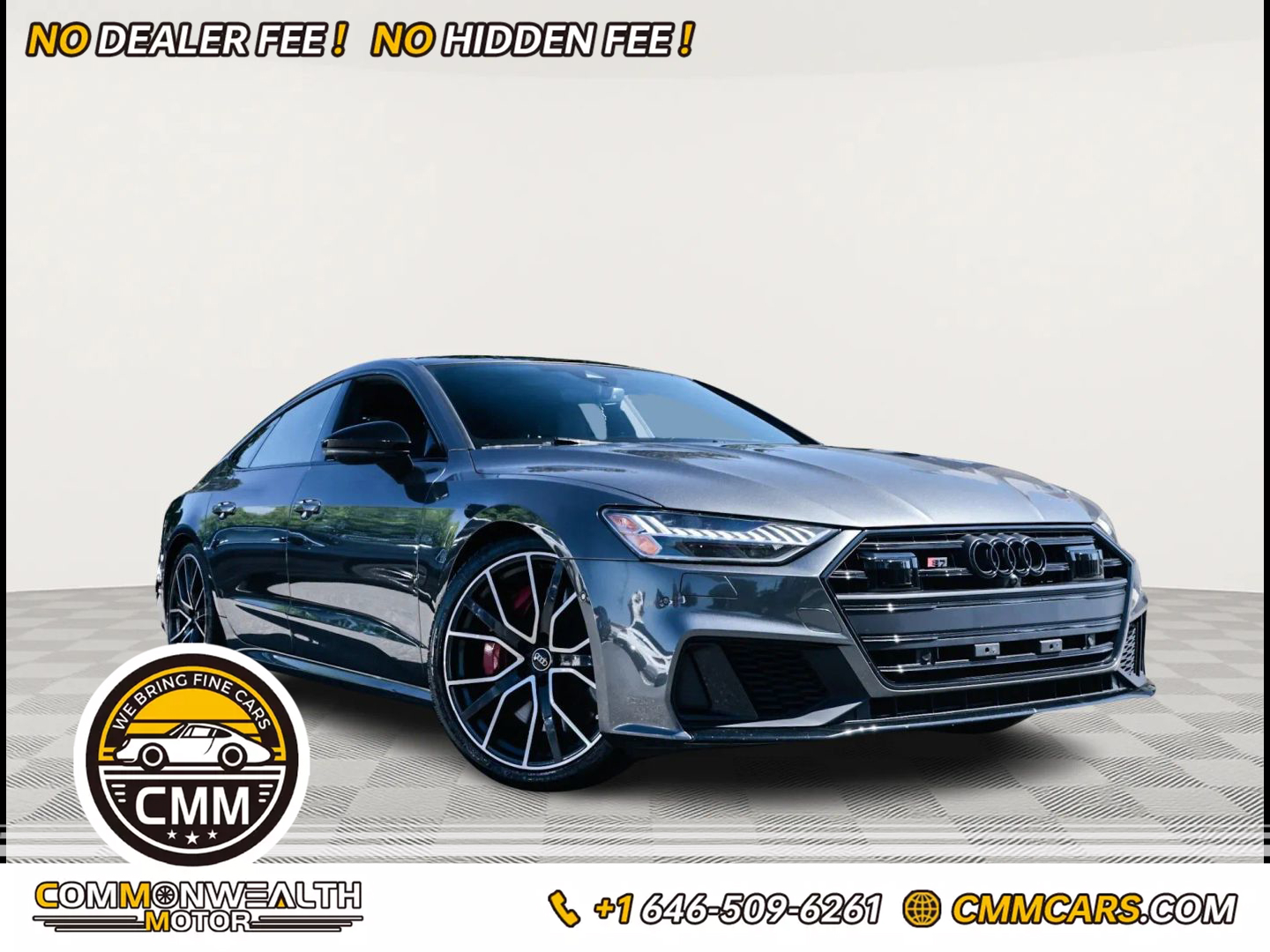
Audi e-tron domestically produced vs. imported differences: 1. Exterior changes: The exterior of the domestically produced Audi e-tron indeed has subtle differences compared to the imported version, mainly focused on localized details. Due to the S appearance package, there are slight variations in the styling of the left and right "air vents" on the bumper between the imported and domestically produced versions. The imported version features a straight-line design, while the domestically produced version appears more three-dimensional and dynamic, with a matte silver dual-tone wrap. The rear of the domestically produced e-tron includes the FAW Audi logo, and the model designation changes to 50-quattro, whereas the imported Audi e-tron is labeled 55-quattro. The height of the domestically produced e-tron is 1640mm, compared to 1628mm for the imported version. 2. Different power specifications: The domestically produced Audi e-tron has a maximum power of 230kW and maximum torque of 540N·m, with a WLTP range of 347km. In contrast, the earlier imported Audi e-tron model had a 95kWh battery capacity, maximum power of 265kW, maximum torque of 561N·m, and a WLTP range of 446km.

Was this review help?
109
Share
Daisy
09/08/2025, 10:37:16 PM

As a cost-conscious consumer, I thoroughly researched the differences between domestically produced and imported Audi e-tron models. The most obvious distinction is the price gap: the domestic version is manufactured in local factories, exempt from tariffs and import fees, typically costing tens of thousands less than the imported one. The savings could cover a premium sound system or several months of loan payments. In terms of features, the domestic e-tron often includes localized optimizations like built-in Baidu Maps and a compact voice assistant, while the imported version retains the original German system with a smoother interface but requires international maps. Material quality is slightly higher in the imported version, such as more durable genuine leather seats; the domestic model simplifies some basic components but maintains identical core performance specs like motor power. Operating costs are also more economical—domestic maintenance is quicker and more convenient at local 4S shops, plus it qualifies for subsidy policies. In summary, from a budget perspective, the domestic version is more pragmatic, ideal for someone like me with tight finances.

Was this review help?
2
Share
Expand All
SanCharlie
10/22/2025, 11:25:52 PM

As a car enthusiast, I've thoroughly compared the differences between the two e-tron models. The powertrains are nearly identical, but the domestic version features slightly adjusted battery management for Chinese road conditions, offering smoother acceleration response. The imported version maintains the original driving tuning with slightly better high-speed performance. The tech differences are significant: the domestic model integrates local charging network protocols and a Chinese voice assistant, while the imported version supports global charging standards but requires an adapter. Interior-wise, the domestic version uses slightly inferior plastics and has firmer seating, whereas the imported version boasts higher-grade, more comfortable materials. Real-world range is similar, but the domestic model receives more frequent software updates optimized for local conditions. In my view, choose the imported version for pure driving pleasure, while the domestic model suffices for daily commutes—core experiences remain consistent.

Was this review help?
19
Share
Expand All
DeTeagan
12/05/2025, 10:49:27 PM

Considering safety and reliability, I prioritize quality and warranty. The domestic e-tron, although based on German technology, has slightly lower material standards, such as rougher plastic edges inside the cabin, while the imported version boasts finer assembly and is less prone to aging. The battery performance is similar for both, but the imported version performs more stably under extreme temperatures. The domestic model has a significant advantage in warranty services, with a wide local 4S dealership network and ample spare parts for same-day resolution; imported repairs often involve waiting for parts to be shipped long distances. Both meet safety test standards, but the imported version has slightly higher crash ratings. As a family user, I lean toward the domestic model for convenience and cost savings, but the imported version scores higher in reliability.

Was this review help?
17
Share
Expand All
VonAyla
01/26/2026, 12:08:40 AM

As someone who frequently uses cars for business, I prioritize convenience and service. The domestically produced e-tron is easy to purchase with sufficient inventory and about 10% lower in price; the imported version requires pre-ordering and waiting for the import cycle. For after-sales service, the domestic version is fully supported at 4S stores with faster and cheaper maintenance; imported models face difficulties in finding repair parts and take more time. In terms of driving, the domestic version is locally tuned, and the navigation uses Baidu Maps, which is accurate and user-friendly; the imported version requires manual adaptation. For charging compatibility, the domestic version is plug-and-play with Chinese charging piles, while the imported version needs additional conversion. The usage cost is lower for the domestic version, saving on taxes and insurance, making it more suitable for frequent travel. I choose the domestic version for its efficiency and practicality.

Was this review help?
1
Share
Expand All
VivianFitz
04/21/2026, 10:40:55 PM

As someone who pursues fashion and comfort, I pay attention to the subtle differences. The domestic e-tron simplifies interior materials but retains Audi's elegant design. The seating comfort is moderate, not as plush or quiet as the imported version's premium leather. The domestic cockpit integrates local apps like QQ Music for greater convenience, while the imported version offers a cleaner interface with fewer distractions. In terms of comfort, both have similar suspension systems, but the imported model feels more stable during high-speed cornering. The domestic version excels in tech with faster Chinese-optimized voice response, whereas the imported one boasts a smoother native system. For daily use, the domestic model is sufficiently elegant and more affordable, offering a comparable experience while saving money for other life expenses.

Was this review help?
20
Share
Expand All
More Q&A

At what level of wear should a wire rope be scrapped?

GB6067-2010 "Safety Regulations for Lifting Appliances" specifies the following criteria for scrapping wire ropes: 1. When the number of broken wires within one lay length reaches 10% of the total wires in the rope: For example, a 6×19=114-wire rope should be scrapped and replaced when 12 wires are broken, and a 6×37=222-wire rope should be scrapped when 22 wires are broken. For wire ropes composed of both thick and thin wires, the calculation is one thin wire counts as one, and one thick wire counts as 1.7. 2. If radial wear or corrosion exceeds 40% of the original diameter, the rope should be scrapped: If it is less than 40%, the number of broken wires can be reduced proportionally for scrapping. 3. For wire ropes used in lifting hot metals or hazardous materials, the scrapping standard is half the number of broken wires compared to general lifting wire ropes. 4. For wire ropes conforming to ISO2408 (Characteristics of wire ropes for general purposes), the number of broken wires for scrapping should follow the standards specified in GB5972—86. 5. If an entire strand breaks, the rope should be scrapped. 6. If the diameter of the wire rope decreases by 7% or more compared to the nominal diameter, the rope should be scrapped even if no broken wires are found. 7. If the core is exposed, the rope should be scrapped. 8. If the wire rope shows obvious corrosion, it should be scrapped. 9. If the outer wires locally elongate and form a birdcage shape, the rope should be scrapped.
103
Share

How to drive a Volvo XC60?

Method to drive a Volvo XC60: 1. First, press the vehicle's brake pedal, otherwise the vehicle cannot be started; 2. Press the vehicle's one-touch start button to start the engine; 3. Flip the vehicle's electronic parking brake lever to release the electronic parking brake; 4. Shift the gear lever to D (Drive) position; 5. Release the brake pedal, and the vehicle can then move. Features of driving a Volvo XC60: 1. Spacious interior, with electrically adjustable front seats; 2. Strong power; 3. Clear road feel and solid overall performance; 4. Good comfort; 5. The car's rearview mirrors can be heated, feature electric folding, and have memory function; 6. All areas of the center console are covered with soft-touch materials.
101
Share

How to Remove the Screws of a License Plate?

Steps to remove the screws of a license plate: 1. First, clean the surface of the screws, especially any rusty areas, to facilitate the subsequent removal; 2. Use a small flat-head screwdriver to pry under the screw cover, focusing on the crimped edge that acts as a fastener. Loosen one or two fasteners, insert the screwdriver into the loosened gap, and gently pry the cover off; 3. Insert a Phillips screwdriver into the hole and unscrew the inner screw, and you're done. The license plate is a legal mark registered by the statutory authority, permitting the motor vehicle to drive on the road, and it is the number that identifies the vehicle's identity, usually hung in a specific position of the motor vehicle. Blue license plates represent ordinary small vehicles, yellow represents ordinary large vehicles, and black represents vehicles used by foreign investors in China or important figures.
118
Share

Is 18 Too Early to Get a Driver's License?

18 is not too early to get a driver's license. Here is some relevant information about obtaining a driver's license: 1. Subjects required for the driver's license test: Subject 1, Subject 2, Subject 3, and Subject 4. 2. Materials needed for the driver's license test: medical examination form, application form, ID card, etc. 3. Precautions for the driver's license test: Subject 1 is a theoretical test, so don't take it lightly, and always check your ID card before the test; Subject 2 involves an in-car test, so make sure to adjust the seat and rearview mirror properly after getting in the car; after completing Subject 3, always shift to neutral when parking by the roadside; Subject 4 includes multiple-choice questions, so don't mistake multiple-choice questions for single-choice ones—always read the question requirements carefully.
107
Share

What is the reason for the warning light to illuminate after restarting a car with a dead battery?

After restarting a car with a dead battery, the warning light may illuminate due to a generator circuit malfunction. Related information: 1. Introduction: A generator (English name: Generators) is a mechanical device that converts other forms of energy into electrical energy. It is driven by a water turbine, steam turbine, diesel engine, or other power machinery, transforming the energy generated from water flow, air flow, fuel combustion, or nuclear fission into mechanical energy, which is then converted into electrical energy by the generator. Generators are widely used in industrial and agricultural production, national defense, technology, and daily life. 2. Expansion: There are many types of generators, but their working principles are all based on the laws of electromagnetic induction and electromagnetic force. Therefore, the general principle of their construction is to use appropriate magnetic and conductive materials to form magnetic and electric circuits that interact electromagnetically, generating electromagnetic power to achieve energy conversion.
102
Share

What are the symptoms indicating a transmission fluid change?

Symptoms indicating a transmission fluid change: 1. The replacement interval for manual transmission fluid is 40,000 kilometers or 2 years, while for automatic transmission fluid it's 60,000 kilometers or 3 years; 2. Noticeably rough gear shifting, significantly less smooth than before, and a clear increase in transmission noise after exceeding 100 kilometers - in such cases, regardless of the mileage, it's essential to promptly replace the gear oil. Transmission fluid is a lubricant that maintains the cleanliness of the gear system, ensuring proper transmission operation and extending the lifespan of the drivetrain. Early automatic transmissions didn't use specialized fluids but instead relied on engine oil. Due to vastly different working conditions and technical requirements, this practice was quickly phased out. Today's dedicated automatic transmission fluids serve multiple purposes: they act as hydraulic fluid for torque converters, lubricants for planetary gear structures, and hydraulic oil for shift mechanisms.
108
Share
Cookie
Cookie Settings
© 2025 Servanan International Pte. Ltd.