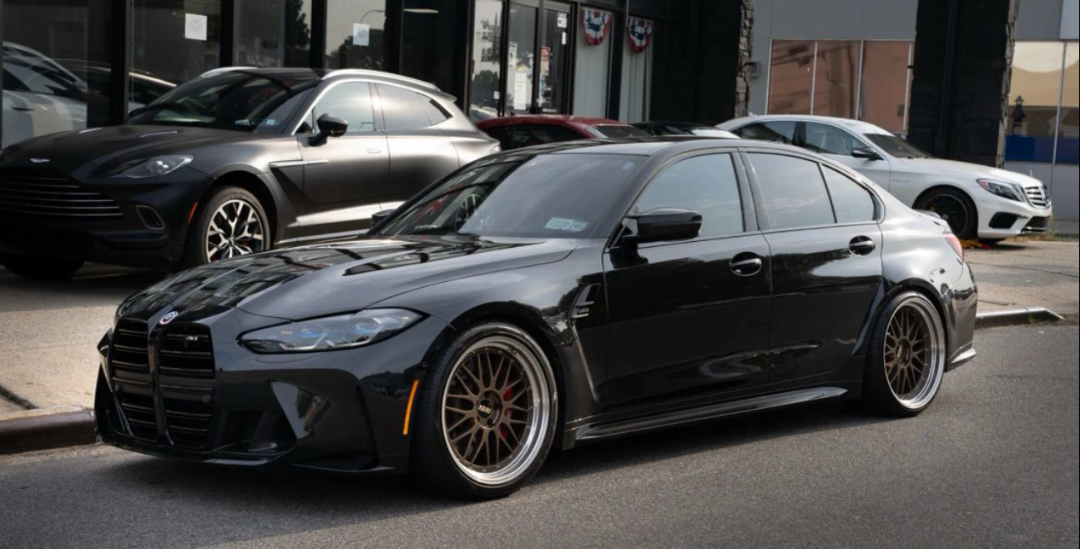
M2C is the Thunder Edition model of the BMW M2. The Thunder Edition model uses a different engine compared to the standard version. The Thunder Edition is equipped with the S55B30 engine, while the standard version uses the N55B30 engine. The Thunder Edition's engine delivers higher horsepower. Below are the key details about the BMW M2C: 1. The BMW M2C is powered by a 3.0-liter twin-turbocharged inline-six engine, producing 410 horsepower and 550 Nm of maximum torque. This engine reaches its peak power at 5,230 to 7,000 rpm and maximum torque at 2,350 to 5,230 rpm. It features direct fuel injection and an aluminum alloy cylinder head and block. 2. The engine is paired with either a 6-speed manual transmission or a 7-speed dual-clutch transmission (DCT). The DCT is known for its quick gear shifts and high transmission efficiency. 3. The BMW M2C uses a double-joint independent suspension at the front and a multi-link independent suspension at the rear.

That's right, the M2 Thunder Edition is what enthusiasts commonly refer to as the M2C, an abbreviation derived from its English name M2 Competition. According to BMW's official website, this car was positioned as a high-performance version when it was launched in 2018. The standard M2 uses the N55 engine, but the M2C is equipped with the same S55 six-cylinder engine found in the M3/M4, boosting its horsepower to a staggering 410 hp. The steering wheel also features two additional red M driving mode buttons, and the chassis has been upgraded with reinforced suspension and braking systems. Every time I see this car at a track day, I can tell whether it's the standard version or the Thunder Edition by the rear badge—only the Thunder Edition comes with exclusive black grille and 'demon ear' side mirrors. BMW now uses 'Competition' to denote its higher-tier performance models, so when you see M2C, it unequivocally means the Thunder Edition—no mistake about it.

Last week, I just helped a friend pick up a used . He specifically asked for an M2C, which actually refers to the Competition model. These performance car enthusiasts' jargon is quite interesting—us seasoned car guys are used to using abbreviations. The Competition model originally replaced the standard M2, with key upgrades under the hood: the standard version used the single-turbo N55, while the M2C directly adopted the S55 twin-turbo from the M4, along with an added standalone water cooling system. Once at a repair shop, I compared the chassis of both cars—the Competition model’s suspension bushings and links were noticeably more hardcore, and the rear differential was also recalibrated. So now, in the used car market, the M2C code directly represents the high-performance version, and it’s normal for it to be 30% more expensive than the standard M2.

Actually, BMW's model naming convention is quite straightforward. The M2C corresponds to the M2 Competition, where the 'C' stands for 'Competition'. I remember when the first-generation M2 Competition was launched in 2018, it replaced the standard 3.0T engine with the same one used in the M3, boosting horsepower to 410 and reducing crankshaft weight. The most obvious difference is at the rear: the standard M2 has quad exhaust pipes, while the Competition version features larger dual exhaust pipes. Driving both versions reveals a noticeable difference—the Competition's steering feedback is more direct, and the gear shifts feel more aggressive. Nowadays, in car enthusiast groups, 'M2C' is commonly used to refer to the Competition version, just like 'M3C' is used for the M3 Competition.

is quite adept at playing alphabet games in its performance car lineup, with the M2C being the official code for the M2 Competition. Initially, the standard M2 had only 370 horsepower, but the Competition version directly adopted the S55 engine from the M4, boosting horsepower to 410 and featuring a more aggressive ECU tune. During a test drive, I noticed a detail: the standard version limits the RPM to 2500 when stationary, while the Competition version can rev up to 3500 for a launch start. The cooling system is also entirely different, with the Competition adding an extra oil cooler for more stable performance during spirited summer driving. Nowadays, automotive media uniformly refer to it as the M2C—just look for the 'Competition' badge on the rear of the new car.

Performance car enthusiasts all know that 'M2C' specifically refers to the M2 Competition, where the letter 'C' stands for the Competition version. The biggest difference from the standard version lies in the powertrain—the standard version uses the N55 engine, while the Competition version upgrades to the S55 engine, which shares its origins with the M4. This upgrade not only adds a turbo but also optimizes direct fuel injection. I've compared the specs of both cars: the Competition version gains an extra 85 Nm of torque, and the top speed is electronically limited to 280 km/h instead of 250 km/h. The chassis also gets a stealth upgrade with aluminum control arms, reducing body roll during cornering. Nowadays, used car dealers specifically look for the 'M2C' label when buying, as the S-numbered engine under the hood represents BMW's performance pedigree, adding an extra 50,000 to 60,000 yuan to the resale value.