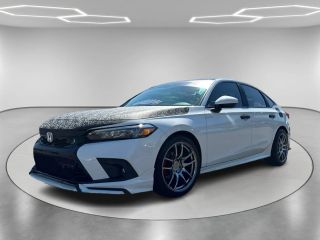
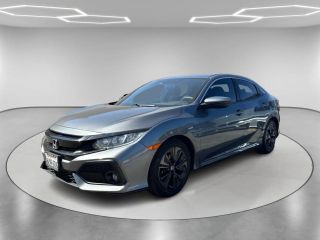
Here are methods to reduce fuel consumption for the 10th-generation Civic: 1. Enhance vehicle : The adjustment and maintenance of the car affect engine performance and driving resistance. Statistics show that poorly maintained engines can increase fuel consumption by 10% to 20%. Owners should regularly visit auto repair shops for routine maintenance, such as checking tire pressure, wheel alignment, adjusting brake pad and drum clearance, lubricating chassis points, timely oil changes, and filter inspections. 2. Avoid prolonged engine idling: Idling consumes significantly more fuel than normal driving. Therefore, if the vehicle is stationary for extended periods (e.g., waiting), it's best to turn off the engine. During cold starts, warm-up should not exceed 1 minute; maintaining low-speed driving for a few minutes is sufficient. 3. Minimize sudden braking and acceleration: Smooth and steady driving is most fuel-efficient. During acceleration, avoid stomping on the throttle—gradual acceleration is ideal. Once reaching a steady speed, maintain it as much as possible. In congested areas, anticipate road conditions to avoid sudden braking, which not only saves fuel but also extends vehicle lifespan. 4. Maintain an appropriate driving speed: Each car has an optimal fuel-efficient speed (typically 70–90 km/h for sedans, varying by model). At high speeds, resistance (mainly air resistance) increases dramatically.

I found that the most important thing to save fuel in the 10th-gen Civic is to maintain steady throttle input. When I drive, I always try to avoid heavy acceleration and sudden braking, and I release the throttle early to coast when approaching a red light. Tire pressure must be kept between 2.3-2.5 bar—low tire pressure significantly increases fuel consumption. Another small trick is to use ECON mode; although acceleration is slower, it can save about 1 liter per 100 km. On the highway, setting the cruise control at 90 km/h is the most economical, as wind resistance increases significantly beyond 110 km/h. Try not to use the highest AC setting—I usually keep it at two bars. Slightly tilting the sunroof creates less wind resistance than opening the side windows. Also, I regularly clean out the trunk and remove unused items, since every extra kilogram of weight increases fuel consumption by 0.1 liters per 100 km.

I think the Civic saves fuel by developing a few habits. Don't warm up the car for too long, about 30 seconds is enough. The timing of shifting gears is crucial; for manual transmissions, shifting at 2000 RPM is the most fuel-efficient, while for automatic transmissions, using paddle shifters to control the RPM is best. When you're first in line at a traffic light, don't accelerate too aggressively; gradually reaching 40 km/h is the most economical. Regularly check the air filter—I replace mine every 5,000 kilometers—as a dirty one can increase fuel consumption by 0.5 liters. Don't wait until the fuel light comes on to refuel; fill up when the tank is a quarter full to ensure better cooling for the fuel pump. The most important thing is to avoid rush hours in the morning and evening, as the fuel consumption from each start-stop system activation in traffic is higher than idling.

I have three tips for saving fuel with a Civic. First, throttle control should be gentle; keeping the RPM between 1500-2000 is most economical. In summer, don't set the air conditioning below 24°C, as each degree lower increases fuel consumption by 7%. Secure the dashcam wires on the rearview mirror properly, as wind noise can increase fuel consumption. Use 0W-20 grade engine oil for the right viscosity. Avoid driving short distances since cold starts consume the most fuel—the first 5 kilometers can use up to 12L. Opening the sunroof on the highway is better than opening the windows, as it has much lower drag coefficient. Regularly clean the throttle body, as carbon buildup makes the throttle response sluggish and increases fuel consumption.

After driving the 10th-generation Civic for three years, here are my fuel-saving tips. Engine temperature is crucial—warm up the car in winter until the coolant temperature gauge starts moving before driving. On highways, close the windows and use the external air circulation mode, which is more fuel-efficient than using the AC. Don’t fill the tank to the brim; stop at the first click to reduce weight. Get into the habit of monitoring instant fuel consumption—coasting in gear downhill shows 0 fuel usage. Turn off the engine at red lights exceeding 30 seconds; auto start-stop actually drains the more. Maintain tire tread depth above 3mm, as worn tires increase rolling resistance. I’ve removed the spare tire from the trunk—it’s rarely needed in the city and adds 20kg of weight.

The key to Civic's fuel efficiency lies in the details. Every time I drive, I turn on the ECO evaluation function to get driving behavior prompts. Avoid accelerating on uphill sections; fuel consumption is more accurate on flat roads. Start slowly for the first kilometer when the engine is cold until the water temperature normalizes. Switch from internal to external air circulation after 5 minutes of AC use for better airflow and energy savings. Using cruise control on highways saves 10% more fuel compared to manual acceleration. Cleaning the fuel injectors improves atomization—do this every 30,000 km. Avoid placing heavy items in the back seat, as every 100 kg increases fuel consumption by 0.6L. Refuel during early morning or evening hours when fuel density is higher, allowing you to drive farther for the same amount of money.