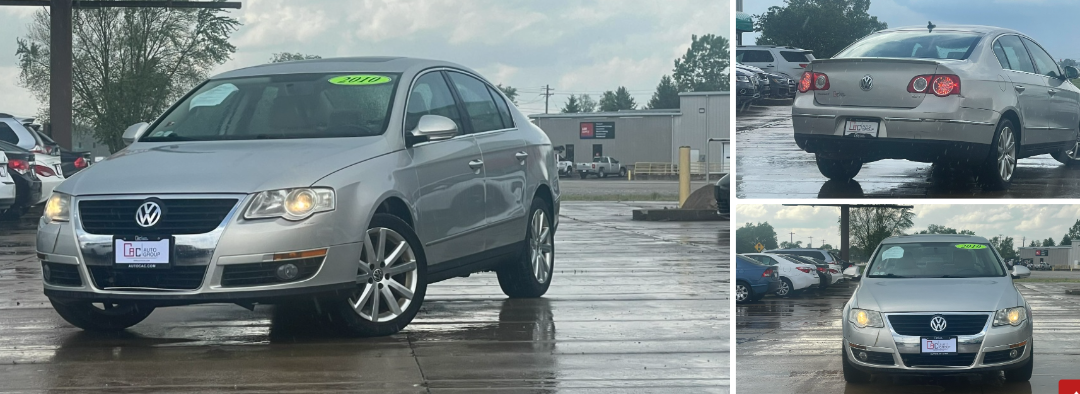
The Magotan B7 made its debut at Shanghai Hongqiao Airport in May 2011 and was officially launched in Hangzhou on July 28, 2011. Magotan B7 body dimensions: The FAW- New Magotan B7L measures 4865mm in length, 1820mm in width, and 1475mm in height. Compared to the current Magotan model, its length has increased by 100mm, while the height has been reduced by 3mm. The most notable change is in the wheelbase, which has been extended by 100mm compared to the overseas version of the B7, reaching 2812mm. Magotan B7 powertrain: The new Magotan B7 is expected to feature a combination of 1.4TSI, 1.8TSI, and 2.0TSI engines paired with a DSG transmission. Of particular interest is the 3.0-liter V6 engine found in the Shanghai Volkswagen New Passat, as well as the suspected 2.0-liter engine listed in the application directory. It remains uncertain whether these engines will ultimately be equipped in the FAW-Volkswagen New Magotan B7.

As a seasoned car enthusiast, I've always been fascinated by the evolutionary story of . The Volkswagen Passat B7 is the seventh generation model, produced from 2010 to 2014, succeeding the B6 and gradually transitioning to the B8 generation. During this period, the B7 introduced some innovative designs, such as a more streamlined exterior and upgraded engine options, with improved fuel efficiency particularly in post-2011 models. Many people appreciate its comfort and reliability, and I often hear friends in the community praise the balanced performance of the 2012 or 2013 models. Additionally, the early 2010 versions might have had some minor issues, but by the 2014 final edition, it had become more refined. If you're considering buying a used one, I recommend prioritizing a check of the maintenance records and VIN code to ensure the year matches correctly. Overall, the B7 generation represents a golden era, worth revisiting those classics.

I frequently service vehicles, and the Passat B7 generation, produced from 2010 to 2014, is a common sight in the workshop, appearing almost every week. Over the years, the most frequent issues I've encountered are electrical system failures or wear and tear on small components. For instance, sensors in the early 2010 models were prone to problems, while the final 2014 version addressed many of these flaws, making maintenance much smoother. Overall, its production years are accurate and reliable. If you own one, I recommend checking the VIN or manual to confirm the manufacturing date. Additionally, the B7 generation has abundant spare parts, and replacements aren't overly complicated. However, older models require extra attention to engine cooling and regular inspections to prevent unexpected breakdowns.

When I was researching cars, I found that the Passat B7 was produced from 2010 to 2014. This is a good period as the design is elegant and fuel efficiency has improved. My view is that choosing a used model from 2012 or 2013 is more cost-effective because early models might have bugs, while later ones are more expensive. Simply put, cars from these years are easier to find and practical, making them suitable for buyers like me with a limited budget. I recommend prioritizing the maintenance history to ensure there are no major issues.

From a technical perspective, I observed that the production cycle of the Passat B7 spanned from 2010 to 2014. As the seventh generation, it featured significant optimizations in chassis and powertrain systems, offering greater stability compared to its predecessor, the B6. By 2014, the B8 introduced more intelligent features. During this period, global sales were strong, particularly for the 2011 to 2013 models, with outstanding performance in the Chinese and European markets. My research data indicates that the B7 generation had high reliability, though some initial production flaws might have existed in early 2010 models, while the 2014 version was largely refined.

I once drove a 2011 Passat B7 and found it super practical. The production years spanned from 2010 to 2014, and mine was right in the middle of that period. It drove comfortably, had spacious interiors, and was fuel-efficient. I remember there were some minor tweaks to the late 2014 version, but overall those model years were quite durable. If you're curious about the exact production years, it was a full four-year span. Looking back now, the B7 generation offered great value for money. Before buying, make sure to check the VIN and vehicle history report to avoid any pitfalls.