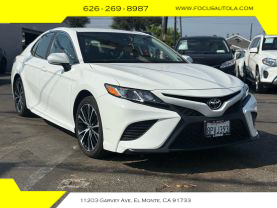
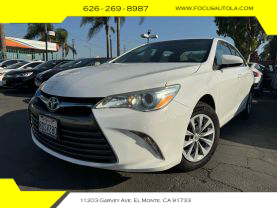
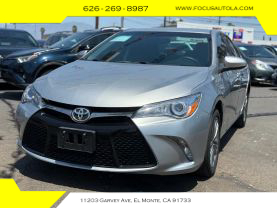
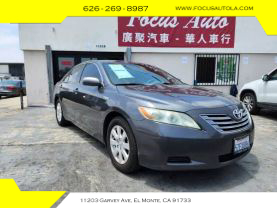
Camry is indeed the same as Camry. Here are the relevant details: 1. Difference: The biggest difference between Toyota Camry and Camry lies in their Chinese names. Both Camry and Camry share the same English name "CAMRY". Initially, CAMRY was sold in China as an imported model, with the fifth-generation model being referred to as Toyota Camry in the domestic market. However, when the sixth-generation CAMRY began production in China in 2006, its Chinese name was officially changed to Camry, marking the end of the Camry era. 2. Features: Camry and Camry can be understood as the same car model, with Camry representing the older generation of imported vehicles and Camry being the newer generation of domestically produced cars. Both the former Camry and the current Camry share a common characteristic: excellent quality, reliability, and durability.

As an automotive enthusiast, I've always followed the historical evolution of models. The Toyota Camry is indeed the result of a name transition across different periods. Initially, from the 1980s to the 2000s, when Toyota introduced the Camry to the Chinese market, it adopted 'Jiamei' as the official phonetic translation, widely used in imported and early domestically produced vehicles. However, with the advancement of Toyota's global branding strategy, starting around 2006 with the seventh-generation model, the name was uniformly changed to 'Camry' to enhance consistency. This move was primarily aimed at simplifying global market recognition and avoiding confusion caused by translation differences. If you check vehicle documentation or nameplates, you'll find that both names share the same chassis codes and platform technologies, such as engines, transmissions, and safety configurations being essentially identical. In the used car market, vehicles labeled as 'Jiamei' are the classic Camry models, making them worthy of collection or practical driving. Such naming adjustments are actually quite common, with other brands doing similar things, all with the goal of making it easier for owners to choose a good car. Personally, I recommend keeping an eye on the latest Camry models, which inherit classic advantages while improving fuel efficiency and smart configurations, making them more comfortable and safer to drive.

I've been driving cars for many years and have also experienced the confusion between Camry and Camry. From a usage perspective, they are essentially the same car, just with a name change. Over a decade ago, Toyota sold the Camry in China under the name 'Camry,' and my friend bought one back then—it was smooth and reliable. Later, the manufacturer decided that unifying the name to 'Camry' would be better for marketing, and now all new car promotions use this name. The key point is that there's no significant difference in performance; they are built on the same platform, with similar engine power, and nearly identical interior design and space layout. When it comes to repairs, finding parts isn’t difficult either—the 'Camry' version just has the old logo. My advice when buying a car is to check the model year: older models are labeled 'Camry,' while newer ones are labeled 'Camry.' After the unification, after-sales service is more convenient, and insurance and maintenance are hassle-free, making it suitable for both daily commuting and long-distance trips.

Since my youth, I've been passionate about studying various cars, and I'm quite familiar with Toyota's naming conventions. The Camry was previously known as 'Jiaming' in China, but it's now almost universally referred to as 'Camry.' Simply put, they belong to the same model series, with the name change being a historical translation adjustment. The Camry has different names in various global markets—it was initially called 'Jiaming' in China before being rebranded as 'Camry' to unify the branding. Technically, there are no differences; they share the same design parameters and safety standards. The newer Camry models feature more modern styling and smarter driver-assistance systems. This topic often comes up in car enthusiast groups, confirming that it's merely an evolution in naming—so there's no need to worry about confusion when purchasing.

From a family car perspective, I must say the Camry and Camry are essentially the same. When helping my family choose a car, I researched and found both belong to the Camry series - 'Jiamei' was the old name used for imported models, while 'Camry' is the modern standardized name. This stems from brand adjustment strategies for greater simplicity and clarity. In actual driving, whether it's the Jiamei version or Camry version, they offer spacious interiors, low fuel consumption, and high reliability - particularly suitable for family trips with children. Both have excellent safety test results, with identical airbag systems and automatic emergency braking. When inspecting used cars, I suggest noting this naming distinction doesn't affect vehicle quality. After unifying as Camry, 4S shop services became more convenient with reasonable maintenance costs.

Based on my observations of the market regions, the Camry indeed has a history of aliases in Asia. 'Jiaming' was the early version name of Camry in China, which has now been generally changed to 'Camry' to align with the global unification strategy. This is similar to the background of Corolla being called 'Huaguan' in some regions, mainly due to transliteration and localization adjustments. The core model remains unchanged, with engine performance and transmission systems maintaining high efficiency and stability. From a market perspective, this name integration reduces purchase confusion, and the sales of the new Camry are steadily increasing. I recommend consumers to confirm the vehicle identity through the VIN code, but regardless of the name, it remains the top choice for a high-quality family sedan, being both durable and affordable.