···
Log in / Register

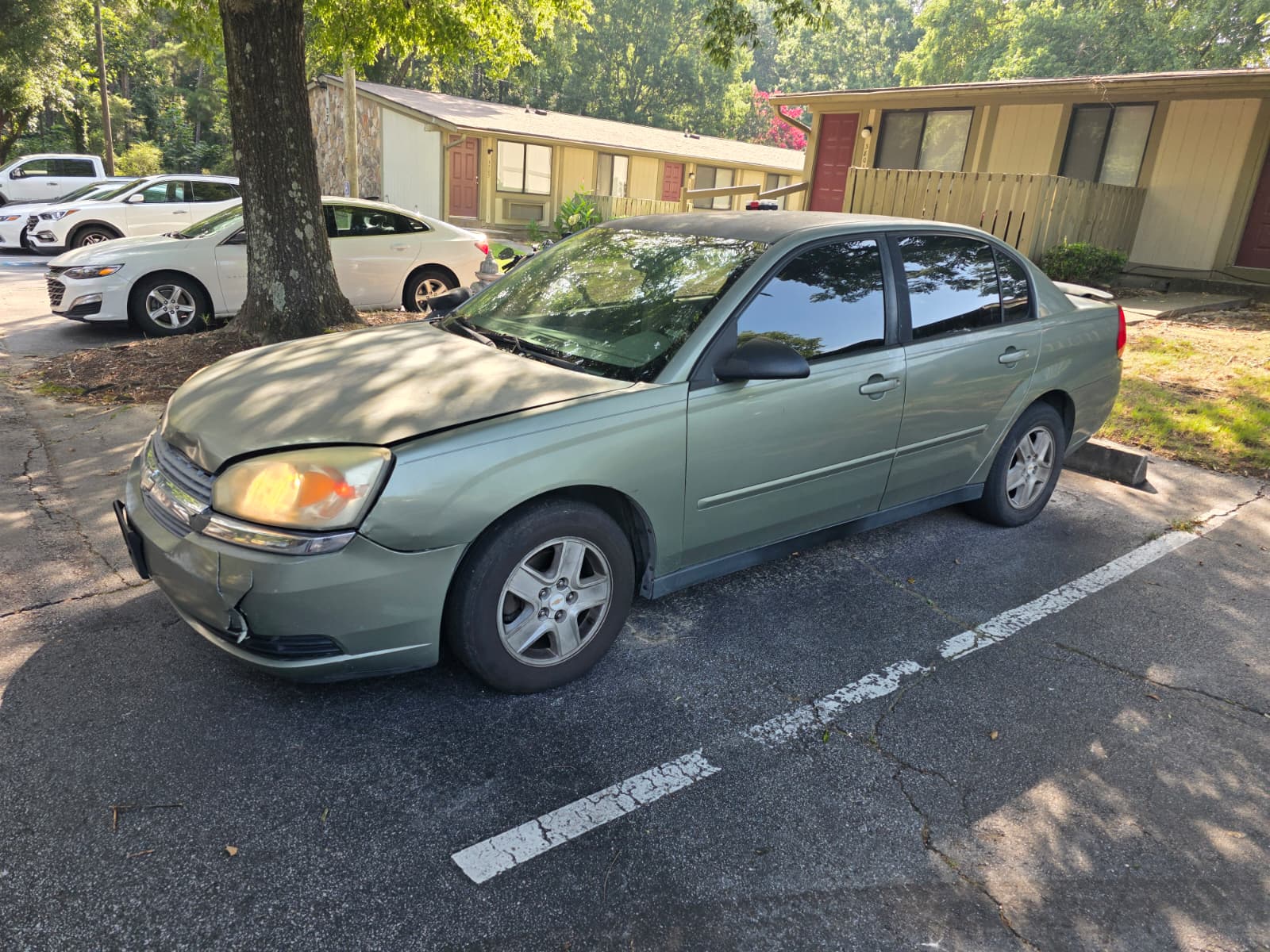
What is the emission standard for cars in 2004?

6Answers
DiAlivia
07/29/2025, 05:55:47 AM

2004 cars comply with the China II emission standard. You can check your vehicle's emission standard through the following methods: via the environmental protection label issued during vehicle inspection, by inquiring at the vehicle management office, or by checking the vehicle model directory on the Motor Vehicle Environmental Protection Network. The China II emission standard is the abbreviation for the second phase of national emission standards, equivalent to the Euro II emission standard, meaning the tailpipe pollutant levels match those of Euro II. Compared to the first phase national emission standard (China I), the China II standard reduces single-vehicle carbon monoxide emissions by 30.4%, and hydrocarbon and nitrogen oxide emissions by 55.8%.

Was this review help?
101
Share
Robles
08/13/2025, 08:03:43 AM

I remember back in 2004, most vehicles had already upgraded to China II emission standards. At that time, I had just bought a new car, and the 4S store specifically mentioned it met China II standards because the second phase of national emission standards had just been fully implemented. The environmental label also clearly stated this. If you want to confirm your car's emission standard, just check the vehicle qualification certificate or the sticker issued by the environmental department. However, nowadays, China II vehicles may face driving restrictions in urban areas, especially in pollution control zones, and their resale value in the used car market is also affected. It's advisable to stay updated with local policy changes. Regular maintenance and annual inspections can ensure your vehicle remains compliant and also contribute to environmental protection.

Was this review help?
3
Share
Expand All
Geraldine
10/06/2025, 04:34:44 AM

I have some knowledge about vehicle emissions. In 2004, China began implementing the National II standard, and most new cars that year belonged to the second phase. The emission requirements for vehicles that year were stricter, and new cars were affixed with environmental labels. You need to check the vehicle registration certificate to confirm the specific emission level. It's worth noting that National II vehicles may face driving restrictions in certain cities, and their exhaust emissions are significantly higher than current standards, contributing to pollution issues. If you're driving a 2004 car, regular engine maintenance can help reduce emissions, and when replacing your vehicle, prioritizing new energy models is more environmentally friendly. Don't worry too much about it affecting daily use; just drive steadily.

Was this review help?
20
Share
Expand All
LaBrooke
10/06/2025, 04:36:40 AM

Most vehicles in 2004 were compliant with China National II emission standards, which were mandatorily implemented nationwide starting from July of that year. You can check your vehicle's emission level by looking at the environmental label or consulting the vehicle management office. The upgrade in emission standards was primarily aimed at reducing exhaust pollution and improving air quality. Driving a China National II vehicle isn't a big issue as long as it's properly maintained.

Was this review help?
4
Share
Expand All
LaConnor
11/19/2025, 10:14:13 PM

From an environmental perspective, cars in 2004 were mostly compliant with China II emission standards, which released higher levels of pollutants. That year marked the initial upgrade of standards, covering new vehicle models. Checking is straightforward—just refer to the vehicle documents or environmental labels. China II vehicles may now contribute to increased urban pollution, with some areas imposing driving restrictions. It's advisable to avoid congested routes for daily commutes and opt for public transport or electric vehicles as greener alternatives.

Was this review help?
15
Share
Expand All
CollinFitz
01/09/2026, 11:52:28 PM

In 2004, China's vehicle emissions entered the National II era, with new vehicles fully complying with the second-stage standards. Inspection method: Check the environmental label or query the VIN code online. From the perspective of emission upgrade history, National II reduced pollutants by about 20% compared to National I, but it still lags behind current air quality requirements. Related topic is vehicle restriction rules. For such vehicles, pay attention to annual inspections and maintenance to extend their service life.

Was this review help?
7
Share
Expand All
More Q&A

Solutions for Rear Displacement of the Right Front Wheel After a Collision

After the collision, perform a thorough re-inspection and realign the steering. The methods for tire maintenance are as follows: 1. Perform wheel alignment and tire rotation: Conduct wheel alignment and tire rotation every 10,000 kilometers traveled. 2. Check tire pressure: Tire maintenance also includes regular pressure checks. Tires exceeding the specified pressure will significantly reduce their lifespan, while tires below the specified pressure can lead to poor braking performance, difficulty or heaviness in steering, and also reduce tire lifespan. 3. Pay attention to the tread wear indicators: The tread wear indicators are located in the main drainage grooves of the tire and appear as trapezoidal rubber protrusions. When the tire tread wears down to the level of the wear indicators, the tire must be replaced. During the rainy season, to prevent the vehicle from slipping on wet roads, the tire tread depth must be maintained at least 3mm. 4. Inspect tire condition: Regularly check the tires to promptly identify issues such as bulges, cracks, cuts, punctures, valve rubber aging, and abnormal tire wear. Pay special attention to inspecting the wear on the tire tread and edges.
107
Share

What is the ground clearance of the Vezel?

The ground clearance of the Vezel is 170MM. The Vezel adopts a front MacPherson suspension structure, which is a mainstream suspension layout. Its advantages include occupying less space, which is beneficial for the layout of the engine compartment, and the lower control arm is made of steel. The front suspension subframe is a full-frame steel subframe, equipped with an engine underguard and an aluminum heat shield in the engine compartment. The lower control arm is connected to the subframe via rubber bushings. More details are as follows: 1. Generally, the ground clearance of a sedan should be between 130mm and 200mm, ensuring that it doesn't scrape the chassis when encountering small bumps. However, overall, the ground clearance of sedans is relatively low, mostly below 150mm. 2. According to relevant regulations, the minimum ground clearance refers to the distance from the lowest point of the chassis (excluding wheels and suspension) to the ground when the vehicle is fully loaded and stationary. In fact, the height of the chassis has both advantages and disadvantages. Vehicles with higher ground clearance, such as full-size SUVs, have better off-road capability, while sedans with lower ground clearance are more prone to scraping the chassis.
118
Share

How to Reverse Without a Backup Camera?

Here are the steps to reverse without a backup camera: 1. Find a suitable parking spot. Then drive forward parallel to the car in front, maintaining a distance of about one to one and a half steps (approximately 50~80 cm) from the adjacent car until your vehicle aligns with the B-pillar of the neighboring car. 2. Shift into R gear and quickly turn the steering wheel fully in the corresponding direction. Reverse until your car is at about a 45-degree angle to the parking space, which is usually when you can see the license plate of the rear car in the left side mirror. 3. Quickly straighten the steering wheel and continue reversing straight. During this process, pay attention to the rearview mirrors. 4. When the front of your car aligns with the rear of the car in front, quickly turn the steering wheel fully in the opposite direction and continue reversing. Open the window to observe and guide the left rear wheel into the parking space. 5. Once the left front wheel enters the parking space, straighten the steering wheel. Then adjust the car's position as needed.
113
Share

How to reset the tire pressure warning light on Roewe 360?

There are two methods to reset the tire pressure warning light on the Roewe 360: 1. Operate the buttons on the multifunction steering wheel, and store the tire pressure status through the "Tire Pressure" option in the multifunction menu. 2. There is a tire pressure reset switch on the side of the gear lever. With the ignition switch turned on, press and hold this switch button until you hear a beep, and the tire pressure will be reset. Additional information: 1. Tire pressure, strictly speaking, refers to the pressure of the air inside the tire. In car maintenance, the engine is the heart of the car, and its damage will lead to the end of the car's life. Similarly, tire pressure is the blood pressure of the car, and its level has a crucial impact on the car's performance and power. 2. Generally, for external sensors, there is a professional fault code reset button in the cabin. For built-in sensors, turning the power off and on will clear the fault. The tire pressure warning light indicates that the pressure in one of the tires is below the minimum limit, reminding the driver to stop and check or visit a service station for tire pressure inspection.
118
Share

What does a flashing red light in front of the car mean?

A flashing red light on the dashboard indicates that the vehicle has entered anti-theft mode. The functions of the electronic anti-theft device are as follows: 1. Anti-theft alarm function: This function means that after the owner remotely locks the doors, the alarm system enters the alert state. If someone attempts to pry open the door or use a key to open it, it will immediately trigger the anti-theft alarm, deterring thieves. 2. Door not closed: If the front door is not closed, the warning light will flash continuously for a few seconds. After locking the doors with the remote, if a door is not properly closed, the car lights will not stop flashing, and the horn will sound until the door is closed. 3. Vehicle locator: When the owner uses the remote to locate the car, the car horn will sound intermittently, accompanied by flashing car lights. 4. Remote central locking: When the remote sends the correct signal, the central locking system will automatically open or close. The electronic remote control device operates via remote, and the electronic key has a corresponding password.
102
Share

What is the function of the EGR valve?

The function of the EGR is exhaust gas recirculation. By introducing exhaust gas into the combustion chamber, it reduces the peak combustion temperature of the engine, thereby achieving the goal of reducing NOx emissions. Diesel vehicles use an external system, where a pipe connects the exhaust pipe to the intake pipe, and a valve is installed in the pipe to control the amount of exhaust gas entering. It can be seen that the EGR valve is the core component of the entire system, and how to precisely control and monitor it is the development direction of the EGR system. EGR: The full name is Exhaust Gas Recirculation, a technique (or method) in which part of the exhaust gas from internal combustion engines is separated after combustion and reintroduced into the intake side for re-combustion. EGR valves are divided into mechanical and electronic control types. The EGR valve guides the exhaust gas from the engine combustion back to the intake manifold to participate in combustion, thereby reducing the combustion chamber temperature, improving engine efficiency, enhancing the combustion environment, reducing engine load, effectively reducing NOx emissions, minimizing knock, and extending the service life of various components. The working principle of the EGR solenoid valve is as follows: The EGR solenoid valve has three air ports. When the EGR solenoid valve coil is not energized, the spring of the EGR valve presses the valve body upward, cutting off the atmospheric port. At this time, the intake manifold of the EGR solenoid valve is connected to the vacuum chamber of the EGR valve. When the EGR solenoid valve coil is energized, the EGR valve body moves downward, connecting the atmospheric port, while the intake manifold of the EGR valve is disconnected from the vacuum chamber. One side of the EGR valve diaphragm (lower part) is exposed to the atmosphere, and the other side with a spring is the vacuum chamber, whose vacuum degree is controlled by the EGR solenoid valve. Increasing the vacuum degree in the vacuum chamber causes the diaphragm to overcome the spring force and arch upward, increasing the valve opening and thus the exhaust gas recirculation flow. When the upper part loses vacuum, the diaphragm arches downward under the spring force, closing the valve and blocking exhaust gas recirculation. In addition, increasing the exhaust gas recirculation rate will reduce the total exhaust gas mass flow, so the total pollutant output in the exhaust emissions will be relatively reduced. The task of the EGR system is to ensure that the exhaust gas recirculation volume reaches the optimal condition at every operating point, keeping the combustion process in the most ideal state and ultimately minimizing the pollutant components in the emissions. Since changes in exhaust gas recirculation volume may have completely opposite effects on different pollutant components, the so-called optimal condition is often a compromise to achieve the best overall emission reduction of related pollutants. For example, although increasing the exhaust gas recirculation rate has a positive impact on reducing nitrogen oxide (NOx) emissions, it may also negatively affect the increase in particulate matter and other pollutant components. Control principle: The engine's operating conditions vary, and so do the requirements for EGR volume. To make the EGR system more effective, the amount of exhaust gas participating in EGR must be limited. As the load increases, the EGR volume also increases accordingly and can reach the optimal value. At idle and low load, NOx emission concentration is low, so EGR is not performed to ensure normal combustion. During warm-up, the engine temperature is low, and NOx emission concentration is also low. To prevent EGR from worsening the combustion process, EGR is not performed. At high load, high speed, or full throttle, EGR is not performed to ensure the engine's power performance. During acceleration, to ensure the vehicle's acceleration performance and necessary purification effect, EGR functions during the transition process. Control method: According to the design principle of EGR, EGR must be controlled and adjusted to achieve the expected effect in engine applications.
119
Share
Cookie
Cookie Settings
© 2025 Servanan International Pte. Ltd.