Browse

Log in / Register
 Share

In a strategic move with far-reaching implications for the global electric vehicle (EV) race, Malaysia has enacted stringent new regulations that effectively raise a protective barrier against a wave of affordable Chinese EVs. The policy, which pivots sharply from previous subsidy-driven approaches, is seen as a direct counter to China's rapid automotive expansion in Southeast Asia, placing companies like BYD in a particularly tight spot. This development offers a critical case study for Western markets, including the United States, as they grapple with similar competitive pressures. July 20, 2023.
The Malaysian government, through its Ministry of Trade, Industry and Energy (MITI), has shifted its strategy from broad subsidies to targeted protectionism. The new framework, effective July 1, 2026, imposes two primary hurdles for imported fully-built EVs: a minimum cost, insurance, and freight (CIF) value of 200,000 Malaysian ringgit (approx. $42,500) and a minimum motor output of 180kW (241 hp). These criteria are not arbitrary; they are calibrated to exclude the majority of popular Chinese models that have fueled the country's recent EV adoption surge.
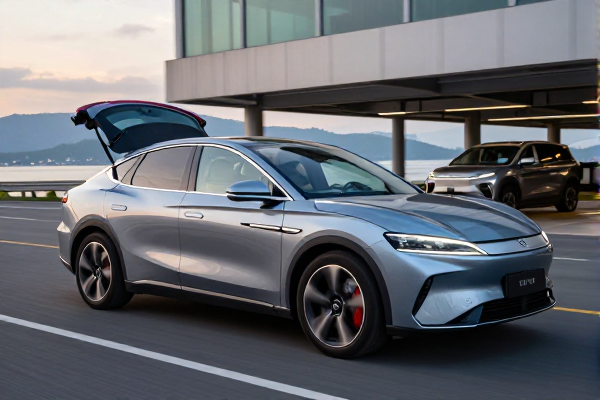
This policy represents a calculated strike at the heart of the Chinese EV playbook in emerging markets: competitive pricing. Data from Malaysia’s Road Transport Department (JPJ) indicated that by the end of 2025, Chinese brands commanded about 60% of the nation's new energy vehicle market. The new rules render best-sellers like BYD's Dolphin and entry-level Atto 3 ineligible for import, as they fall short on both price and power metrics. Other models from Zeekr and Chery also fail to clear the newly established bar, forcing a sudden strategic recalibration for these automakers.
Recognizing that manufacturers might seek to circumvent import barriers through local assembly, Kuala Lumpur has concurrently tightened rules for new manufacturing projects. Approvals granted after September 1, 2025, come with demanding conditions: a mandated minimum vehicle price of 100,000 ringgit, a requirement that 80% of production be exported, and stringent local content rules for key manufacturing processes. This has directly impacted BYD's plans for an assembly plant in Perak, effectively putting the project on hold due to the difficulty of meeting the high export quota.
The policy's design reveals a clear dual objective: shielding the domestic market from low-cost competition while attempting to attract what it terms "high-quality investments" that contribute to export earnings and local industrial development. By setting high price and performance floors, Malaysia aims to steer its EV market toward premium segments, potentially creating space for legacy automakers and local players, while forcing foreign entrants to add significant value to the local economy if they wish to manufacture there.
Some Chinese firms are adapting nimbly to the new landscape by leveraging existing local partnerships rather than building new facilities. Lippo Motor, for instance, began local assembly of its C10 model using Stellantis's existing factory, while Xpeng announced production plans through a collaboration with local firm EPMB. These ventures, classified as utilizing existing capacity, are exempt from the punitive 80% export rule, demonstrating a potential loophole for well-connected manufacturers.
From a U.S. perspective, Malaysia's maneuver provides a stark contrast to America's own trade policy framework. Analysts note that the United States, bound by numerous Free Trade Agreements (FTAs) and the World Trade Organization's national treatment principle, cannot enact such overtly discriminatory tariffs or import bans without risking significant trade disputes. "Malaysia's approach is a blunt instrument that smaller economies with fewer multilateral ties can sometimes wield," notes Dr. Anika Weber, a trade policy fellow at the Center for Strategic and International Studies. "For the U.S., the toolbox is different—it relies more on domestic content requirements under laws like the Inflation Reduction Act, and targeted tariffs on national security grounds, which are themselves contentious."
The Malaysian case underscores the growing global dilemma of how to manage China's EV dominance. While the U.S. and EU investigate Chinese subsidies and consider tariffs, Malaysia has taken a more definitive, exclusionary step. This move could fragment the global EV market, encouraging other regional blocs to enact their own localized rules, thereby complicating the export strategies of all major automakers. For American companies like Tesla, which compete in higher-price segments globally, such policies may offer temporary respite in specific markets but also signal a broader trend towards protectionism that could eventually hinder their own overseas expansion.
Exclusive industry analysis suggests that the ripple effects of Malaysia's policy may extend beyond its borders, potentially influencing investment flows in Southeast Asia. "Thailand and Indonesia, with their more open EV investment policies, are likely to become even more attractive hubs for Chinese EV manufacturing destined for the ASEAN region," says Michael Chen, a Singapore-based automotive analyst. "This could accelerate the shift of supply chains away from Malaysia, prompting a reevaluation of its long-term industrial strategy. The U.S. auto sector should watch this space closely, as it will affect where future components and competitive pressure originate."
Ultimately, Malaysia's bold regulatory stroke is more than a local trade story; it is a microcosm of the geopolitical tensions reshaping the automotive industry. It highlights the limited toolkit available to democracies operating within complex international trade rules when facing state-backed industrial competition. As the U.S. continues to debate its approach to Chinese EVs, the Malaysian experiment—its successes, unintended consequences, and legal challenges—will serve as a critical reference point in the ongoing debate over fair competition, economic security, and the future of clean transportation.