Browse

Log in / Register
 Share


Range Rover has spent five decades building the world's most capable luxury SUV. Its first fully electric model, the 2027 Range Rover Electric, arrives carrying the weight of that legacy — which is to say, a very heavy battery. We drove it on May 7, 2025, through a route that mixed highways, broken pavement, and a muddy off-road loop. The question that guided every mile was simple: does it feel like a Range Rover, or just an expensive EV in Range Rover clothing? The answer, it turns out, has a lot to do with what you value in a luxury SUV.
Land Rover has been laying groundwork for an electric model for years, yet the production vehicle still feels like a quiet shock. Unlike many automakers that treat their EVs as separate projects, the electric Range Rover rides on the same MLA architecture used by the gas and plug-in hybrid versions. That means it shares the body structure, air suspension layout, and even wheelbase options with its combustion siblings. The strategy was deliberate: this isn't an electric lifeboat for the company. It's the flagship itself, reinvented without changing the shape, the status, or the stubborn capability that made the name famous.
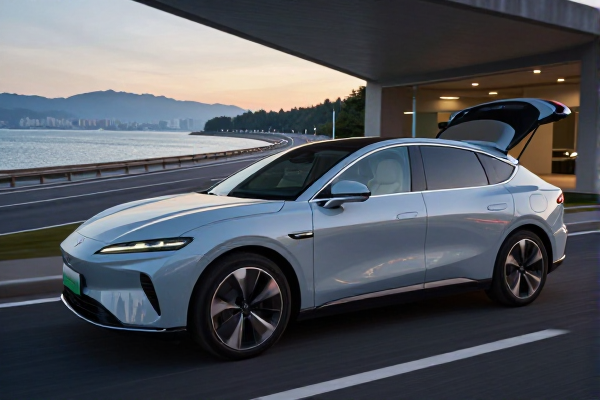
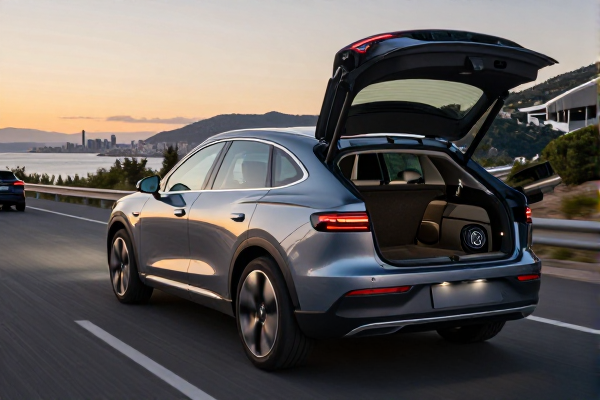
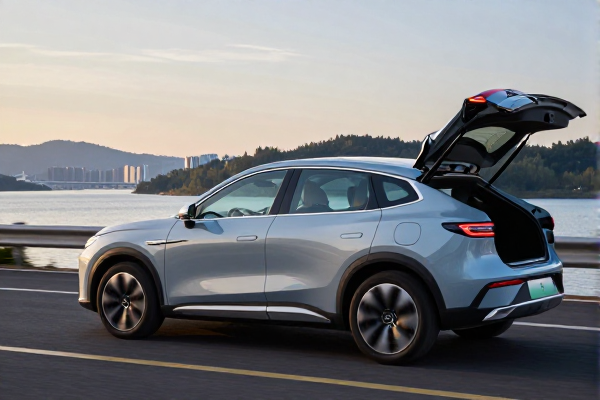
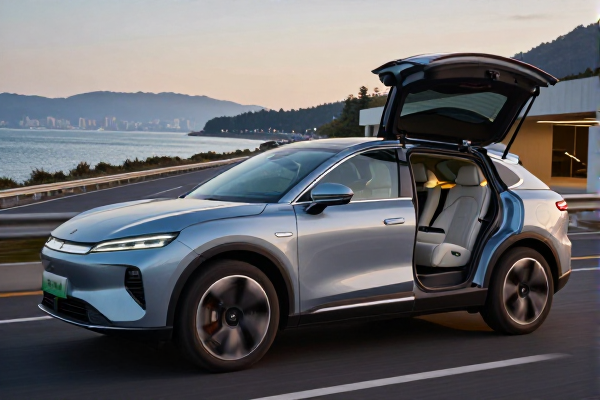
The exterior is a lesson in restraint. Instead of aero fins, hidden light bars, or a giant LED front screen, the Range Rover Electric carries a cleanly etched grille panel with a subtle mesh pattern and slim LED headlights. The profile remains boxier and more upright than any competitor, with short overhangs and a smooth, floating roofline. The visual message is clear: you only realize it's an EV when you get close enough to notice there are no exhaust tips. It's the sort of design language that ages slowly, and Land Rover knows that's a feature, not a bug.
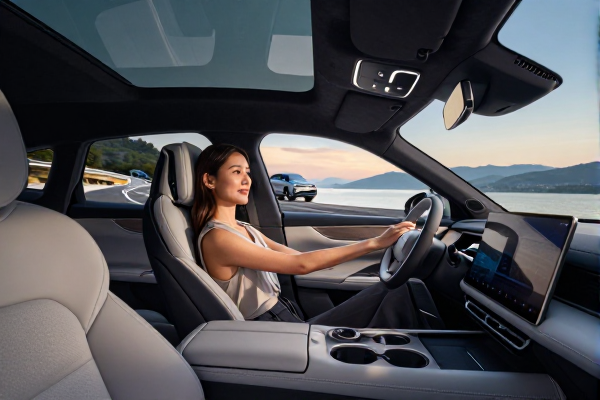
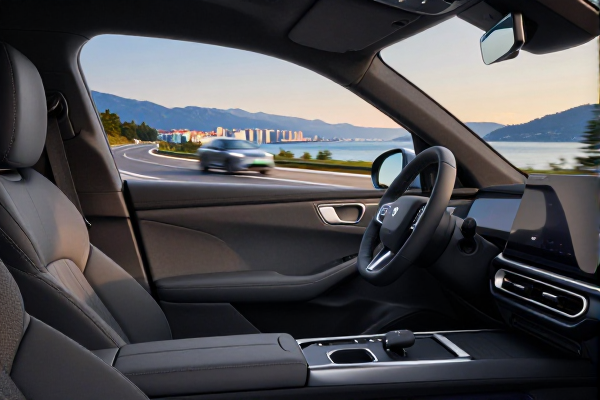
Step inside and the luxury dial gets turned up. The new cabin seals out sound better than any Range Rover before it — no engine whine, no exhaust note, just the subtle rustle of tires and the occasional fan. Materials range from open-pore wood and soft synthetic leather to a strikingly tactile Ultrafabrics option that feels more like a high-end sport shoe than traditional upholstery. The curved 13.1-inch touchscreen is fast and logical, with short menus and physical knobs for climate control. In the back, passengers get reclining seats with electric adjustments, while the long-wheelbase version adds genuinely executive-level legroom. The only compromise is a higher rear hip point because of the battery pack beneath the floor, and the middle seat remains a place for small children or rare occasions. For the typical buyer, that's an easy trade.
Full performance data is still under wraps, but Range Rover has made one promise loud and clear: the electric model will match the muscle of the V8 versions in everyday driving. The hardware includes dual electric motors, all-wheel drive, and an 800-volt electrical architecture. That last detail matters more than horsepower numbers, because it means the vehicle is built for fast charging, not just pretend range. On paper, the figures are compelling. Behind the wheel, the sensation is better. Acceleration arrives with no drama and no pause — just a deep, silent push that builds quickly enough to make your passenger look up from their phone. This is not an EV that wears loudness as a personality. It prefers to let its pace speak quietly.
Let's address the elephant in the room: weight. The Range Rover Electric is heavy, visibly so in the way it settles at stoplights and the extra mass you feel under hard braking. Yet the adaptive air suspension does an impressive job of hiding it. Body motion stays calm on undulating pavement; the steering offers a reassuringly substantial feel, not the numb lightness found in many electric vehicles. Regenerative braking has been tuned with patience — there are multiple adjustable levels, and the strongest mode is aggressive enough for true one-pedal driving, but you can dial it back when you want a more traditional feel. Over coarse surface roads, the cabin stays eerily quiet, with nothing but road noise to remind you the car is doing anything at all.
The real test happens off the pavement. Land Rover's core belief has always been that a Range Rover must be just as capable in the wild as it is polished in the city, and the electric version turns out to be no exception. Officially, the wading depth is 850mm — only a fraction less than the gas model — because the front axle's electric motor sits sealed inside its housing, allowing engineers to keep water away from the most sensitive component. On our course, which included a rutted incline slick with mud, the traction control moved the car forward with the quiet confidence of someone who has done this before. Instant torque, available at the slightest touch of the pedal, helps where a gas engine might need to build revs. The low center of gravity, meanwhile, does wonders for stability on slopes. We didn't turn it into a rock crawler, but we pushed hard enough to know it hasn't lost its party trick.
It's no secret that the luxury EV market in the United States has cooled since the early fever days. Tesla's Model X, Rivian's R1S, the Mercedes EQS SUV, and the BMW iX are all fighting for the same evolving pool of buyers. Range Rover intends to play a different game. It targets the buyer who would otherwise be in a G-Wagen or a Bentayga — someone who values the name, the presence, and the exclusivity as much as the zero tailpipe emissions. Will they switch? The waitlist suggests many already have. Pricing is expected to be serious, with most versions likely landing well into six-figure territory, but in this segment, "expensive" is often a sales pitch, not an obstacle.
Look past the sheet metal for a moment. The 2027 Range Rover Electric is JLR's proof of concept for its "House of Brands" plan, the strategy that splits Jaguar Land Rover into separate luxury labels, each with its own identity and showroom experience. This vehicle is the first test of whether Range Rover can carry its heritage into the electric era without losing any of its luster. If it works, it gives every other traditional luxury automaker a template: respect the past, electrify the future, and let the product do the talking. If it fails, it will probably fail on price and execution rather than engineering — the battery and drivetrain are the least of anyone's worries.
So does the 2027 Range Rover Electric live up to the reputation of its combustion-powered counterparts? After a full day behind the wheel, the short answer is yes. It is, unquestionably, still a Range Rover: imposing, luxurious, quietly talented off-road, and blessed with an interior that makes its rivals look underdone. It also happens to be a strong electric car, with fast charging, composed dynamics, and a calm that a V8 could never match. The remaining questions are ones of patience for those waiting in line — and whether the eventual window sticker turns that wait into a subscription to exclusivity. On the road, on the trail, and in the driveway, the king of SUVs still wears the crown. It's just plugged in now.