Browse

Log in / Register
 Share

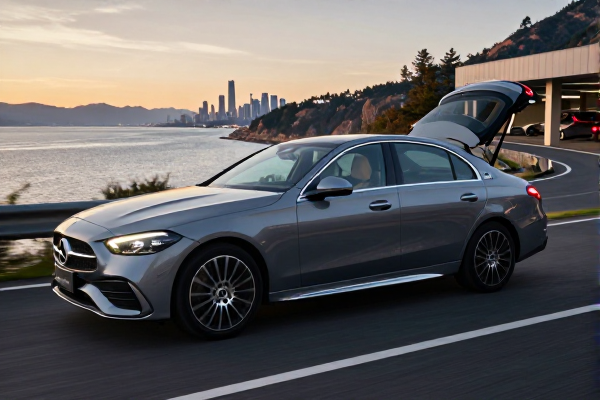
The 2027 Mercedes-Benz C-Class is splitting in two. By early 2027, the familiar C300 will be phased out, leaving the new C350 as the non-AMG entry point. As of June 17, 2025, Mercedes-Benz USA has not released final EPA fuel-economy numbers or a complete U.S. options list for the C350. But European test drives already reveal the big story: the C350 is powered by an updated M254 engine with an electric compressor designed to kill turbo lag.
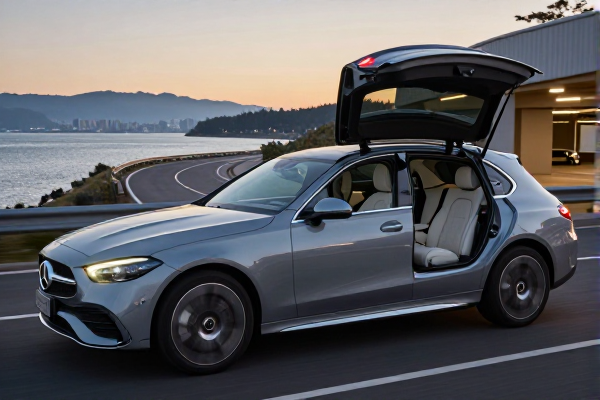
Mercedes-Benz is not trying to make the C350 look different from the C300. The two sedans share the same exterior. That is deliberate. The C300 stays mechanically unchanged from the 2026 model year, while the C350 gets specific hardware and control-logic updates. The result is a C-Class that looks the same but responds differently.
The differences are under the hood and inside the cabin. The C300 will continue to serve as the volume model until early 2027. The C350, by contrast, is being positioned as the more refined version of the same idea. Buyers who want the latest powertrain technology will need to choose the C350.
The core of the C350 is a revised version of Mercedes’ 2.0-liter turbocharged four-cylinder, now called the M254 EVO. The name is important because it signals more than a software tune. The EVO adds an electric compressor, which is the key mechanical difference from the regular M254 engine.
Both engines produce the same nominal output: 255 horsepower and 295 lb-ft (400 Nm) of torque. Both are 2.0-liter inline-fours. But the EVO’s displacement has been reduced slightly from 1,999 cc to 1,991 cc. That small change is not what makes the engine feel different. The electric compressor is.
At low engine speeds, the electric compressor can build boost pressure before the exhaust-driven turbocharger has enough exhaust flow to spool up. In plain terms, the C350 should respond to the throttle immediately instead of waiting for the turbo to catch up. That is the kind of behavior drivers usually associate with a larger-displacement engine or a hybrid assist system. Mercedes-Benz’s engineers say the system is designed to keep the small four-cylinder responsive in daily driving, not just at high rpm.
The M254 EVO can also briefly deliver more than its nominal rating. An overboost function raises output to 282 horsepower for short bursts. That is an increase of 27 horsepower over the standard figure. Mercedes says the C350 will hit 60 mph in 5.8 seconds.
That official number looks conservative. For comparison, the current C300 4Matic, with the non-EVO M254 engine and the same 255-hp rating, was previously quoted at 5.3 seconds to 60 mph by the company. The C350’s electric compressor fills the low-rev gap where the older engine needs to wait for boost. With the added overboost function, it is hard to see the C350 being slower in real-world testing. The 5.8-second claim may be for a rear-drive version, while a 4Matic model could be quicker off the line. Either way, independent testers will likely beat Mercedes’ estimate.
The C350’s nine-speed automatic transmission plays a big role in how the electric-boost engine feels. In Comfort mode, the transmission shifts up early. That smooths out the extra low-end response and makes the car feel more relaxed around town. In Sport mode, the engine reacts more quickly and the electric compressor effect is more obvious, especially at the lower end of the rev range.
The suspension layout is unchanged, with multi-link geometry at both the front and rear. Mercedes did retune the dampers to sharpen agility without destroying long-distance comfort. On smooth European roads, the difference between Comfort and Sport is subtle. The main sensation is a slight change in body roll damping rather than a dramatic chassis split. Testing on rougher U.S. roads with potholes and dips would be needed to judge the ride quality properly.
The test car wore staggered Pirelli P Zero PZ4 tires: 225/40R19 in front and 255/35R19 in back. That is a performance-oriented setup, not necessarily a comfort-oriented one. The car also had rear-axle steering, but that feature is not currently offered in the U.S. market. It may explain why the steering in Comfort mode felt a little distant and why Sport mode improved the connection to the road. Even then, the Pirellis’ grip levels did not fully transmit through the wheel. A U.S.-spec car without rear steering could feel different again.
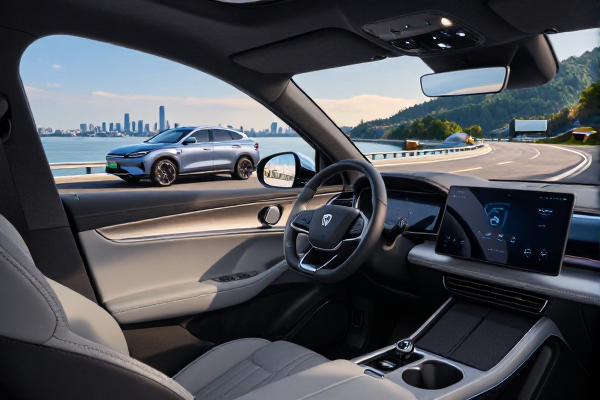
Inside, the C-Class finally fixes one of its most criticized details. The steering wheel’s capacitive touch pads are gone, replaced by physical wheels and buttons for volume and cruise control. That alone will make the cabin easier to live with.
The bigger update is the switch to the MB.OS operating system. That change enables over-the-air software updates, an AI-assisted voice assistant, and a more natural digital experience. Mercedes has also brought over an augmented-reality head-up display from the S-Class. The adaptive high-beam headlights can selectively dim portions of the light beam when another car is approaching, without lowering overall brightness.
The Burmester audio system now has 15 speakers and supports Dolby Atmos. None of this changes the body shape, but it does alter the ownership experience. The C350 is not just a faster C300; it is also the version with the newer digital architecture.
Mercedes-Benz plans to sell the C300 and C350 in parallel only until early 2027. After that, production of the base C300 is scheduled to end. That means the C350 will become the standard gasoline C-Class in the lineup.
Pricing makes the situation interesting. The C300 starts at $51,500. The C350 is expected to start around $53,000. The price gap is only about $1,500, but the C350 includes the M254 EVO engine and the latest interior tech. The 4Matic all-wheel-drive option now costs $2,000, which means an all-wheel-drive C350 will sit above $55,000 before options.
That pricing structure gives buyers a reason to wait for the refreshed model. It also signals that Mercedes wants to simplify the C-Class range. By early 2027, the question will no longer be C300 or C350; it will just be how much C-Class you need.
The biggest missing detail is U.S. fuel economy. Since the M254 EVO’s displacement change is minimal, efficiency may come more from the electric compressor’s ability to reduce transient fuel enrichment and keep boost steady. Mercedes-Benz USA has not yet released official EPA numbers, so real-world efficiency remains unknown.
Another thing to watch is rear-axle steering. The European test car had it, but U.S. buyers will not get it, at least not initially. That means early reviews based on European-spec cars may not fully represent the American driving experience. U.S. journalists will need to test a domestic C350 to confirm how much the steering character changes.
The 2027 C350 is a case study in using electrification selectively. It is not a hybrid in the traditional sense. It does not add a large electric motor to drive the wheels. It simply bolts an electric compressor onto a familiar turbo engine and uses software to make the whole system feel sharper. That approach may not be as dramatic as a full EV or plug-in hybrid, but it could be the more important story for buyers who still want a gasoline C-Class after 2026.