Browse

Log in / Register
 Share

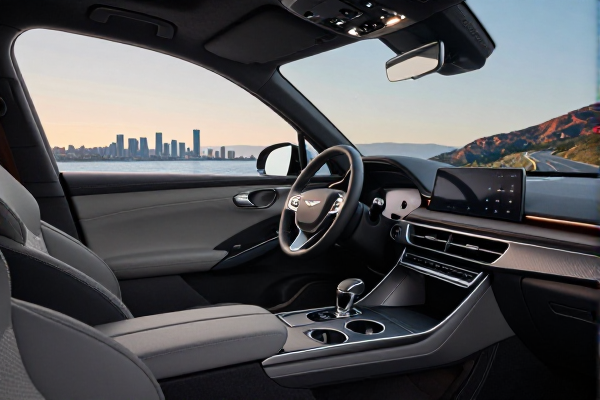
April 4, 2025 – Genesis has formally introduced a new hybrid powertrain that will debut on the 2027 GV80 Hybrid, marking a strategic shift toward electrified performance in the luxury SUV segment. The system pairs a turbocharged 2.5-liter four-cylinder engine with two electric motors, producing a combined 352 horsepower and approximately 390 lb-ft of torque. Beyond the power figures, the automaker is emphasizing a driving experience that mimics an electric vehicle, enabled by a first-of-its-kind liquid-cooled battery within the Hyundai Motor Group.
Liquid-Cooled Battery Breakthrough
The most notable technical advance is the use of a liquid-cooled hybrid battery—the first in any Hyundai or Kia hybrid. Unlike air-cooled units, this system maintains more consistent temperature across varying loads, allowing higher discharge output. Genesis engineers can therefore draw more electric power during acceleration and low-speed driving, reducing reliance on the gasoline engine. The battery's capacity and chemistry have not been disclosed, but the architecture is designed to support frequent EV-mode operation at speeds up to roughly 30 km/h (19 mph) from a cold start.
Why This Matters for the Luxury Segment
This hybrid system is not a direct carryover from the Hyundai Palisade Hybrid or Kia Telluride Hybrid, which produce 329 hp and 339 lb-ft using a front-wheel-drive-based six-speed automatic. The GV80 Hybrid uses a new seven-speed automatic designed for a rear-wheel-drive layout, matched to the GV80’s longitudinal platform. The result is a more refined powertrain with reduced noise, vibration, and harshness (NVH). Genesis also added a centrifugal pendulum absorber on the transmission and a revised crankshaft damper pulley to further minimize engine vibrations.
Driving Dynamics: More Electric, More Often
Genesis intends for the GV80 Hybrid to drive like an EV in everyday scenarios. The system prioritizes electric propulsion at traffic lights, in stop-and-go traffic, and during low-speed maneuvers. In urban settings, the gasoline engine may remain off for extended periods, providing quiet, linear acceleration. The final-drive ratio has been adjusted to lower cabin noise, and the electric motor (P2) handles both propulsion and regenerative braking seamlessly.
Market Context and Competitive Edge
The luxury hybrid SUV market is heating up, with rivals like the Lexus RX 350h and BMW X5 xDrive50e already offering electrified options. According to industry analysts, Genesis’s move to a liquid-cooled battery and a dedicated RWD hybrid platform could give it an edge in refinement and efficiency. The company claims at least a 25% improvement in fuel economy over the non-hybrid GV80 2.5 Turbo, although official EPA figures are pending. With the 2027 GV80 Hybrid expected to reach dealerships in late 2026, Genesis is positioning itself as a serious player in the premium electrified SUV space.
What’s Next for Genesis Hybrids
The 2.5 Turbo Hybrid system is expected to spread to other Genesis models, including the G80 and GV70, in the coming years. The brand is also developing a full EV lineup under the Electrified sub-brand, but hybrids serve as a bridge for customers not ready to go all-electric. The GV80 Hybrid’s 7.1-second 0-100 km/h (0-62 mph) time, while not blistering, is competitive for its class, and the focus on quiet, EV-like operation may appeal to luxury buyers seeking a refined daily driver.
As Genesis continues to carve out its identity in the luxury market, this hybrid system represents a deliberate step toward sustainable performance without compromising the core attributes of comfort and sophistication.