Browse

Log in / Register
 Share
Share
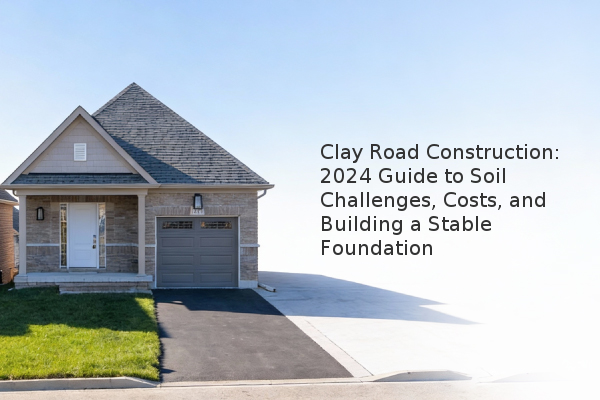
Building on clay soil, often referred to as a "clay road" project, presents unique geotechnical challenges that can significantly impact a property's foundation and long-term structural integrity. For landowners and developers, understanding these challenges is not optional—it's essential for risk mitigation and cost control. The core conclusion for building on clay soil is that a specialized, proactive approach involving soil testing, engineered foundation designs, and proper drainage is non-negotiable to prevent catastrophic foundation failure. This guide provides a factual overview of the critical considerations, from initial assessment to final construction, based on current engineering standards.
Clay soil is problematic due to its high expansiveness. This property refers to the soil's ability to absorb water and expand significantly, then shrink as it dries. This constant cycle of expansion and contraction exerts tremendous pressure on a building's foundation, leading to cracks, uneven settling, and structural damage. Before any construction begins, a geotechnical survey (a specialized analysis of soil properties) is critical. This survey determines the composition of the soil, its plasticity index, and its expansion potential. The results directly inform the necessary engineering solutions, making it the most important first step in any "clay road" development.
The risks of neglecting proper soil analysis are substantial. Issues may not appear immediately but can manifest over several seasons as the clay responds to varying moisture conditions. Common signs of foundation distress on clay soil include sticking doors and windows, visible cracks in drywall, and uneven floors. Proactively addressing the soil's behavior through engineering is far more cost-effective than repairing foundation damage after the fact.
Once the properties of the clay are understood, several engineered foundation designs can be employed to ensure stability. A common and effective solution is the use of pier and beam foundations. This system involves driving concrete piers deep into the ground until they reach stable soil or bedrock, bypassing the expansive clay layer. Beams are then placed on these stable piers to support the structure above, creating a crawl space that also allows for ventilation and access to utilities.
Another robust method is the engineered slab-on-grade foundation, which is reinforced with steel rebar and designed with a perimeter beam (or footing) that extends below the frost line and the active zone of the clay. For extreme conditions, deep foundation systems like drilled concrete caissons may be required. The choice of foundation depends entirely on the geotechnical report's findings. Additionally, implementing sophisticated subsurface drainage systems is crucial to manage water flow away from the foundation, minimizing the amount of water the clay can absorb.
Constructing a stable foundation on clay soil inevitably incurs higher costs compared to building on stable soil. These costs are an investment in the property's long-term durability. The primary cost drivers include the geotechnical survey itself, which can range from $1,000 to $5,000, and the more complex foundation system. A standard concrete slab might cost between $4 and $8 per square foot, while a pier and beam foundation can range from $6 to $12 per square foot, with prices varying by region and project complexity.
The table below outlines potential cost factors:
| Cost Factor | Estimated Price Range | Purpose |
|---|---|---|
| Geotechnical Survey | $1,000 - $5,000 | Analyze soil composition and expansion potential |
| Pier & Beam Foundation | $6 - $12 per sq. ft. | Bypass expansive clay to reach stable soil |
| Additional Site Grading | $1,000 - $4,000 | Ensure proper surface water drainage |
| Subsurface Drainage (French Drains) | $1,500 - $5,000 | Control groundwater around the foundation |
It is vital to view these expenses not as optional upgrades but as fundamental components of the project. Skipping these steps to save money upfront can lead to repair costs that are ten times higher within a few years.
Successfully navigating a "clay road" construction project hinges on a disciplined, knowledge-based approach. The most critical step is to always commission a professional geotechnical survey before finalizing designs. This report is the blueprint for all subsequent decisions. Second, work with a builder experienced in constructing on expansive soils; their expertise is invaluable. Finally, prioritize investment in a robust foundation and drainage system—this is the cornerstone of the property's value and safety. By understanding the challenges and implementing these proven solutions, landowners can build with confidence on clay soil.