Browse

Log in / Register
 Share

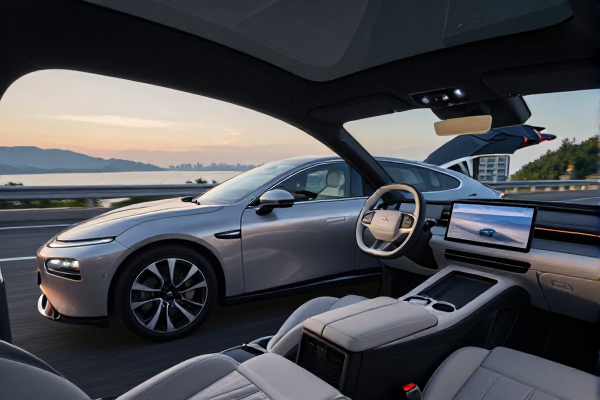
In a strategic move to challenge Tesla's dominance in advanced driver-assistance systems, Chinese electric vehicle maker XPENG has officially designated Australia as a first-wave adopter for its next-generation VLA 2.0 AI platform, with deployments slated to begin in 2027. This announcement, made by company executives in July 2024, marks a pivotal step in XPENG's aggressive right-hand-drive expansion and directly pits its "Vision Language to Action" technology against Tesla's Full Self-Driving (FSD) suite in a key international market.
The core of XPENG's strategy hinges on a significant hardware overhaul for its global models. Beginning with the upcoming L03 sedan, new vehicles destined for markets like Australia will be equipped with a trio of proprietary XPENG "Turing" AI chips. This configuration delivers a staggering 2250 TOPS of computing power, which the company claims is necessary to run the complete VLA 2.0 large language model. This hardware-software synergy is designed to process visual data with greater inference efficiency, aiming for more human-like learning and faster vehicle response times than previous systems.
For consumers, the primary implication is clear: access to the full VLA 2.0 experience will be gated behind the purchase of a new, triple-chip-equipped XPENG model. Company executive Alex Tang confirmed that the brand has not yet committed to delivering a downgraded version of VLA 2.0 for existing overseas vehicles, such as the G6 SUVs already on Australian roads. This creates a distinct generational divide, where early adopters may find their hardware unable to support the flagship AI features rolling out later this decade.
The approach contrasts with XPENG's plan for its home market in China. There, engineers are developing a "model distillation" process to shrink the VLA 2.0 AI model, allowing it to function on vehicles with only one or two chips. This distilled version targets roughly 80% of the full system's capability and is aimed for a Chinese rollout in Q3 2026. The absence of a confirmed parallel path for international markets underscores the complexity of adapting AI systems to diverse regional regulations and hardware landscapes.
Australia's selection as a priority market is no accident. XPENG identifies it as a strategic, tech-adopting region that can serve as a proving ground for its global right-hand-drive portfolio, which will include the G9L SUV and the L03. Beyond mere sales, XPENG plans extensive local validation testing in Australia, tuning vehicle behavior and driver-assistance software for local conditions. The company argues that its AI-centric approach allows for faster, software-driven adaptations compared to traditional, hardware-reliant tuning methods.
This announcement arrives as XPENG seeks to solidify its operational footprint in Australia, transitioning to a direct sales and service model following previous distribution partnerships. The upcoming local brand launch event in Melbourne on July 21st is expected to provide more concrete details on model availability, pricing, and the specific timeline for the VLA 2.0 introduction.
Industry analysts note that XPENG's 2027 timeline for VLA 2.0 sets the stage for a fascinating competitive battle. By the time it launches, Tesla's FSD system is likely to have undergone several major iterations. The success of VLA 2.0 will depend not just on its technical prowess but also on XPENG's ability to build consumer trust in its AI safety and reliability, a factor where Tesla currently holds significant brand advantage in markets like Australia and the United States. XPENG's move signals that the race for autonomous driving is far from a one-horse race, with serious, well-funded competitors emerging from China with globally-ambitious roadmaps.