Browse

Log in / Register
 Share


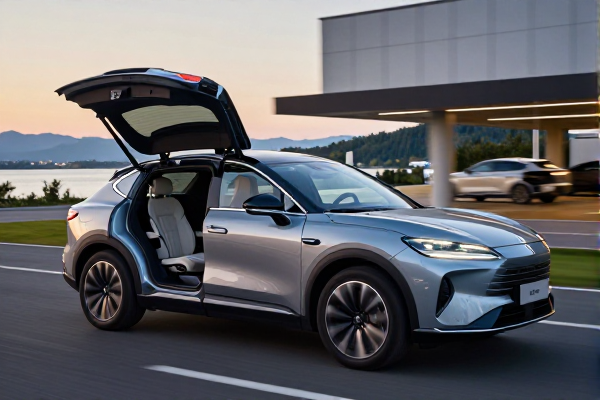
April 28, 2026 — Toyota has spent a decade telling everyone that a car doesn’t need to feel like a smartphone. Its engineers prioritized hybrid powertrains, build quality and resale value while Tesla and a wave of Chinese startups treated software as the soul of the car. That era at Toyota is about to end.
Nikkei Asia reports that Toyota is now preparing to turn all 50 of its current car models into software-defined vehicles. That isn’t just a trim-level upgrade or a bigger center screen. It’s a fundamental shift in how the company designs, sells and, most importantly, profits from cars in the U.S. and everywhere else.
What actually changes when a car becomes software-defined?
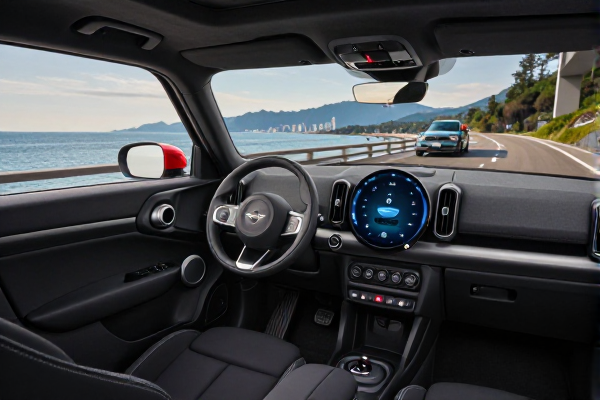
The phrase “software-defined vehicle” gets thrown around a lot these days, but the concept is straightforward. Instead of a car being a mechanical machine with some electronic extras bolted on, the software becomes the core architecture. Everything from collision detection and driver-assist features to climate control and infotainment is connected to one unified digital platform.
Think of it as a difference between a traditional car and a tablet on wheels. The tablet gets better after you buy it. The car, in Toyota’s new world, will get better too. That’s the biggest mental leap for the company, because Toyota’s culture has always favored getting everything right before it hits the assembly line.
Software-defined cars are easier to build on an electric foundation. With an EV, the motor, battery management and drivetrain are all managed by code rather than hardwired mechanical parts. Toyota is chasing this transformation just as electric vehicles are becoming mainstream in the U.S., but the company is also applying it to hybrids and gasoline models. The software platform won’t only live in dedicated EV models.
Toyota’s answer to Tesla is called Arene
Toyota has been quietly developing its own software platform, Arene, for years. The latest RAV4 already runs on it. Arene is designed to be the common operating system across Toyota and Lexus models, something similar to what Volkswagen wanted to build with Cariad, but with fewer stops and starts.
The first practical benefit for U.S. drivers will be over-the-air updates. Until now, Toyota treated software like hardware: if you wanted a new feature, you waited for the next model year or a dealer visit. Arene changes that. Bug fixes, new capabilities, comfort features and even performance tweaks will be delivered wirelessly while the car sits in the driveway.
That’s a routine practice for Tesla and for Chinese brands like BYD, Xpeng, GAC and Zeekr. But it’s a new game for Toyota, and an important one. How well the company executes OTA updates will determine whether its cars feel fresh in five years or obsolete.
The convenience play goes beyond the dashboard
The Nikkei report also suggests Arene won’t stay confined to cars. Toyota is reportedly looking at embedding the software in robots, homes, power poles and charging infrastructure. If that sounds ambitious, consider the potential: approach your house and your Toyota could switch on the lights, open the garage, pre-cool or preheat the house, and begin charging itself from the grid at the optimal rate.
Toyota isn’t the only automaker chasing this connected-life vision. Hyundai, BMW and Ford are all working on home-to-car integration. But Toyota’s global reach in everything from forklifts to home robotics gives it an unusually wide territory to cover. Arene could end up as the layer that ties all of it together.
The serious catch: Toyota plans to collect cash for services many rivals give away
The honest reason behind Toyota’s software push isn’t just fear of falling behind. It’s money. Toyota has reportedly set a goal to raise profit from outside new car sales by 40 percent. The plan is to hit that target with paid software subscriptions, genuine spare parts and used-car sales.
That could mean $26 billion or more in annual service revenue — a staggering number for a company that has historically treated post-sale revenue as an afterthought. Some of those services will be convenience-driven, like advanced navigation and remote comfort controls. Others will likely be security-related or tied to autonomous driving features.
Here’s the tension for U.S. consumers. Tesla has mostly bundled its basic software into the car’s price, charging for extras like premium connectivity and Full Self-Driving. Toyota will probably be more aggressive than that. Customers who expect “Toyota reliability” to also mean “cheap to own” may get a surprise when the subscription prompts start appearing on their dashboard.
A decade-late leap, but maybe not too late
By 2026, Toyota is arriving late to a software race that Tesla started more than a decade ago. Still, the company’s size is its advantage. Toyota sells more cars every year than nearly anyone else in the world, and its dealer network in the U.S. is unmatched. When Toyota rolls out over-the-air updates, it won’t just be a niche novelty for a few thousand owners; it will be mass-market by default.
The bigger question is whether Toyota can make the cultural leap. Software-defined vehicle development requires updates, bug triage, cloud infrastructure and a customer relationship that continues long after the sale. Toyota has spent years perfecting a retail model that ends when the customer drives off the lot. Arene forces the company into an entirely different rhythm.
Some industry analysts see this as Toyota finally admitting that a car’s hardware alone can’t keep it competitive. The powertrain is still important, but the software that controls the user experience, safety systems and digital services is becoming the real product.
How this lands on the U.S. market
For American buyers, the shift means new Toyotas will gain features gradually instead of at each model refresh. Used Toyota values, which have historically been rock solid, could behave differently if software subscriptions become a deciding factor for future owners. A used Toyota that can’t access the latest safety updates could become less attractive.
It also means the dealer experience will change. Right now, a software fix usually means booking a service appointment. In the software-defined era, the car fixes itself overnight. That should reduce maintenance visits, but it could also push more revenue away from dealers and toward Toyota corporate.
The company hasn’t announced exactly which models will get Arene first or how much subscriptions will cost. But the direction is clear. Toyota is no longer resisting the software takeover. It’s preparing to control it.