Browse

Log in / Register
 Share

Updated: May 9, 2026
Australia’s new-car sales chart no longer looks like the one from a decade ago. The latest VFACTS monthly data shows the Tesla Model Y has become, in practical terms, the new Holden Commodore. The Ford Ranger sits on top, and Chinese brands have forced the old hatchback kings out of the top ten. It’s a change that should interest American drivers, because it shows how quickly a market can turn when EV prices drop and new brands are allowed to compete.
This comparison is deliberately simple. It’s not a scientific study, but the numbers are real. The Federal Chamber of Automotive Industries compiles the VFACTS sales data used by every major Australian outlet, and putting the 2016 chart next to the current 2026 chart tells you almost everything you need to know.
| Place | September 2016 | Latest 2026 |
|---|---|---|
| 1 | Mazda3 | Ford Ranger |
| 2 | Toyota Corolla | Toyota RAV4 |
| 3 | Toyota HiLux | Tesla Model Y |
| 4 | Ford Ranger | Toyota HiLux |
| 5 | Hyundai i30 | BYD Sealion 7 |
| 6 | Mazda CX-5 | Chery Tiggo 4 Pro |
| 7 | Holden Commodore | GWM Haval Jolion |
| 8 | Mitsubishi Triton | Geely EX5 |
| 9 | Hyundai Tucson | Toyota Prado |
| 10 | Hyundai Accent | Isuzu D-Max |
Only two models from 2016 are still inside the current top ten: the Ford Ranger and the Toyota HiLux. The other eight spots belong to names that would have sounded made-up a decade ago. Imagine telling someone in 2016 that a Geely EX5 would be Australia’s eighth best-selling car. They would have asked whether that was a phone or a new app.
The biggest change isn’t just about badges — it’s about what powers the cars. In 2016, every passenger vehicle in the top ten used an internal combustion engine. The Toyota Corolla was the only one available with a hybrid option, and it was still a niche choice.
The current 2026 top ten tells a different story. Three models are fully electric: the Tesla Model Y, the BYD Sealion 7, and the Geely EX5. Five models are offered with both hybrid and internal-combustion versions, and only two remain pure-ICE models. In ten years, the mainstream default moved from “how many cylinders?” to “how do I plug it in?”
In 2016, the Mazda3, Toyota Corolla, Hyundai i30, and even the Hyundai Accent were the cars Australians bought when they wanted something sensible and affordable. They were small, light, and cheap to run. They also shared one weakness: they felt like compromises by modern standards.
Their replacements in the 2026 chart are the Chery Tiggo 4 Pro and GWM Haval Jolion. These two Chinese-built SUVs are almost exactly the same size, price, and target audience as a 2016 Corolla. Buyers today get more ground clearance, bigger screens, and a standard equipment list that would have been top-spec luxury ten years ago. The badge doesn’t carry the same history, but the value is hard to ignore.
Holden may not mean much to American readers, so here is the translation: Holden was General Motors’ Australian division, and the Commodore was its most famous model. It was a rear-drive family sedan that could also be a taxi, a police car, or a V8 weekend toy. For a fun trivia point, the Pontiac G8 sold in the U.S. was basically a rebadged Holden Commodore.
Holden was shut down in 2020, but the Commodore never really left Australia’s automotive memory. It was still the seventh best-selling car in the country in 2016, and it took years for buyers to find something that played the same role.
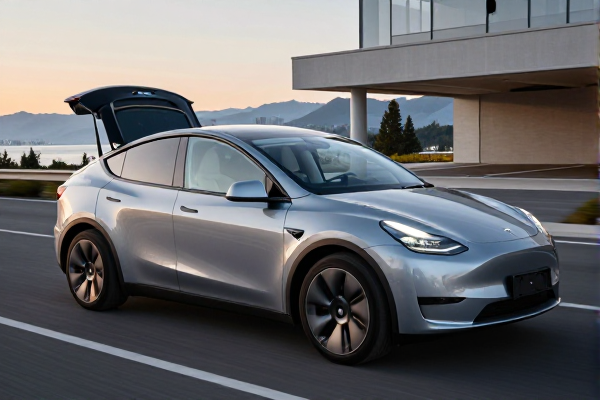
The Tesla Model Y is that something. It isn’t a V8 sedan, but it’s the “yeah, just get that one” choice for families. It has space, it’s quieter than a traditional car, and it makes the driver feel like they’ve moved on from the old world. Holden fans won’t want to admit it, but the Model Y does Commodore things better than the Commodore ever could.
The rest of the 2026 chart has smaller stories worth telling. The BYD Sealion 7 is the new Mazda CX-5. In 2016, people bought the CX-5 when they wanted an SUV that felt a little sharper than a RAV4. The Sealion 7 plays the same trick today: it looks good, it’s priced aggressively, and it comes with technology that makes established rivals look stingy.
The Geely EX5 is the new Hyundai Tucson. It’s an excellent vehicle that doesn’t get enough attention, mainly because people still aren’t confident about saying the brand name out loud. The Isuzu D-Max is the new Mitsubishi Triton. It used to be the quiet ute in the corner, and now it has earned a permanent place in the top ten by offering most of the Ranger’s ability for less money.
As for the RAV4, it is still the RAV4. The loyalty loop is absurd: RAV4 owners buy another RAV4, and then their neighbors buy RAV4s. The chart knows this.
The interesting thing about the Ford Ranger and Toyota HiLux is that they have not been forced out by electrification. They are still top sellers because they are tools, and people protect their tools.
Pickups do the same job in America. The Ford F-Series, Chevy Silverado, and Ram trucks are permanent fixtures on U.S. charts, and the Ranger is Australia’s version of that story. The people who used to buy V8 sedans like Commodore and Falcon now buy high-performance utes. The Ranger Raptor and HiLux GR Sport are the spiritual successors to HSV and FPV. They are expensive, loud, and frequently unnecessary — and that is the point.
Toyota’s Prado also makes sense in this context. It is the choice for Toyota buyers who don’t want a Kluger, known in America as the Highlander, and don’t want the full LandCruiser experience. They want something tough-looking and practical, without becoming the neighborhood’s least fuel-efficient resident.
This Australian comparison is more than a curiosity. The U.S. may not allow Chinese brands to enter the market in large numbers right now, thanks to tariffs, technology restrictions, and data rules. But Australia shows how fast things change once those barriers come down.
Tesla’s Model Y is already a fixture near the top of U.S. sales charts. The Ford F-Series still controls the overall market. Chinese EVs are the unknown variable. The moment a well-equipped BYD appears on a U.S. dealer lot with federal tax credit eligibility or a domestic battery plant behind it, the same disruption that hit Australia’s top ten could start happening here.
People who miss the 2016 list usually miss the simplicity. A 2016 Corolla or Mazda3 was easy to understand. You bought petrol, you changed the oil, and it lasted for years. There were no over-the-air updates, no battery degradation worries, and no touchscreen menu to fight with.
But the 2026 list is not worse. It’s different. Electric crossovers are cleaner, cheaper to run, and far quicker in daily driving. The new list may look like a catalogue of white goods at times, but these appliances happen to be better commuting tools than the old hatchbacks ever were.
The new Commodore doesn’t have a lion badge. It charges at home, carries the family, and does the daily grind without making a noise about it. In 2026, that’s not a compromise. That’s progress.