Browse

Log in / Register
 Share

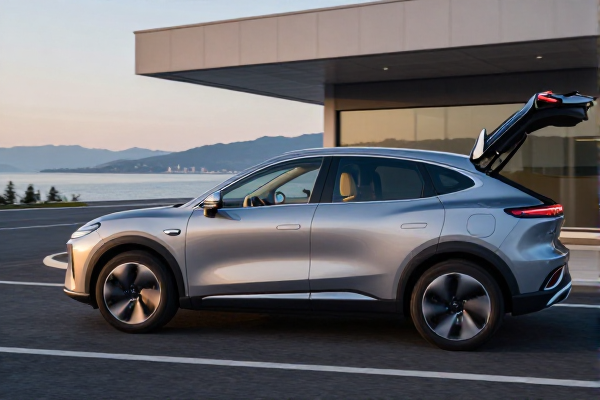
May 24, 2024 — A pioneering journey across Great Britain has demonstrated a compelling vision for the future of electric mobility: driving entirely on sunshine. This week, a standard-production Renault 4 electric vehicle completed the iconic 870-mile route from Land’s End to John o’Groats without consuming a single unit of grid electricity or a drop of gasoline. The total fuel cost for the expedition was precisely zero, challenging conventional assumptions about the limitations and costs of long-distance EV travel.
Dubbed the ‘Easee Sun Run,’ the project marked the first successful attempt to traverse the entire length of the United Kingdom in a showroom-ready EV powered solely by solar energy. The vehicle used was the Renault 4 E-Tech ‘Plein Sud,’ a model retailed at approximately £27,000. Notably, the car itself is not equipped with integrated solar panels. This fact frequently sparked curiosity among spectators along the route, prompting questions about the true source of its energy.
The secret to the journey’s success lay not in the car, but in its support system. The core energy solution was a massive 300kWh portable battery pack, custom-built by OnBio using second-life EV battery cells. These are cells recovered from electric vehicles that were damaged before ever reaching a dealership. This mobile power bank, carried in the vehicle’s boot, functioned as a renewable energy reservoir, holding enough charge to fully replenish the Renault 4’s battery six times over.
A critical phase of the operation occurred before the wheels even began to turn. Power Logistics, a company specializing in energy for large-scale events, spent a week prior to the journey charging the portable battery pack exclusively from a dedicated solar farm. “The entire energy supply for this vehicle is free,” explained Ian Peniston, the company’s Director of Operations. “It originates directly from solar capture, demonstrating a completely off-grid and sustainable charging model.” This meticulous sourcing was fundamental to the project’s integrity, ensuring the energy was purely solar rather than a mixed-grid supply.
The visionary behind the record attempt is Jeremy Hart, an automotive explorer known for extreme driving feats. His inspiration stemmed from a personal experience charging an EV in the harsh -40°C conditions of the Canadian Arctic. He theorized that if solar energy could be viable in such an extreme environment, it should be feasible in more temperate regions like the UK using existing infrastructure. Hart noted that the primary challenge was logistical, not technological: securing commitments from solar farm operators to guarantee a 100% pure solar energy feed for the charging process, a more complex task than simply plugging into the national grid.
From a financial perspective, the contrast with internal combustion engine vehicles is stark. A comparable 870-mile trip in a petrol-powered car would cost roughly £120 in fuel one-way, doubling for a return journey. The solar-powered Renault’s bill remained at a steadfast £0, highlighting the potential for renewable energy to drastically reduce the operational expense of personal transportation once the initial infrastructure is established.
Exclusive Analysis: The Scalability Question for the U.S. Market
While this feat was achieved in the UK, its implications resonate strongly in the United States, where long road trips are a cultural staple. The project underscores a significant, often overlooked, intermediate solution for EV range anxiety: mobile, renewable energy buffers. Instead of waiting for ubiquitous ultra-fast charging stations or vehicles covered in solar panels, the use of large-scale, portable batteries pre-charged from solar or wind farms could temporarily bridge infrastructure gaps.
This model could be particularly relevant for event-based charging, remote locations, or as a supplemental service for roadside assistance companies. Recent data from the U.S. Energy Information Administration shows utility-scale solar generation increasing by over 25% in the past year, creating more opportunities for such off-grid charging solutions. The key to adoption lies in standardizing portable battery systems and developing a service ecosystem for their deployment and solar-to-vehicle recharging cycles.
The ‘Easee Sun Run’ serves as a powerful proof of concept. It moves the conversation beyond the car’s plug to the source of the electricity flowing through it. The journey proves that with planning and current technology, emission-free, cost-free long-distance EV travel is already within reach. The future of clean transportation may well depend not just on the vehicles we drive, but on developing a nimble, renewable energy logistics network to support them.